Wire rope sizes refer to the nominal outside diameter across the crowns of the outer strands. A 1/8-inch rope, for example, has a nominal diameter of 3.175 mm. To order a replacement, keep the original unit and record the construction. For a mesh panel, specify the installed opening as a separate dimension.
Wire rope size chart in inches and millimeters
Multiply inches by 25.4 to convert to millimeters. The table gives exact unit conversions for selected steel rope sizes. A catalog may round the metric column, so keep the fraction on the purchase order if the fitting was specified in inches.
| Nominal diameter (in.) | Decimal inches | Exact diameter (mm) |
|---|---|---|
| 1/16 | 0.0625 | 1.5875 |
| 3/32 | 0.09375 | 2.38125 |
| 1/8 | 0.125 | 3.175 |
| 5/32 | 0.15625 | 3.96875 |
| 3/16 | 0.1875 | 4.7625 |
| 1/4 | 0.25 | 6.35 |
| 5/16 | 0.3125 | 7.9375 |
| 3/8 | 0.375 | 9.525 |
| 1/2 | 0.5 | 12.7 |
| 5/8 | 0.625 | 15.875 |
| 3/4 | 0.75 | 19.05 |
| 1 | 1 | 25.4 |
Take a drawing that calls for 3 mm cable and a quotation offering 1/8 inch. The difference is just 0.175 mm, easy to miss on a printout. Before accepting the substitution, check the permitted rope size and construction on the terminal manufacturer’s data sheet. An inch conversion alone does not establish a fit.
How to measure wire rope diameter with calipers
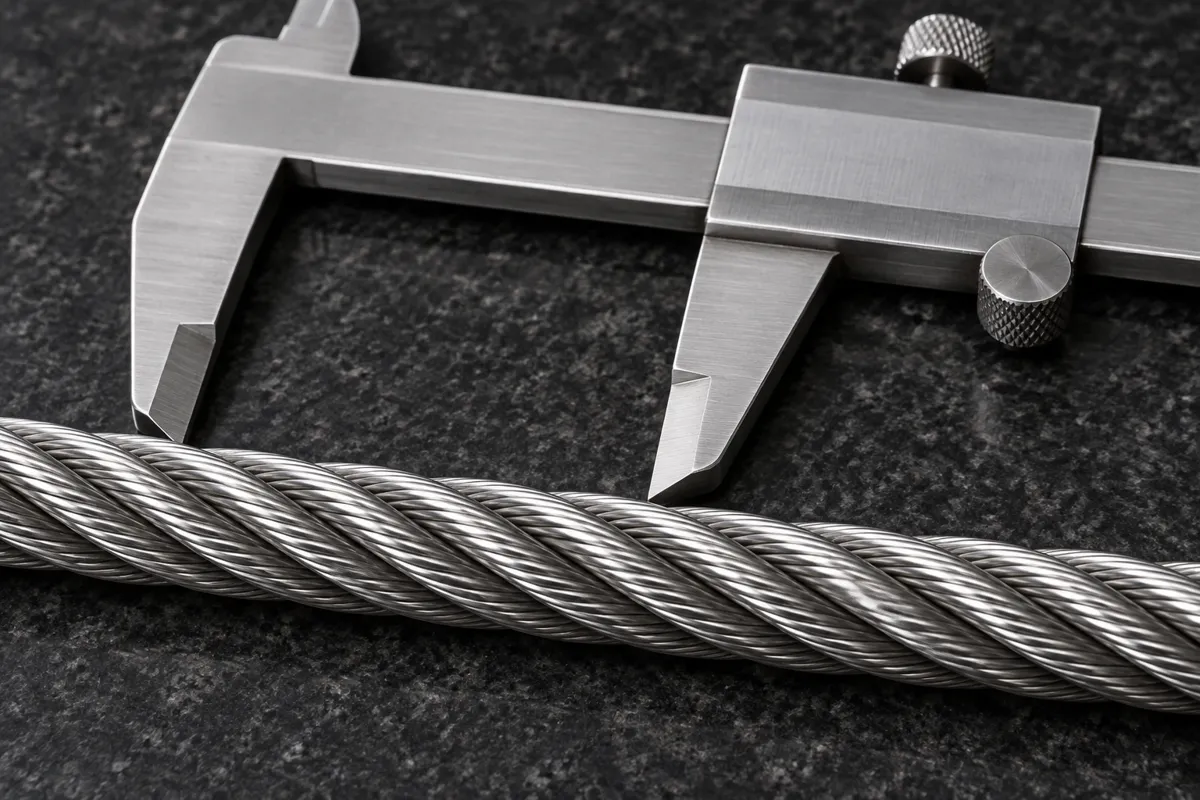
- Use an accessible, straight sample and calipers with faces broad enough to bridge the outer strands. For an in-service rope, follow the equipment inspection procedure and its specified measurement conditions.
- Set the jaws perpendicular to the rope axis. Bring the flat faces against the outer crowns. A narrow jaw that drops into the valley between strands gives a smaller reading.
- Take a second reading at right angles to the first and repeat at another location. Write down the readings and their locations before comparing them with the supplier’s tolerance.
Actual diameter and nominal diameter answer different questions. One describes the sample in your hand. The other identifies the ordered rope. Wear, distortion and a jacket can all affect what the calipers show. If a reading varies enough to change your choice of fitting, keep the original identification tag and ask the supplier to resolve the discrepancy.
What do 7 × 7 and 7 × 19 mean at the same rope diameter?
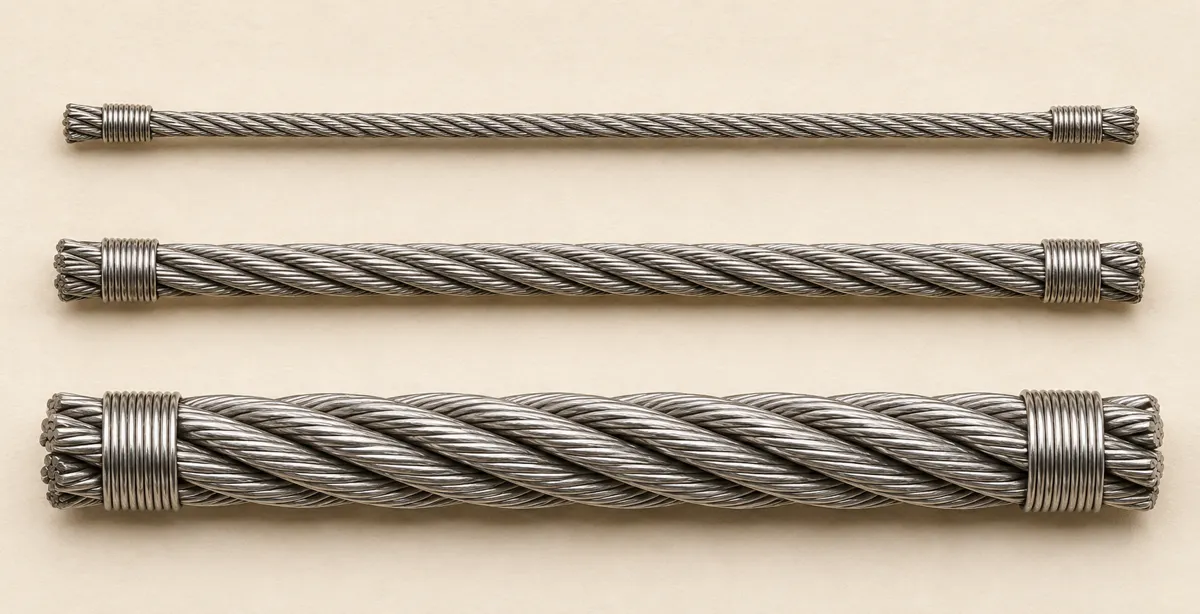
A 7 × 7 cable has seven strands of seven wires each. A 7 × 19 cable has seven strands of nineteen wires each. At a comparable overall diameter, the second construction uses finer wires and generally bends more readily. A 1 × 19 strand is a stiffer option commonly considered for straight tension members. Ask which construction the terminal accepts as well as which diameter.
Larger industrial ropes use additional identifiers. On a chart marked “6 × 19 class, IWRC,” the class covers a family of constructions and IWRC identifies an independent wire rope core. Keep those headings with the figures if you copy a row into a specification. Weight per foot helps estimate reel or shipping weight. Minimum breaking force describes a different property. For lifting, use the rated assembly and the equipment manufacturer’s selection procedure, including hitch configuration and terminations.
Which wire rope dimensions belong on a cable mesh drawing?

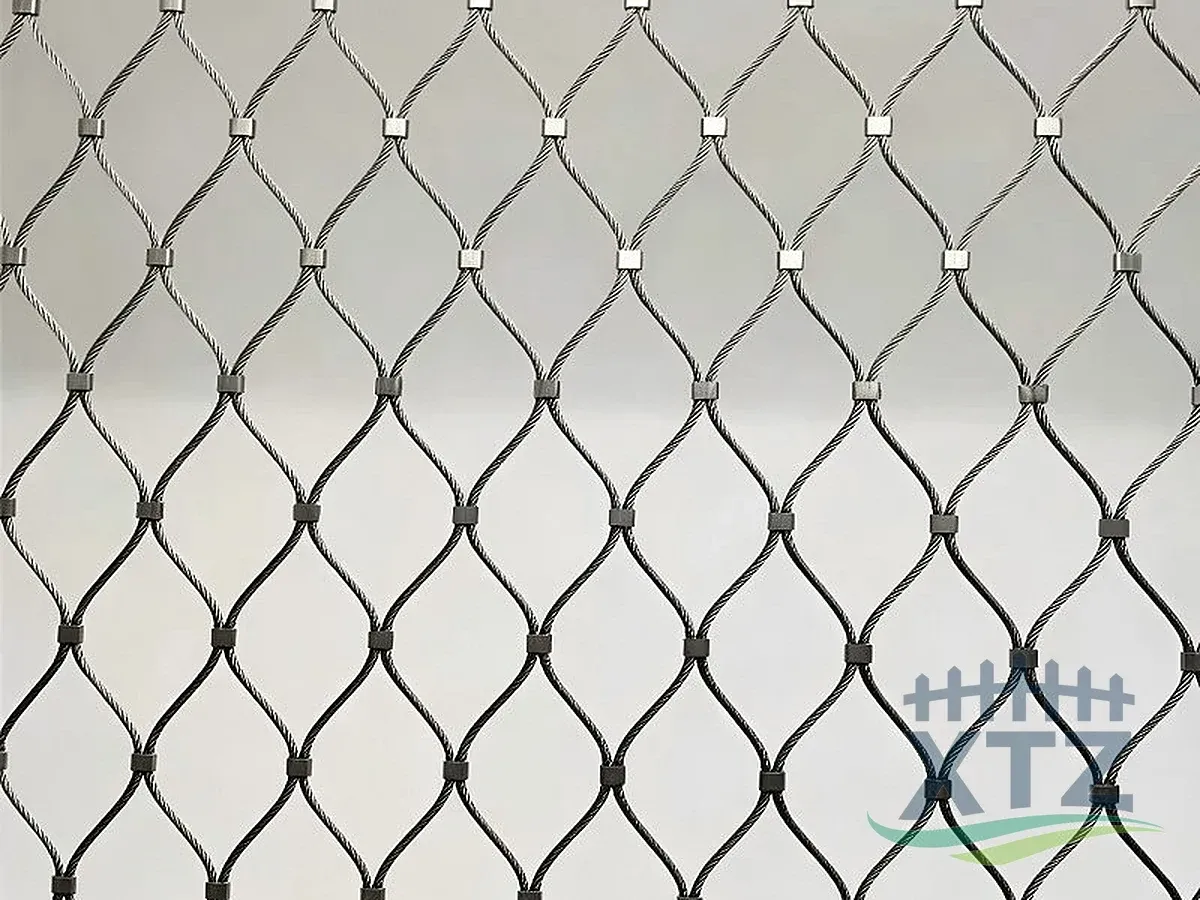
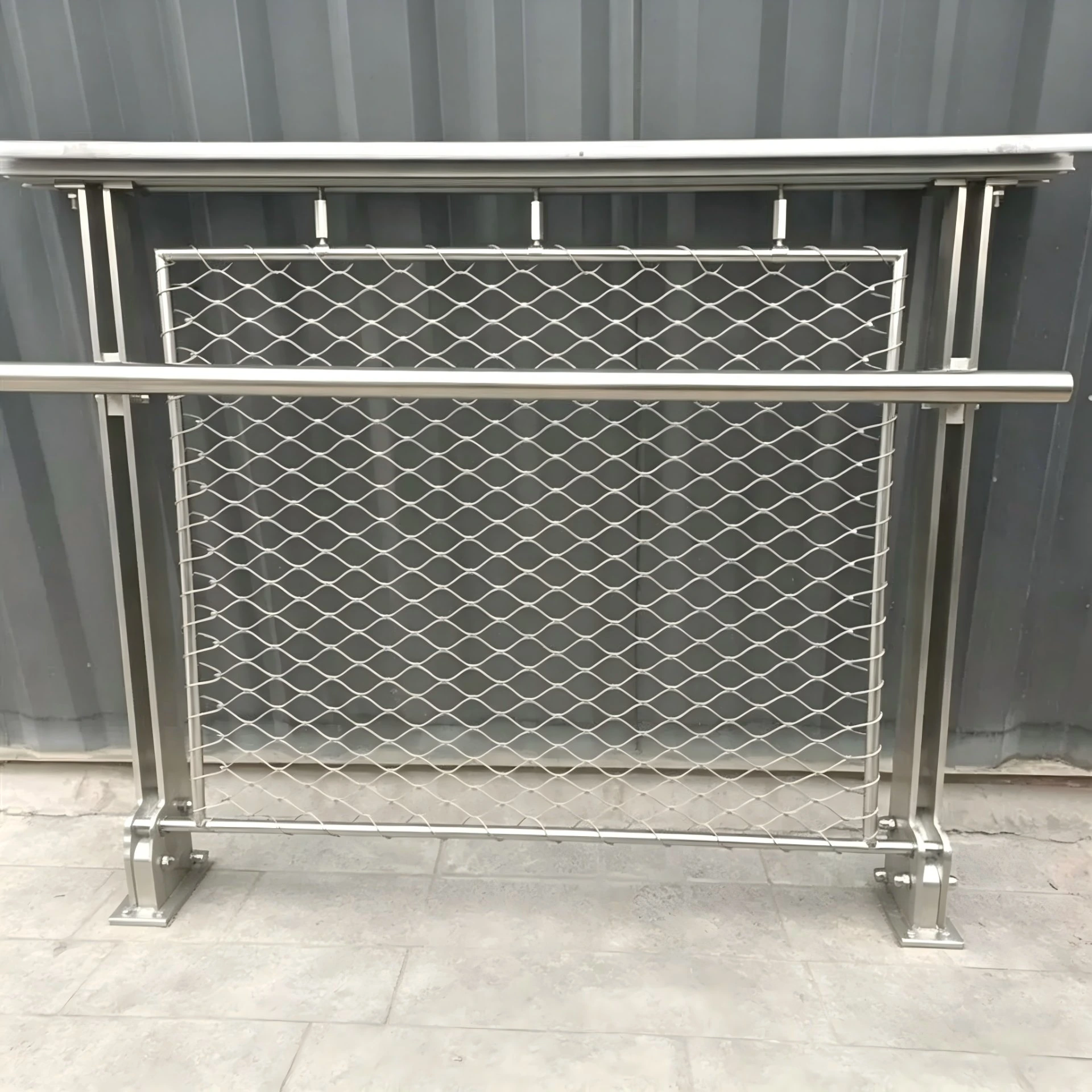
On a drawing for stainless steel cable mesh, put the diameter leader on the exposed rope between two ferrules. A caliper placed over the sleeve measures the connector. Measure the clear opening inside the diamond and show both diagonals at the intended installed angle. Pulling the panel wider changes those diagonals even though the rope stays the same diameter.
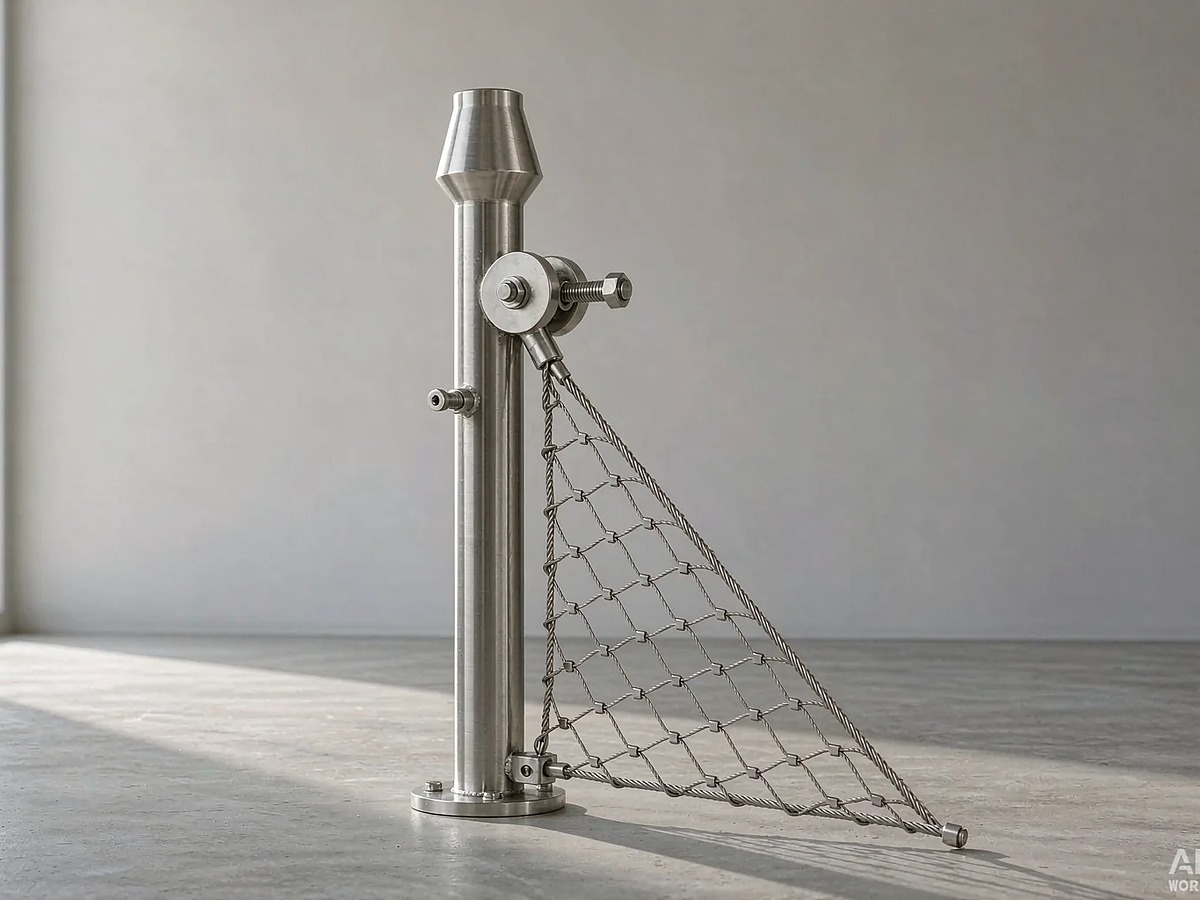
For example, a buyer writes “2 mm, 50 mm diamond” on a sketch. The fabricator still needs to know whether 50 mm runs across the short or long diagonal and whether it is a clear dimension or a center-to-center pitch. Label those points, mark the frame’s clear width and height, then draw the edge detail. If the border uses a separate cable, give it a separate diameter. The frame, anchors and panel tension also matter when an engineer evaluates architectural wire rope systems.
Questions buyers ask about steel rope sizes
Is 6 mm wire rope the same size as 1/4 inch?
A quarter inch is exactly 6.35 mm. Keep the specified unit on the order and check the termination’s approved range before changing sizes. The 0.35 mm difference applies to the nominal diameters, before any manufacturing tolerance.
Which diameter should I quote for coated cable?
Give both the bare metallic diameter and the finished diameter over the coating. A guide hole may need clearance for the jacket, while a terminal may call for a particular bare rope. Include the fitting part number so the supplier can confirm the preparation required.
Can I get the weight of a roll from its diameter?
Use the weight per unit length for the exact construction and core in the supplier’s table. Multiply by the ordered length, keeping feet or meters consistent. Add the reel and packaging separately if the figure is for freight.
Does a larger rope let me use a larger mesh opening?
These dimensions control different features. An enclosure may have a maximum permitted clear opening irrespective of the rope thickness. Set the opening from the containment or guarding brief, then have the panel and its supports checked for the project loads.
What should I send for a rope mesh quotation?
Send XTZ Fence a dimensioned elevation and an edge detail. Mark the cable diameter and construction, stainless grade, installed aperture, frame dimensions and number of panels. For a replacement, include a close photograph of the ferrule and a separate measurement across the bare rope.
Technical sources
- Bekaert — Measuring Rope Diameter
- Bergen Cable — Wire Rope Construction and Sizes
- Union Rope — Wire Rope Weights