A snake-proof fence uses a continuous barrier, small openings and carefully closed edges to reduce snake entry into a defined area. Mesh selection matters, but so do gates, ground contact and nearby vegetation. No single fence specification excludes every snake species in every setting. Start with the local species and the perimeter you can maintain.
What snake-proof fencing can realistically do
A well-designed exclusion fence can reduce access to a yard, animal enclosure or small protected zone. It cannot remove snakes already inside, control the entire surrounding habitat or make an open gate harmless. “Snake-proof” is a common search term, so ask what an actual installation is intended to exclude.
Small snakes and juveniles challenge opening size. Climbing species, uneven ground and adjoining walls create other routes. A fence designed around one region’s rattlesnakes should not be assumed to exclude every snake found elsewhere. University extension guidance treats exclusion alongside habitat management, rather than presenting fencing as a universal guarantee.[1][2]
A smaller, complete enclosure may be more practical than a long property boundary interrupted by vehicle gates, drainage channels and changing terrain. Walk the proposed route first. Mark every place where mesh must meet another material; those details usually need more thought than the straight fence run.
Choose mesh by clear opening and construction
Specify the largest permitted clear opening in both directions, then assess wire diameter and how well the mesh retains that opening. A product described only as “fine mesh” or “heavy gauge” leaves too much unresolved.
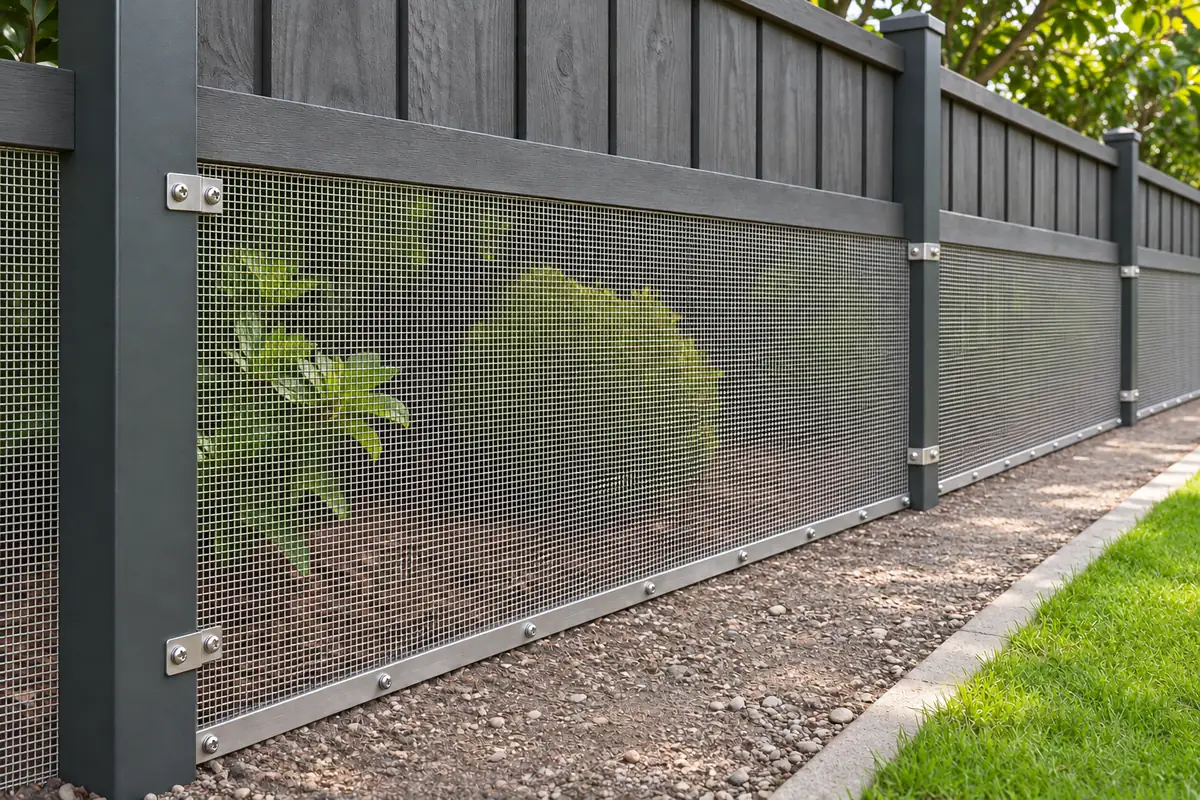
As one regional example, Missouri Extension describes a semipermanent barrier made from 1/4-inch mesh hardware cloth at least 36 inches wide, with the lower 4 inches set into the ground and the fence sloped outward. Its guidance also addresses supporting stakes, gates and vegetation.[1] Treat those dimensions as a published example to discuss with a local specialist, rather than a universal drawing for all species and sites.
A quarter inch converts to 6.35 mm. Do not assume that a catalogue’s “1/4-inch mesh” always means a 6.35 mm clear aperture: suppliers may describe wire centers or mesh count differently. Ask for a dimensional drawing and an agreed maximum aperture, including tolerance.
Before comparing samples, check how the supplier defines wire mesh sizes. A center-spacing description and a clear-opening description can refer to visibly different barriers.
| Mesh or barrier | What to examine | Limitation for snake exclusion |
|---|---|---|
| Small-opening welded wire mesh | Weld consistency, clear aperture, wire diameter and edge support | A broken weld or poorly retained edge can create a larger entry route |
| Rigid or supported woven mesh | Opening stability, crimp and how the cut perimeter is held | Flexible cloth can distort if it is unsupported or poorly fixed |
| Ordinary chain-link or large-opening fence panels | The actual openings through the existing fence | Useful as a supporting boundary, but openings may be too large for the target snakes |
| Loose plastic garden netting | Slack loops and opportunities for entanglement | Can entangle snakes; it should not be substituted casually for a rigid exclusion barrier |
| Solid panels or walls | Joints, ground connection, top edges and surface features | Open joints and adjacent climbing routes still need resolution |
The University of Maryland warns that snakes can become entangled in fencing, particularly deer netting.[3] Exclusion should keep an animal outside, without creating loose loops intended to catch it.
For a regular grid, XTZ Fence’s stainless steel welded wire mesh is a relevant product family to assess against the specified opening. Where an interlaced form is preferred, review stainless steel crimped wire mesh with its support and edge details. Neither product name, by itself, certifies a completed fence as snake-proof.
Compare stainless and galvanized snake fence mesh
Choose corrosion protection for the location and expected maintenance. Ground-level mesh may face wet soil, irrigation, fertilizer deposits and damage from gardening tools, even when the upper fence looks dry.
Galvanized steel uses a zinc coating to protect the base steel. Examine coating continuity and damage at cuts, fixings and contact points. Stainless steel relies on its alloy and surface condition for corrosion resistance. It can be useful where coating damage or appearance is a concern, but it can still stain or corrode in an unsuitable exposure.
Grade 304 and grade 316 should be compared against the actual moisture and chloride conditions. Do not choose from the grade number alone: soil contact, water retention, finish and compatible fasteners also matter. Ask the supplier to confirm the alloy in writing and identify any special requirements at buried or frequently wetted sections.
A thin wire with a small opening and a heavier wire with the same opening are different products. The heavier option may be harder to form around irregular ground, while a lighter option may need more support. Specify both dimensions and the supporting arrangement. A low initial mesh price can be outweighed by difficult gate work or repeated repairs.
Gates and transitions often decide whether the barrier works
A continuous fence ends at every gate unless the gate detail continues it. Check the threshold, hinge side, latch side and corners with the gate closed and throughout its travel.
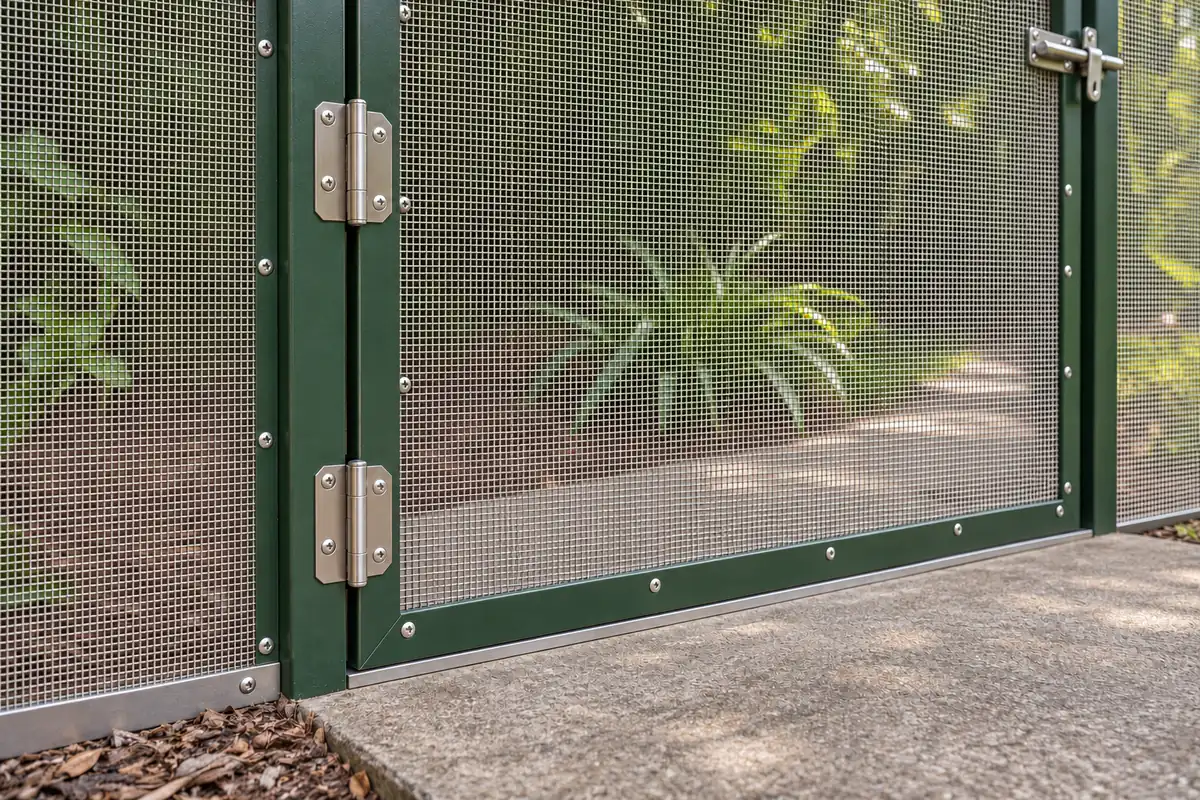
A gate may fit closely on installation day and later sag, lift in wind or lose its intended clearance as the ground erodes. Use a stable threshold and a closing arrangement suited to the gate’s size and traffic. Agree the acceptable gaps with the person designing the exclusion barrier. A flexible brush strip alone should not be assumed to close a wildlife-exclusion gap.
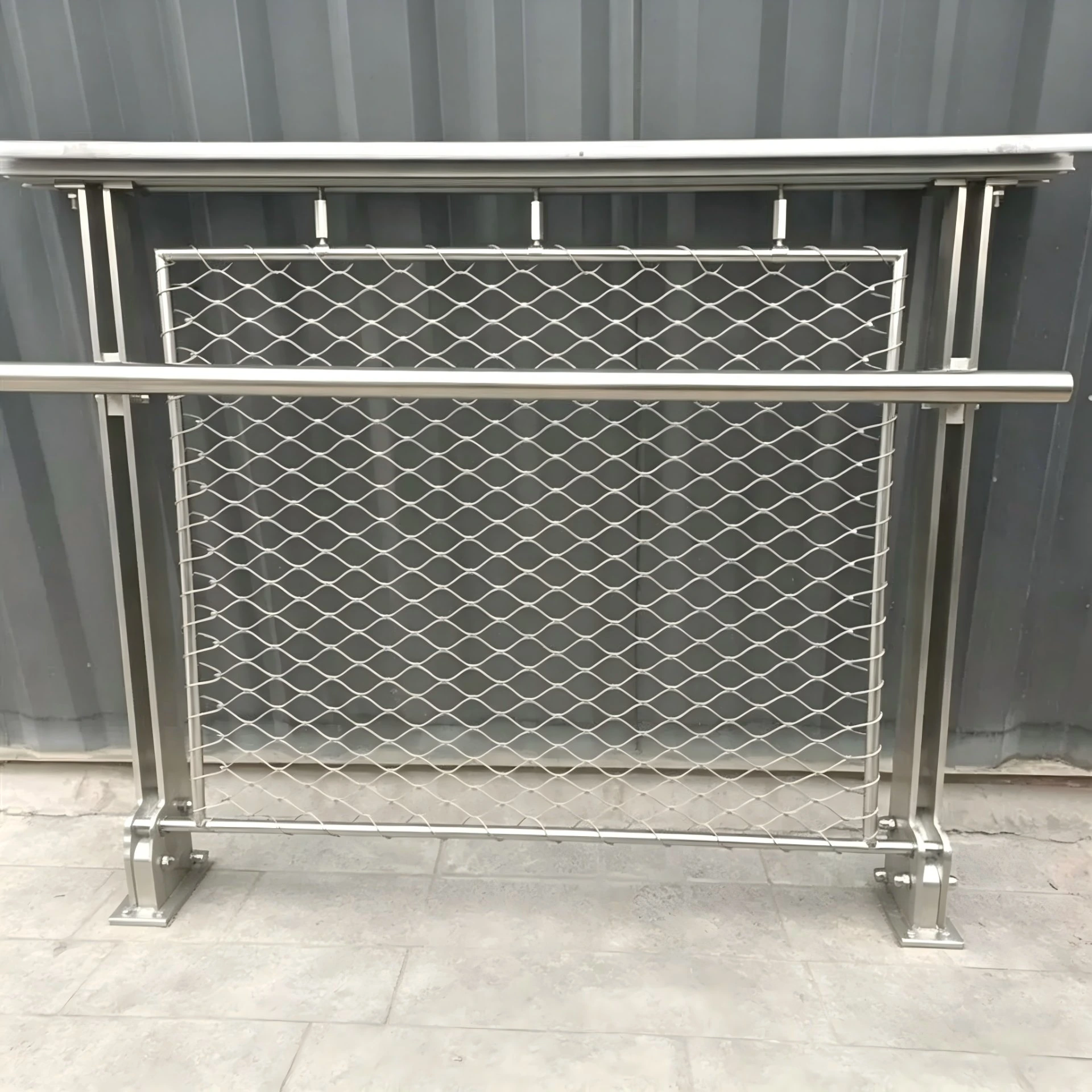
Where snake mesh is being attached to a stainless steel welded wire mesh fence, confirm that the existing posts, rails and fixings can support the added layer. A security fence and a snake-exclusion layer have different opening requirements.
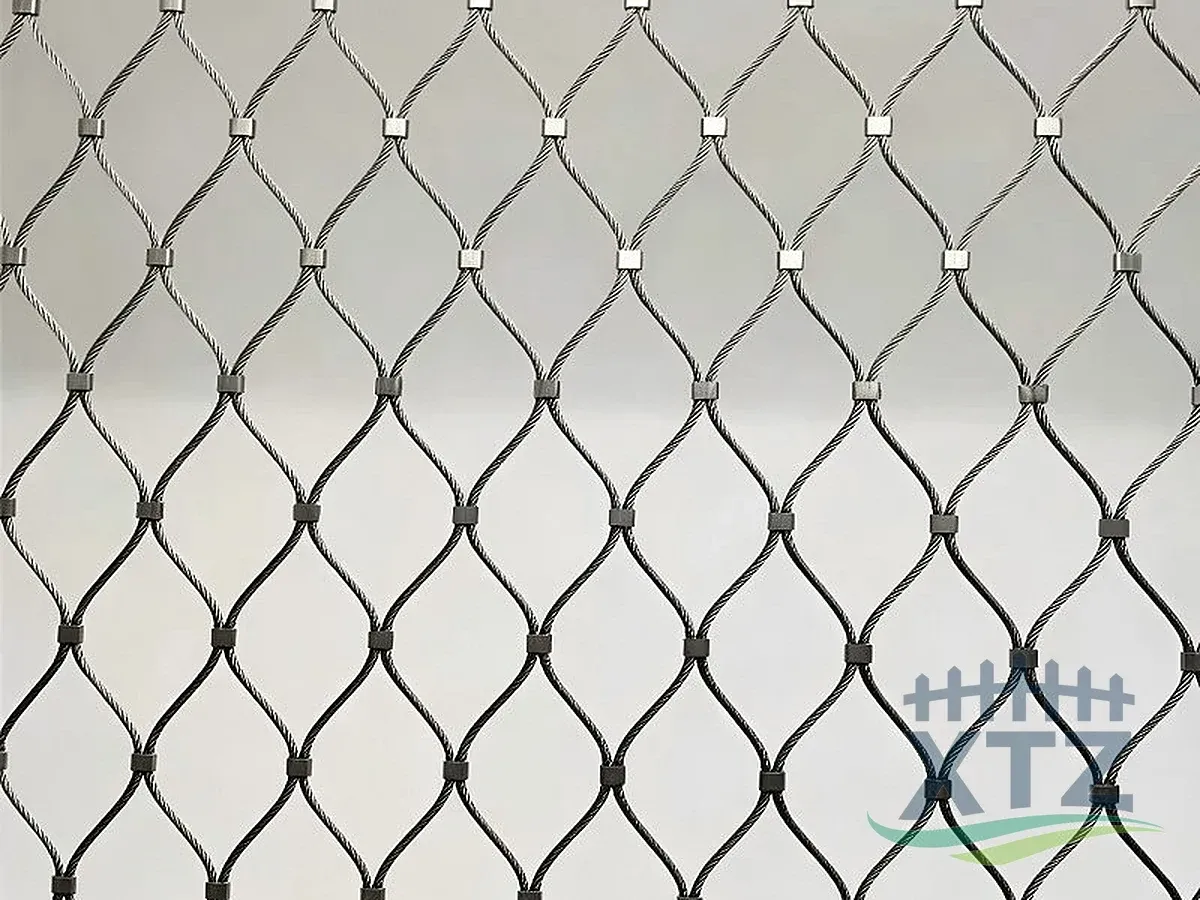
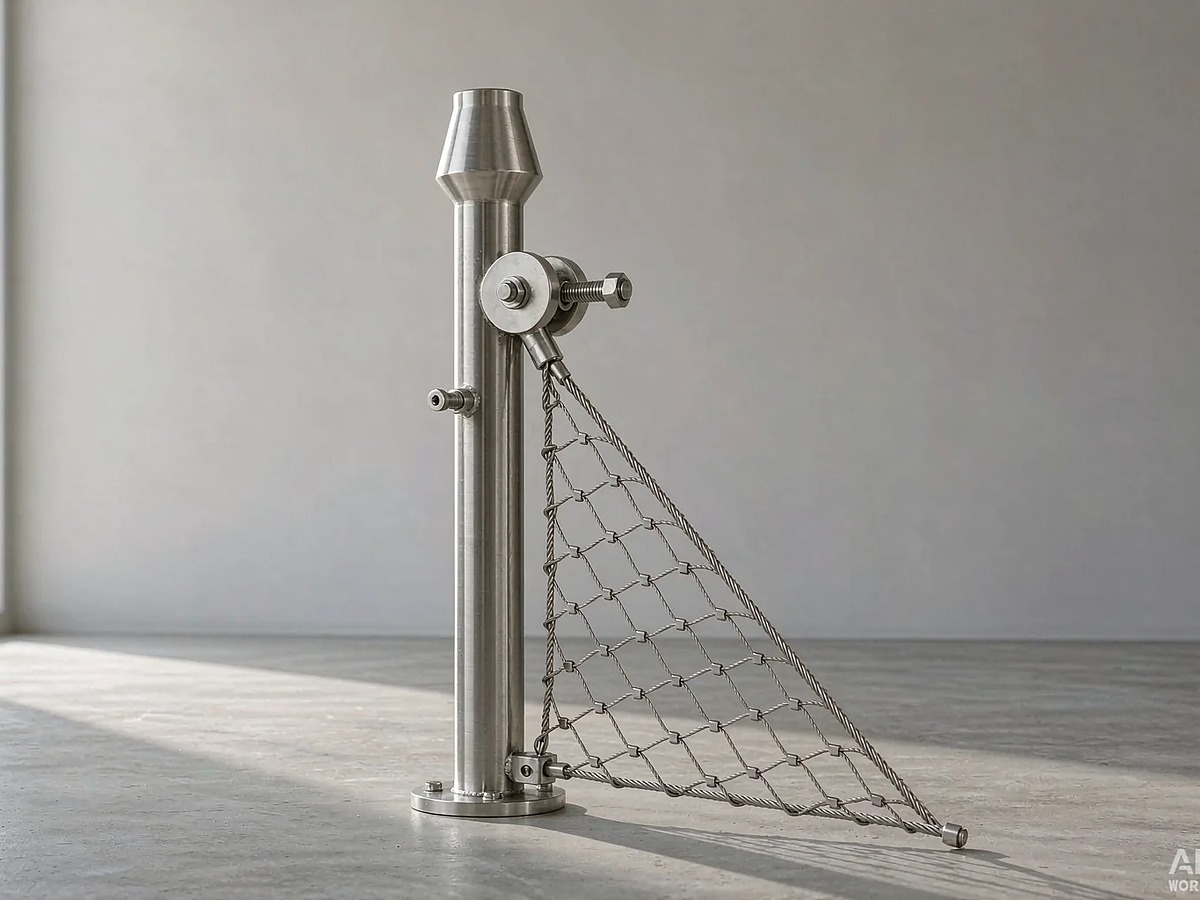
The same junction review applies when the main boundary is a stainless steel rope mesh fence. Its frame and posts may need to accommodate a separately designed fine-mesh layer. Check the actual diamond openings of the stainless steel cable mesh infill; an architectural or animal-enclosure specification does not establish snake exclusion.
Carry the detail around retaining walls, steps, fence ends and utility penetrations. Do not stop the mesh a few inches short because a pipe or post is awkward to work around. Where a drain crosses the line, coordinate a solution that preserves the required water flow and remains accessible for debris removal.
For a less conspicuous boundary, align the exclusion mesh with the existing fence and choose a compatible finish. An attractive snake-proof fence still needs its lower edge and side joints resolved; hiding the mesh behind planting can make inspection harder and introduce climbing routes.
Plan the installation around the whole perimeter
Resolve the route and junctions before cutting material. This avoids using a neat straight-run detail where a slope, gate or watercourse needs a different approach.
- Identify the species of concern with a local wildlife or extension specialist. Record the purpose and limits of the protected area.
- Survey the route, including slopes, rock, irrigation, drainage and existing structures. Locate underground services before excavation.
- Agree the mesh aperture, wire diameter, exposed height and ground detail for the site. Include support spacing, overlaps and fasteners in the drawing.
- Install the supporting structure and ground connection. Keep the barrier continuous through changes in level and material.
- Complete gates, ends and penetrations before treating the enclosure as ready for use. Protect cut edges from contact with people and animals.
- Inspect the finished perimeter and arrange ongoing checks. Have any snake already inside assessed by an appropriate local wildlife professional.
A DIY snake-proof fence may be manageable on a short, uncomplicated route. A long boundary with vehicle access, steep ground or frequent snake activity is a stronger reason to involve an experienced exclusion installer. The difficult work is often the fit around the site, rather than cutting the mesh.
Inspect ground contact and the surrounding landscape
Soil movement can create a route beneath otherwise sound fencing. Check after heavy rain, irrigation work, landscaping or animal digging, paying attention to steps and changes in grade.
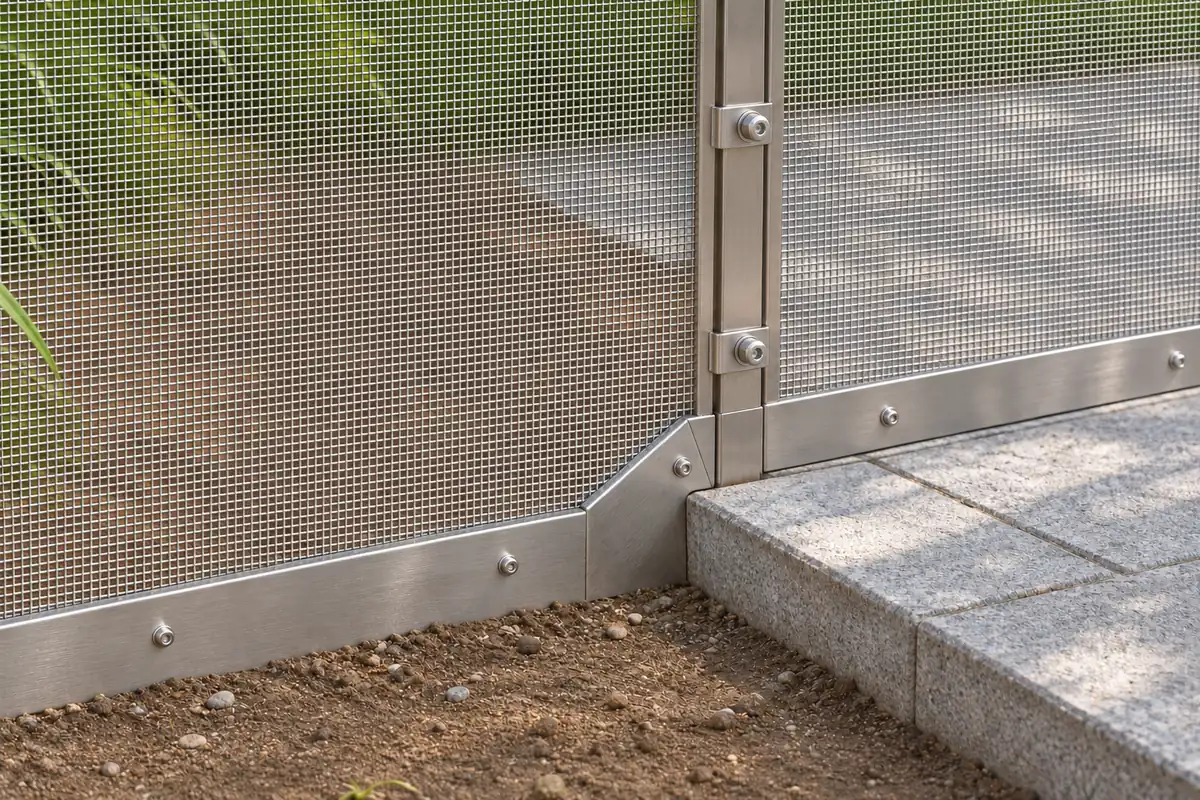
Keep branches, stacked objects and dense vegetation from bridging the barrier. Reduce nearby shelter such as loose boards and unmanaged debris, and address food sources that attract rodents. UF/IFAS includes these habitat measures in its advice on reducing encounters around homes.[2]
Inspect the perimeter from both sides where access allows. Look for loosened attachments, distorted mesh, damaged coatings, corroded wires and debris at drainage points. Test each gate instead of checking only the mesh panels.
For an XTZ Fence enquiry, send the required clear opening and tolerance, wire diameter, alloy, fence height, roll or panel dimensions and a drawing of the gate and ground junctions. Describe the site’s exposure and identify the intended species. The mesh quotation can then be reviewed alongside the exclusion design.
Snake-proof fence questions
Does snake-proof fencing work?
It can reduce entry when the design suits the local snakes and the barrier remains continuous. Its performance depends on mesh openings, gates, ground contact, height and nearby climbing routes. A fence cannot guarantee that no snake will enter, especially if gates are left open or damage goes unnoticed. Combine exclusion with inspection and habitat management.
Is 1/4-inch mesh small enough to keep snakes out?
Quarter-inch hardware cloth appears in extension guidance for certain exclusion designs, but it is not a universal answer for every species or juvenile snake. Verify the actual clear aperture and tolerance, then discuss suitability with a local specialist. The maximum gaps at gates and joints matter as much as the openings in the middle of a mesh panel.
Can I add snake mesh to an existing chain-link fence?
An existing fence may support an additional exclusion layer if its structure and fixing arrangement are suitable. The new layer still needs a continuous ground connection, secure overlaps and complete gate details. Check the existing fence for movement and corrosion first. Simply tying mesh along the visible straight sections leaves the main transition gaps unresolved.
How deep should a snake fence be buried?
Published designs differ, and the appropriate ground detail depends on the local species, soil and site. Missouri Extension’s example sets the lower 4 inches of its specified hardware cloth into the ground.[1] That figure should not be transferred automatically to rocky ground, drainage crossings or erosion-prone slopes. Have those locations detailed before digging or ordering material.
What makes a snake fence fail?
Common weaknesses include oversized openings, loose joins, gate-bottom gaps, erosion beneath the barrier and vegetation or objects that bridge it. Damage to a small section can defeat a much longer sound run. Review the entire perimeter after a sighting instead of assuming that a thicker wire or a taller panel will solve the problem.
What should I do if a snake is already inside the fenced area?
Keep people and pets away and contact an appropriate local wildlife professional if identification or removal is needed. Do not approach or handle an unidentified snake. Once the immediate situation has been addressed, inspect gates, drains, joints and ground contact to find possible entry routes. Closing one visible gap does not establish that the rest of the perimeter is sound.
Technical sources
- Missouri Extension: Snakes, Information for Missouri Homeowners (regional fence example and habitat management).
- UF/IFAS: Dealing with Snakes in Florida’s Residential Areas, Preventing Encounters (exclusion and encounter prevention).
- University of Maryland Extension: Snakes (habitat and netting entanglement).