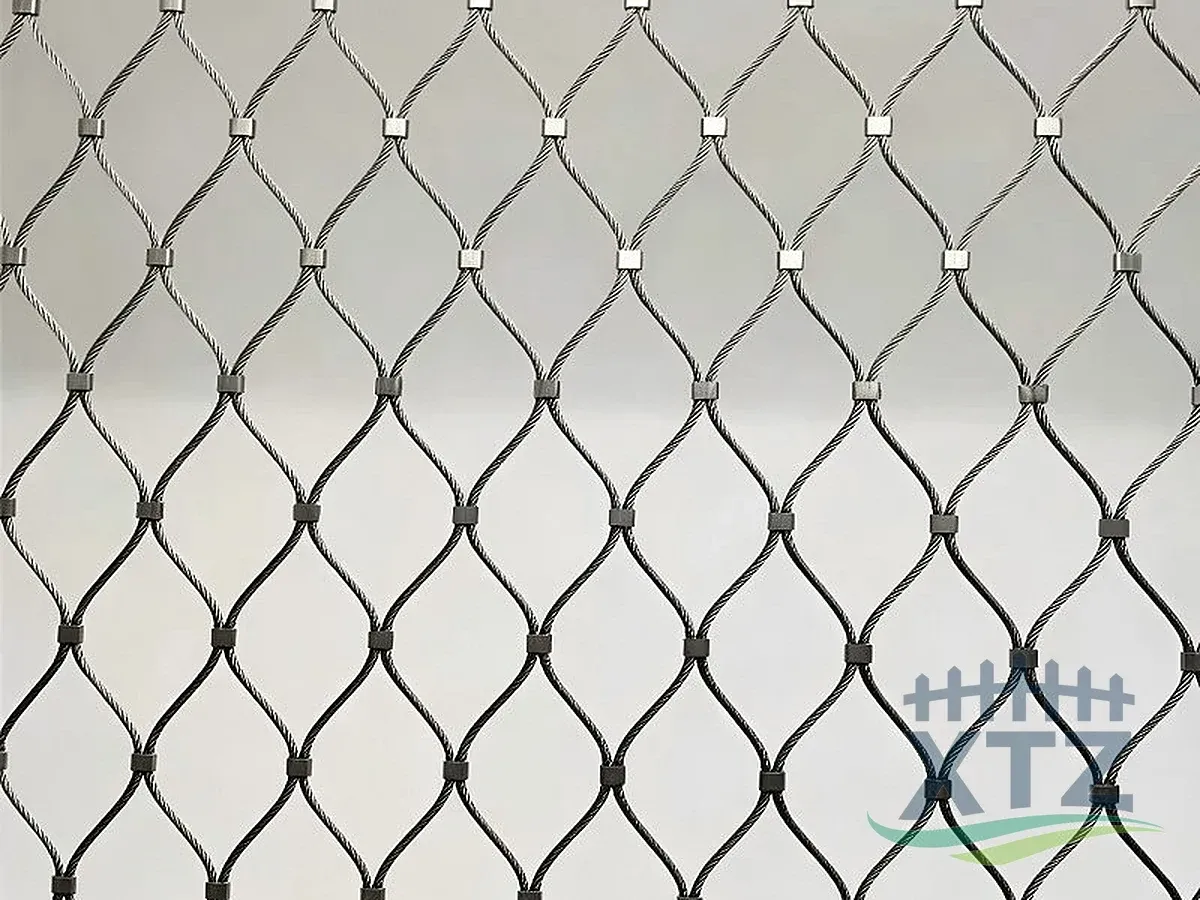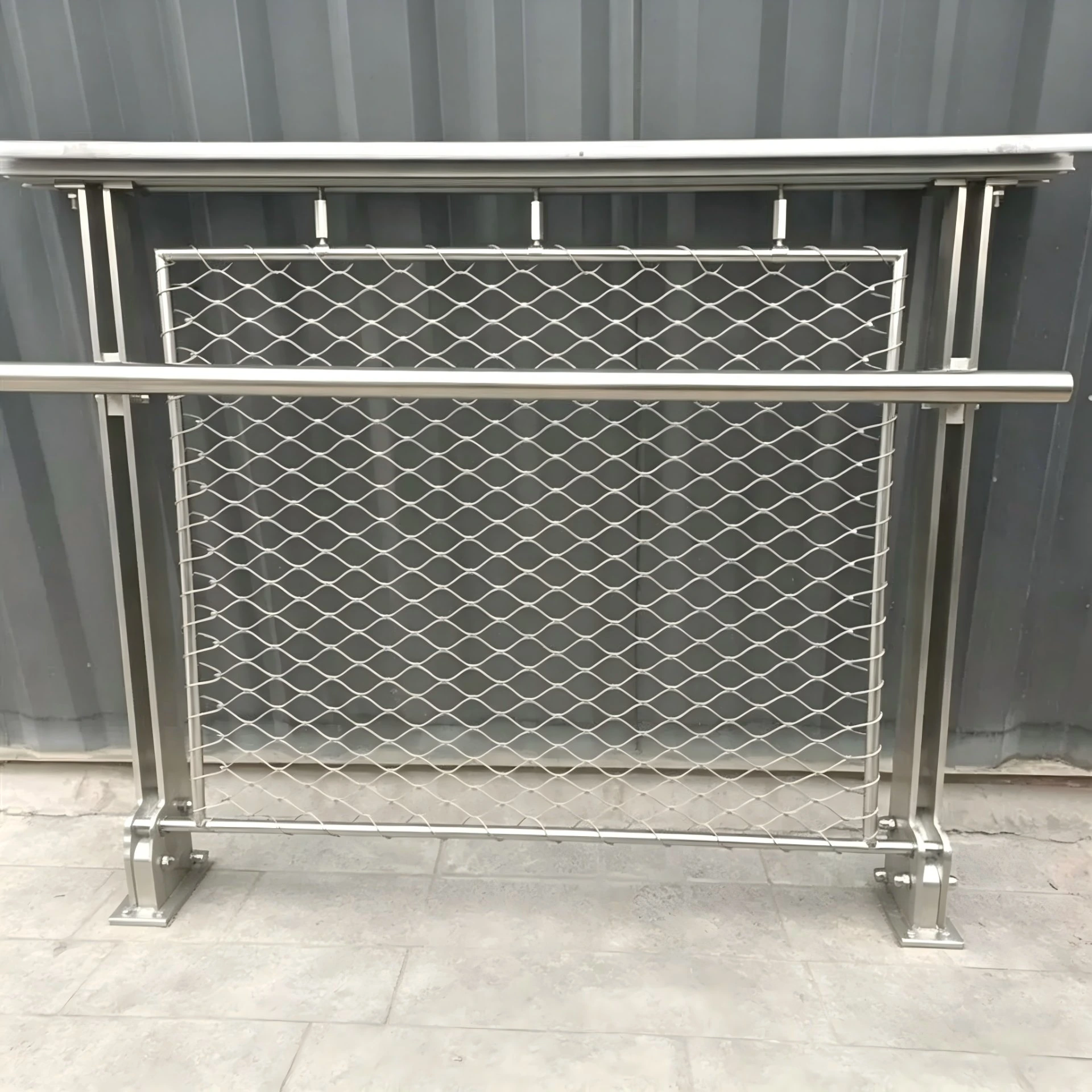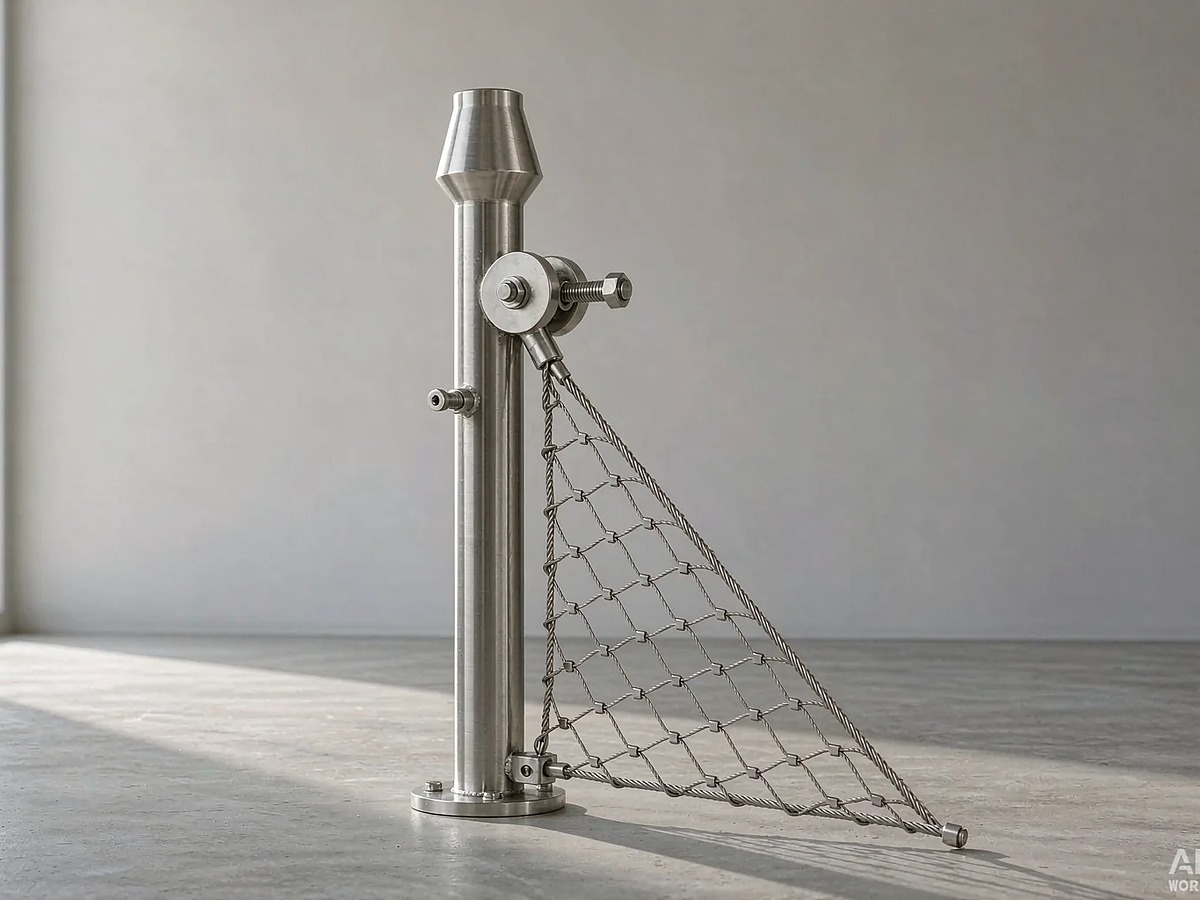
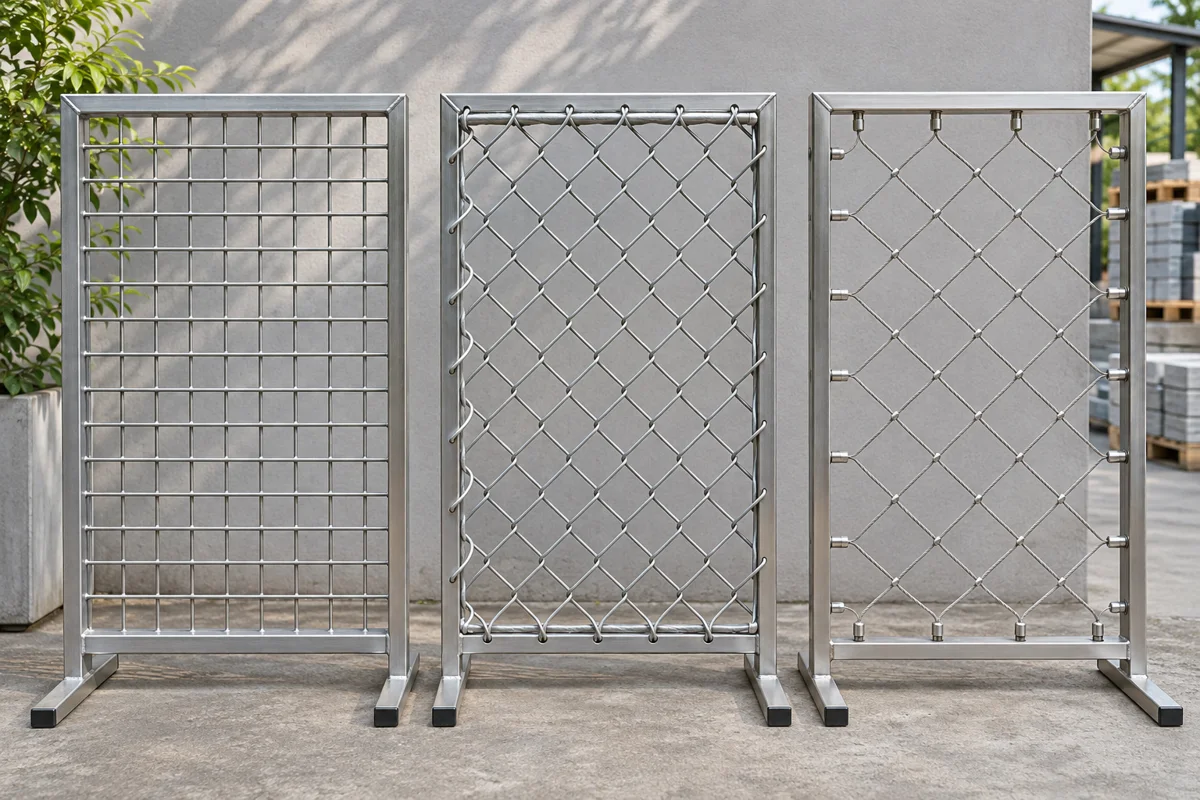
A wire mesh fence combines metal mesh with posts, connections and gates to enclose or divide a site. Welded panels suit rigid layouts, chain link suits continuous fence runs, and cable mesh can form transparent framed or tensioned infill. Choose the construction around the boundary’s purpose, ground conditions, exposure and required performance.
Which wire mesh fence type fits your site?
Start by writing down what the boundary must contain or exclude. A garden edge, a commercial perimeter and an elevated walkway need different evidence and detailing. Include who will use the gate, whether vehicles could approach the fence, and whether the mesh has a protective role at a drop.
| Fence construction | A useful starting application | Detail to resolve before ordering |
|---|---|---|
| Welded wire mesh | A rigid grid for a commercial boundary or equipment enclosure | Panel dimensions, weld requirements, edges, clamps and post layout |
| Chain link | A continuous mesh run around a site | Diamond opening, wire diameter, terminal posts, tensioning and gate connections |
| Cable or rope mesh | Open-view infill, shaped boundaries and animal enclosures | Cable construction, mesh geometry, edge restraint and supporting system |
| Woven or crimped architectural mesh | A framed enclosure where pattern and visibility are part of the brief | Mesh orientation, rigidity, perimeter support and finished appearance |
| Expanded metal | A sheet-based screen or enclosure with diamond openings | Raised or flattened form, sheet direction, edges and frame support |
XTZ Fence lists stainless steel mesh fencing as rigid panels with posts, clips and base plates. Its stainless steel chain link fence range includes rolls or panels with associated fence components. These are two supply routes to compare once the boundary and access points are marked on the plan.
Rigid welded panels or flexible mesh?
Welded intersections hold a defined grid. A rigid panel is convenient when the design calls for repeatable modules, but a change in level still needs a planned detail. Chain link and cable mesh use different connections and installation methods. Confirm how the proposed system handles the actual slope and corners before comparing price per metre.
A request for stainless steel cable mesh should show the panel boundary and edge arrangement. A rectangular frame, a cable-supported field and a shaped enclosure place different requirements on the same mesh construction.
Fence panels versus rolls: compare the installed layout
Panels give the installer defined modules. Rolls supply a longer length of mesh that must be attached and, for the relevant system, tensioned on site. Either form can need substantial supporting work. The drawing should identify who supplies the posts, clamps, rails, tensioning components and cut-edge treatment.
| Question | Panel supply | Roll supply |
|---|---|---|
| How is the run divided? | By scheduled panel widths and post locations | By roll lengths, terminations and any planned joins |
| What happens at a change of level? | Stepped, raked or custom panels as the system permits | A defined ground-following, cutting or termination detail |
| What work happens on site? | Handling modules, setting posts and fixing panels | Unrolling, cutting, joining and attaching the specified mesh |
| How is a damaged area replaced? | Access to remove a module and its fixings | An agreed repair or replacement length and termination method |
Ask suppliers to mark their proposed divisions on your layout. A low mesh price may be accompanied by more site cutting or additional supports. A panel quotation may include factory edge finishing that another quote leaves for the installer.
Wire mesh fence specifications that belong on the drawing
State the opening and wire diameter separately, with units. For a rectangular grid, give both opening directions. For a diamond mesh, identify the measurement convention and installed condition. A dimension taken on the diagonal can describe something very different from the clear gap a person or animal encounters.
Include finished height, bottom clearance, panel or roll dimensions, and the top-edge treatment. At a gate, show the clear passage and swing direction along with hinge and latch positions. If a required security performance or test applies, identify it in the specification so the proposed assembly can be checked against it.
Coated welded fabric has its own product specifications. For example, the public scope of ASTM F2453/F2453M addresses particular welded fence fabrics in panels or rolls. The applicable material, coating, mesh and testing requirements need to match the product being purchased. [1]
Keep a separate schedule for appearance requirements. A sample can establish the visible grid, finish and edge detail, while the material records and agreed tests establish other acceptance items.
Posts, corners and gates determine how the fence works
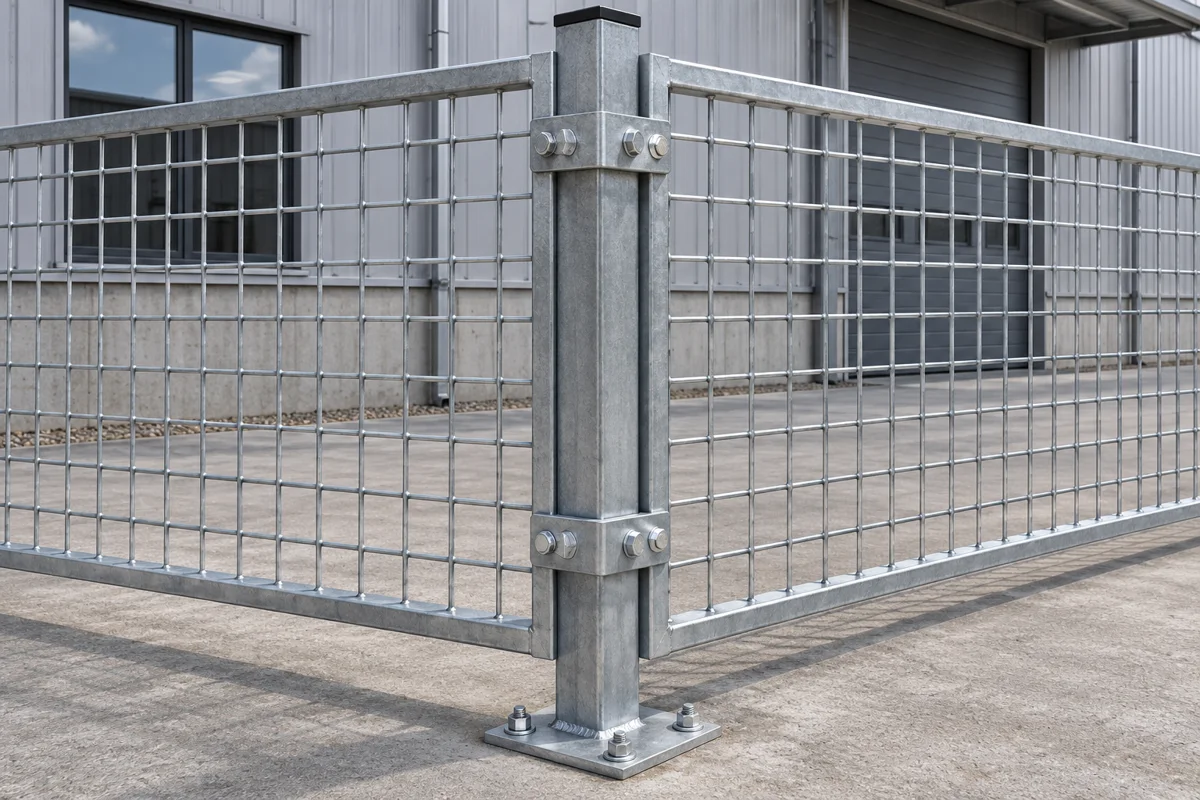
A stainless steel fence post needs to be selected with its height, panel spans, attachments and foundation. Start and end posts, corner posts and gate posts can have different duties. Identify them individually on the plan instead of assigning every location the same component by default.
For chain-link systems, CLFMI provides specifications, drawings and inspection resources covering fabric and framework. Those documents help organize a chain-link scope, including the relationship between the mesh and the rest of the fence. [2]
Bring the following site information into the layout review.
- Changes in direction and level, with the required ground clearance at each transition.
- Gate openings, operating space and any access-control equipment.
- The supporting ground or concrete structure, including known restrictions on fixing locations.
- Exposure to wind and any later addition of planting, signs, privacy fabric or slats.
A screen attached later can change wind exposure and the forces transferred to posts and foundations. Have the complete proposed arrangement reviewed before adding it. For a fall-protection edge, the opening, load and anchorage requirements also need project-specific review. The guide to balustrade infill mesh covers the information to define for that type of boundary.
Choosing fence material for outdoor exposure
Evaluate the mesh, post and fittings together. A stainless mesh fixed to a different metal post can create a materials interface that needs attention. A coated fence also needs a defined process and coating requirement, particularly at welds, cuts and connections.
For stainless systems, tell the supplier about coastal salts, industrial exposure, irrigation and cleaning chemicals. Include sheltered areas where deposits can accumulate. Grade and finish selection should reflect those conditions along with the intended maintenance access.
Where the design needs a more screen-like infill, an expanded metal mesh panel is another format to review. Approve its direction and visible surface in a sample, then confirm its edge treatment and frame. Treat changes to infill as changes to the assembly scope.
How to measure a fence run before requesting quotes
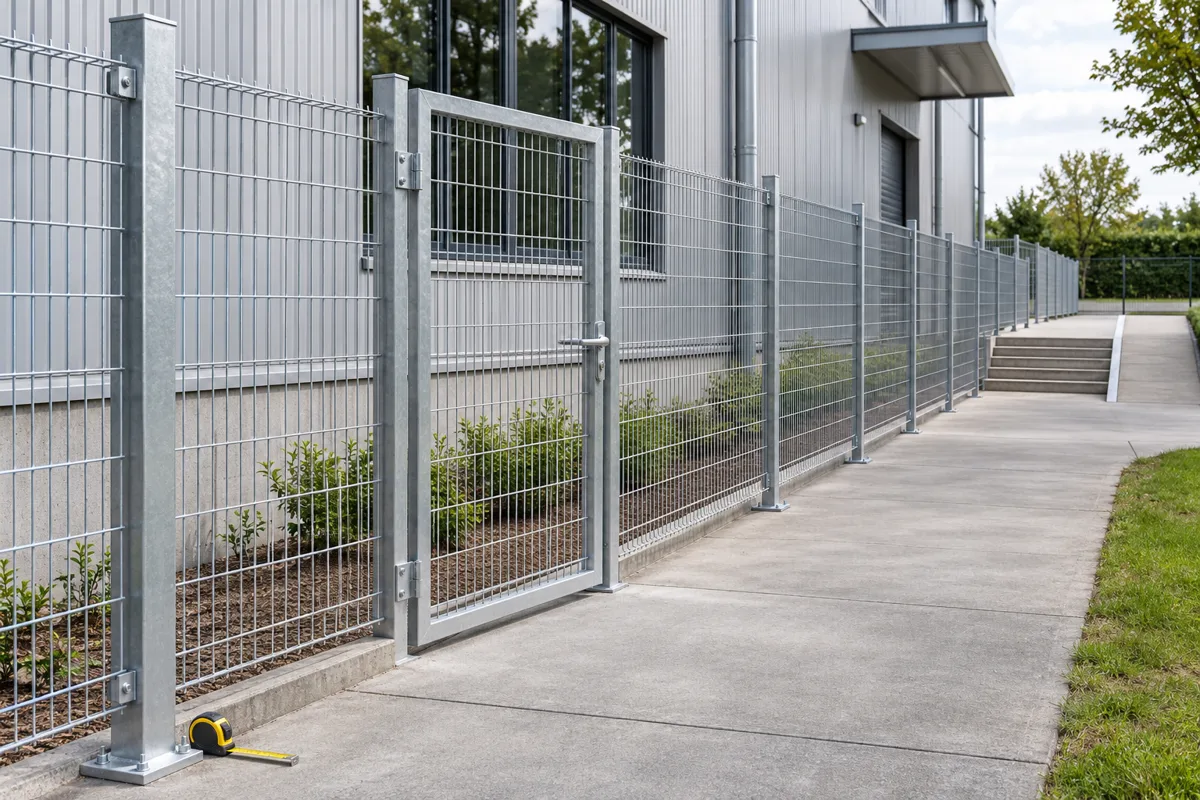
Prepare a plan showing each straight run between corners or terminations. Mark gates separately and note whether each length is a plan measurement or a distance measured along sloping ground. Add a simple elevation wherever the level changes.
Consider a hypothetical 24 m straight boundary containing one 4 m gate opening. The remaining nominal fence coverage is 20 m. That figure still needs to be divided into panel bays or roll lengths around posts, connection allowances and the gate detail. Send the full 24 m layout and the 4 m opening so the supplier can return a coordinated schedule.
Photographs help explain the site, especially at corners and proposed fixing points. Include a known dimension in the survey information. Confirm the boundary and underground-service constraints before installation planning proceeds.
Compare wire mesh fence quotes on the same scope
Request a component schedule alongside the price. The quantity and division of the mesh should agree with the proposed layout, with any excluded work identified in the quotation.
| Quote item | Check across suppliers |
|---|---|
| Mesh | Construction, grade or coating, dimensions, openings and wire or cable diameter |
| Framework | Line, terminal and gate posts, rails, frames, base plates and bracing where specified |
| Connections | Clamps, clips, ties, fasteners, tensioning parts and material compatibility |
| Site work | Survey, foundations, anchors, cutting, finishing, installation and disposal |
| Handover | Material records, required tests, as-built layout and maintenance information |
For an XTZ Fence quotation, send the run lengths, desired height, gate layout and site photographs. Add the required mesh construction, exposure and performance criteria, then ask for the proposed supply schedule against that layout.
Wire mesh fence questions
Is welded mesh better than chain link?
A rigid grid and a continuous interwoven mesh solve different layout problems. Compare the actual panel or roll system, its supports, access requirements and exposure. For a protective enclosure, ask how the complete proposed system meets the specified performance. An appearance comparison alone leaves those questions open.
How far apart should wire mesh fence posts be?
Use the spacing specified for the selected system and project conditions. Height, mesh format, wind exposure, gate positions and foundation design all affect the layout. Ask the supplier to return post locations on the plan and identify the posts that have different terminal or gate duties.
Can a mesh fence follow sloping ground?
Some systems can be raked or follow a slope, while others use stepped panels or custom geometry. Submit a dimensioned elevation and confirm the resulting bottom gaps. Those gaps may affect the fence’s purpose, particularly where animal containment or access restriction is part of the brief.
Can wire mesh fencing be used around a swimming pool?
Check the complete proposed barrier and gates against the rules applicable at the site. CPSC guidance for residential pools addresses barriers and access as a coordinated safety measure. Provide the relevant requirements to the supplier and approval authority before choosing a mesh pattern. [3]
What makes a mesh fence anti-climb?
Opening geometry, footholds, edges, posts, gates and nearby objects all influence climbability. If the project specifies a security classification or test, request evidence for the proposed assembly. Describe the threat and access conditions in the brief so suppliers can offer a system with a defined performance scope.
Should I buy fence mesh by the square metre or the complete run?
Mesh area is useful for comparing material quantities. A complete-run quotation also captures post locations, gates, corners and hardware. Supply the layout and ask for both the mesh quantity and component schedule. That makes it easier to identify extra installation work and compare the final scope.