
Rabbit cage wire should be selected for the enclosure zone, rabbit size, local predators and cleaning routine. Welded mesh can form walls, doors and protected runs, but a wire specification alone does not make an enclosure safe. For pet rabbits, use a comfortable, solid, non-slip floor rather than exposed wire underfoot.
Separate the purchasing decisions for mesh panels from the decisions about housing space and welfare. This guide compares common mesh dimensions and finishes, explains what to put on a fabrication drawing, and identifies details that need confirmation before an enclosure is put into use.
Rabbit Cage Wire: Floor, Wall and Opening Selection
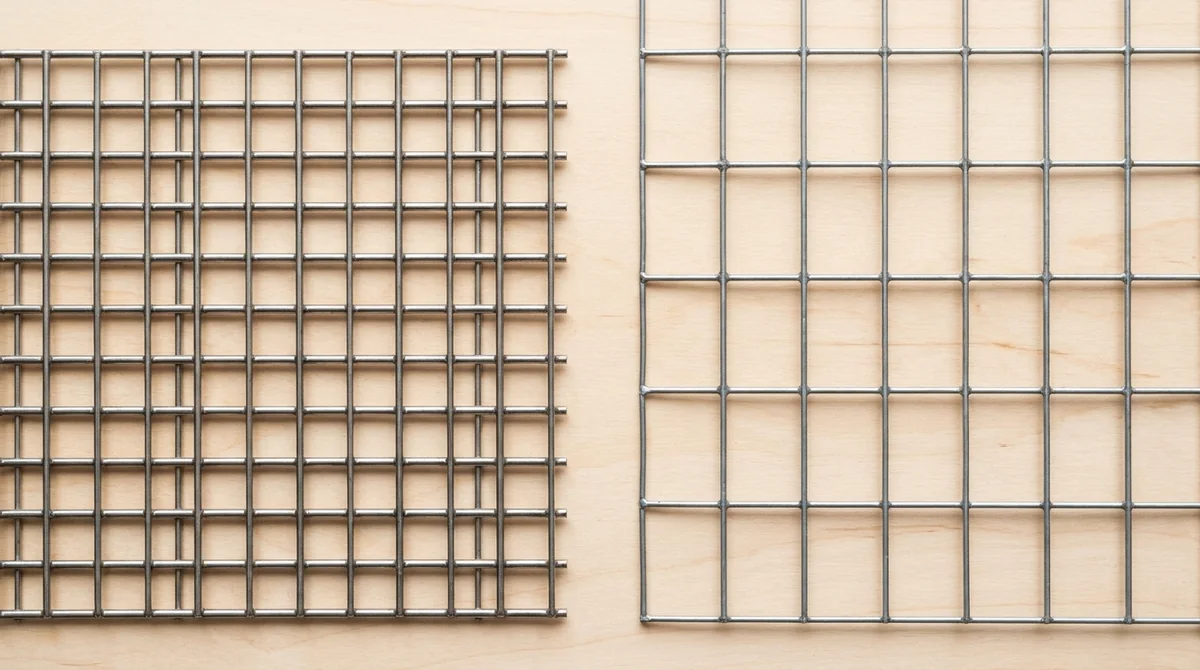
The RSPCA rabbit housing guidance advises against wire floors because they can injure rabbits’ feet. Specify solid, non-slip flooring and suitable bedding for pet housing. A small resting mat does not establish that an otherwise exposed wire floor is appropriate.
| Enclosure zone | What to specify | What to verify |
|---|---|---|
| Main floor | Solid, non-slip surface with suitable bedding and a cleaning plan | Comfort, drainage, cleanliness and absence of exposed sharp edges |
| Walls and doors | Welded panel openings and actual wire diameter in millimeters | Head, limb and escape risks for the smallest rabbit; predator reach-through |
| Lower wall or breeding enclosure | Smaller openings where young rabbits may reach the mesh | Age, body size, nest arrangement and gaps at panel junctions |
| Outdoor roof and perimeter | Secure roof, frame, fixings and a digging-resistant perimeter detail | Local predator species, wind loading, latches and access for inspection |
Are 1/2 × 1 inch or 1 × 2 inch openings suitable?
These nominal dimensions appear in commercial cage-mesh catalogues, but they are not universal welfare or predator-exclusion standards. Confirm whether the supplier means clear aperture or wire center spacing. An opening suitable for an adult rabbit may be unsuitable for a kit, and a predator may reach through a panel without passing through it.
Specify the measured wire diameter as well as any gauge designation. Gauge systems differ, so a bare “14 gauge” or “16 gauge” label is not a complete dimensional requirement. Frame spacing, weld quality and attachment strength also affect the panel’s resistance to deformation.
Why poultry netting is not a complete security specification
Light twisted poultry netting should not be assumed to resist local predators. Compare wire diameter, joint construction and the complete installation. Cover exposed cut edges with an appropriate smooth frame or trim, and inspect door corners, hinges and latches as carefully as the mesh itself.
GBW, GAW and Stainless Steel Rabbit Cage Wire
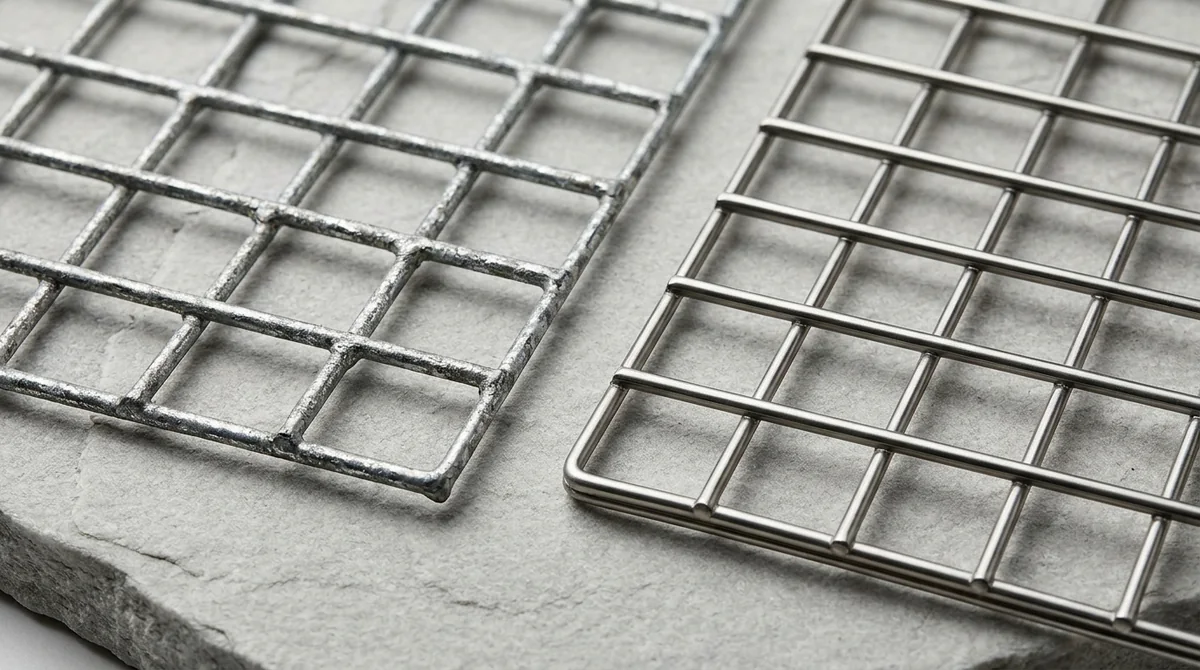
| Material | Construction | Purchasing checks |
|---|---|---|
| Galvanized before welding (GBW) | Wire is zinc coated before joints are welded | Welding can damage local zinc protection; inspect weld coverage and intended exposure |
| Galvanized after welding (GAW) | Zinc is applied to the assembled mesh | Verify coating coverage, smoothness, excess zinc and suitability for animal contact |
| 304 stainless steel | Corrosion-resistant alloy without a zinc jacket | Confirm grade, surface finish, weld quality and cleaning compatibility |
| 316 stainless steel | Stainless grade with improved chloride-pitting resistance compared with 304 | Assess the actual exposure; it remains vulnerable to some chemicals and deposits |
Stainless steel removes the need for a zinc coating, but does not automatically eliminate burrs, sharp welds or injury risks. Inspect a finished sample and specify deburring and edge protection. Compare lifecycle cost using the expected cleaning and maintenance regime, rather than an unsupported replacement interval.
Cleaning chemicals need their own compatibility check
Neither 304 nor 316 is immune to bleach. The British Stainless Steel Association guidance on sodium hypochlorite explains that it can cause pitting. Follow the disinfectant label and the equipment supplier’s compatible cleaning procedure, including concentration, contact time, temperature and rinsing. Remove animals before cleaning and return them only when the enclosure is ready for use.
Designing Modular Rabbit Enclosure Panels
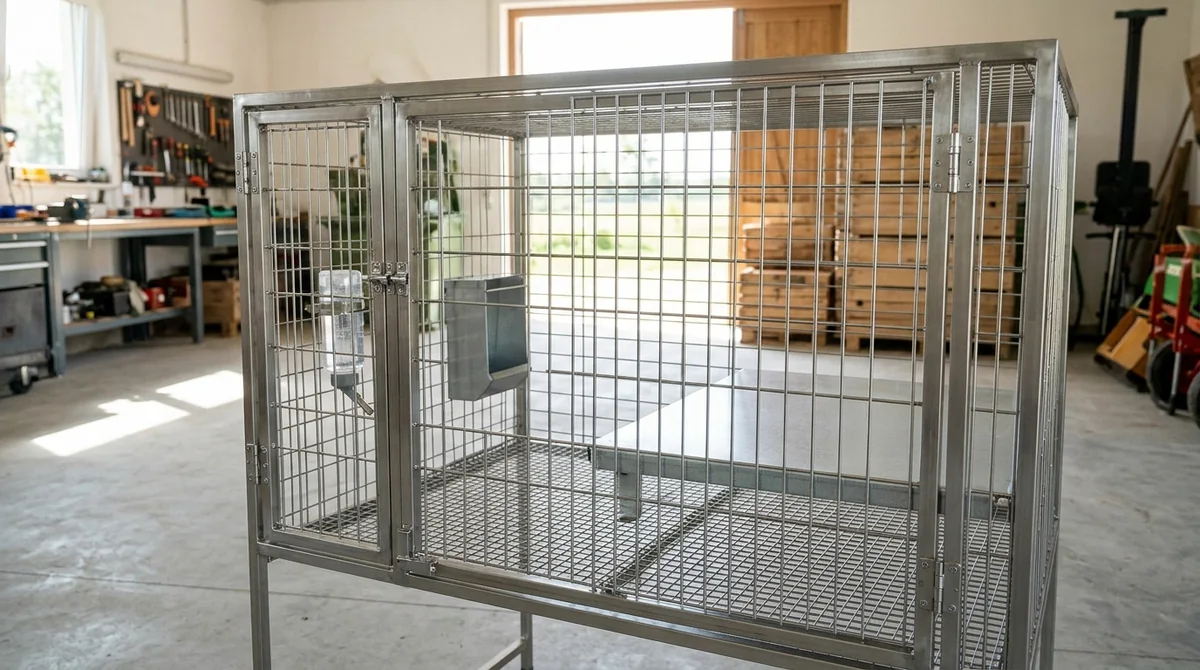
Custom stainless steel welded mesh panels can simplify wall and door fabrication. Confirm that the product’s available openings and wire diameters meet the enclosure drawing; a fencing panel is not automatically suitable for rabbit housing.
- Panel edges: use smooth, protected edges without protruding wire tails.
- Frames and fasteners: check panel retention and inaccessible sharp fixings. Assess galvanic isolation if joining stainless mesh to aluminum frames in wet conditions.
- Access: design doors that permit daily care and cleaning without leaving escape gaps.
- Outdoor detailing: provide shelter, secure roof and digging resistance appropriate to the site. Check the perimeter after damage or soil movement.
Rabbit Cage Wire RFQ Checklist
Send a drawing that separates wall, door, roof and floor components. For the mesh, list alloy, clear openings in both directions, wire diameter in millimeters, panel size, quantity, weld requirements, edge treatment and fixing details. Add the cleaning chemicals and exposure conditions. Identify the smallest rabbits and the predators the enclosure must address.
For material options, review XTZ’s stainless steel wire mesh range and send the panel schedule through the project inquiry page. Confirm fabrication suitability separately from the animal-housing assessment.
Frequently Asked Questions
What is the best wire for a rabbit cage floor?
For pet rabbits, choose a comfortable solid, non-slip floor with suitable bedding rather than an exposed wire floor. Commercial or institutional housing requires its own welfare and husbandry review; wire diameter alone cannot settle that decision.
What is the difference between GBW and GAW mesh?
GBW is galvanized before welding, so welding can affect zinc protection around joints. GAW is galvanized after assembly. Compare coating quality and surface smoothness, not just the process abbreviation.
Is stainless steel mesh automatically safe for rabbits?
No. It can be a useful enclosure material, but opening size, sharp edges, welding, hardware and the housing design still require inspection. Confirm any finish or sealer is appropriate for the intended contact.
Can hardware cloth be used as the floor?
Do not treat a small mesh opening as proof of a comfortable floor. Use solid, non-slip flooring for pet housing and assess the whole enclosure with animal welfare in mind.
How can an outdoor rabbit run resist predators?
Use a suitably strong mesh-and-frame assembly with secure doors, roof and digging-resistant perimeter. Select openings for local predators and rabbit size, and inspect joints and latches regularly. No single mesh dimension guarantees predator protection.