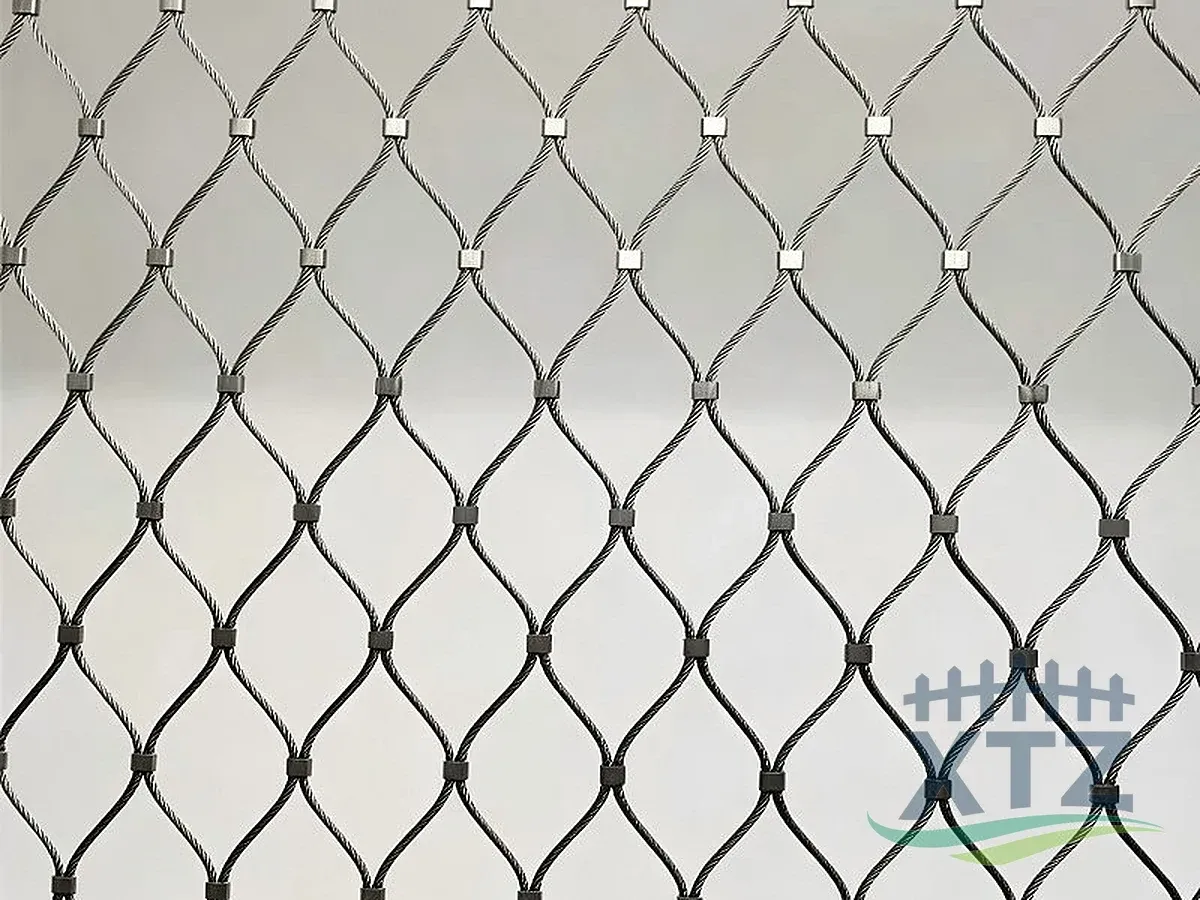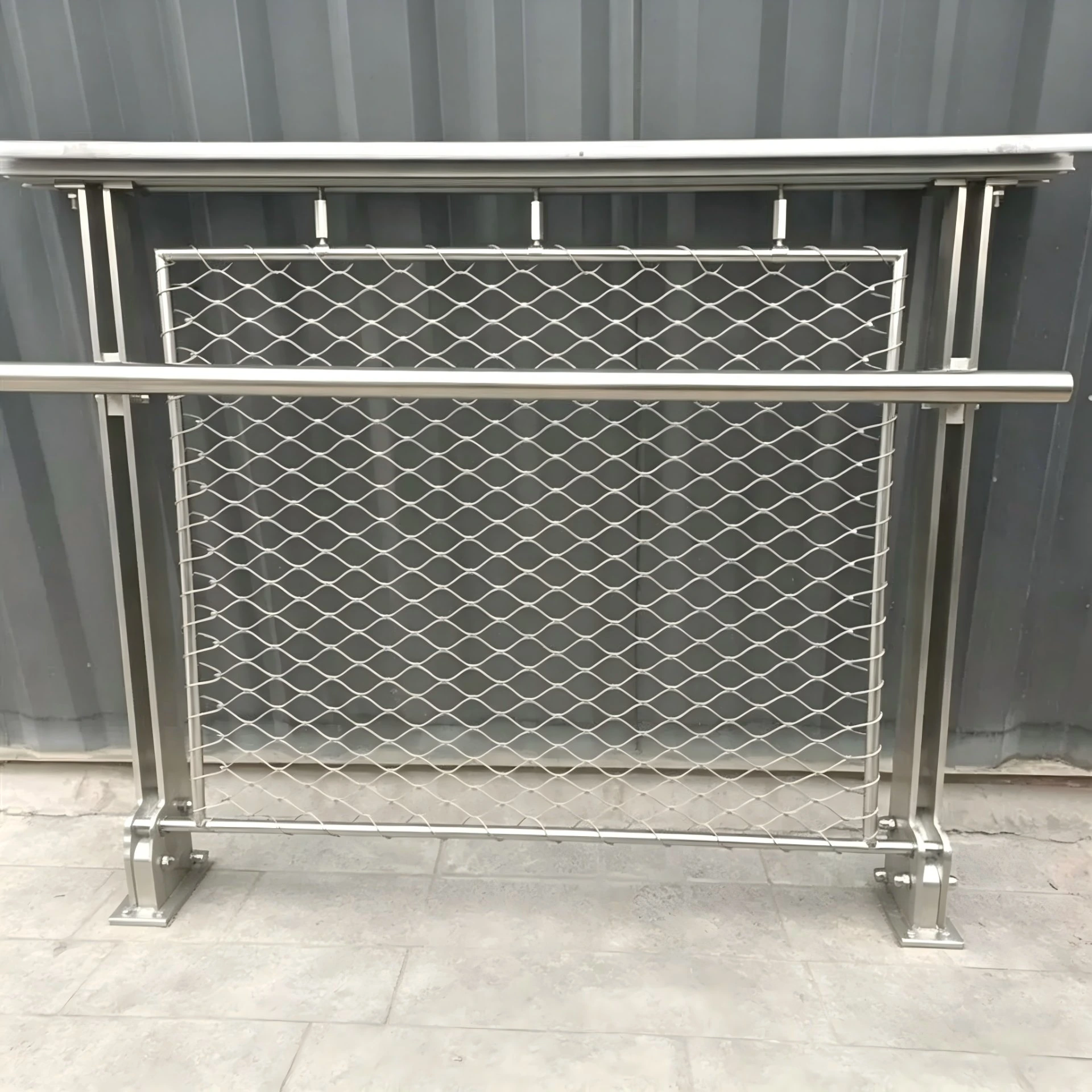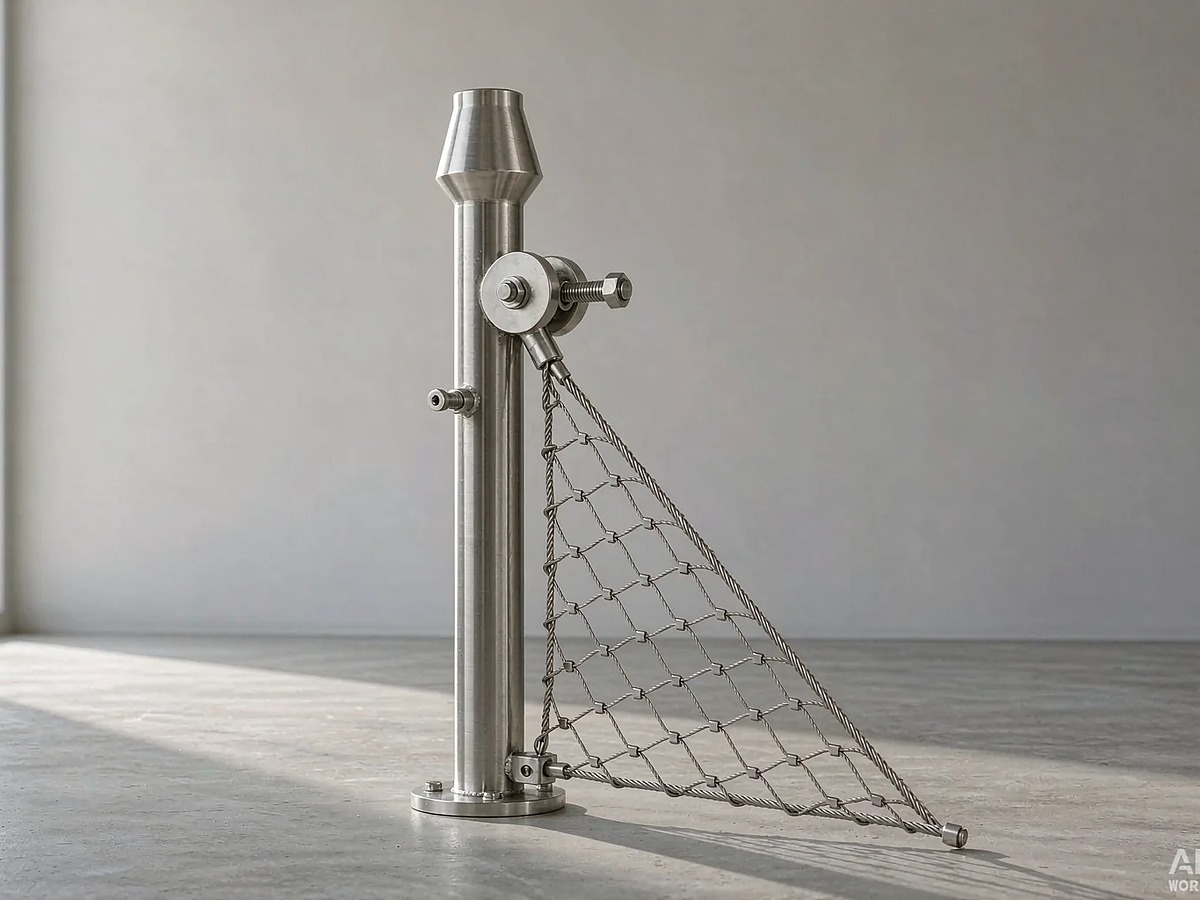
Gopher wire is a metal mesh barrier that blocks a pocket gopher’s route to the roots of a plant. Use a continuous bottom liner under a new raised bed or a basket around an individual root ball. Choose the opening, wire material and layout together, and inspect the edges and seams before the mesh disappears under soil.
Choose a raised-bed liner or a root basket
A raised-bed liner protects the full footprint from below. A root basket protects part of the root zone of one plant. For in-ground landscape beds, a perimeter barrier is a third option, although pocket gophers can sometimes burrow underneath or find a route above it. Identify where the animal is entering before deciding which area the mesh should cover.[1]
| What you want to protect | Mesh layout | Detail that changes the result |
|---|---|---|
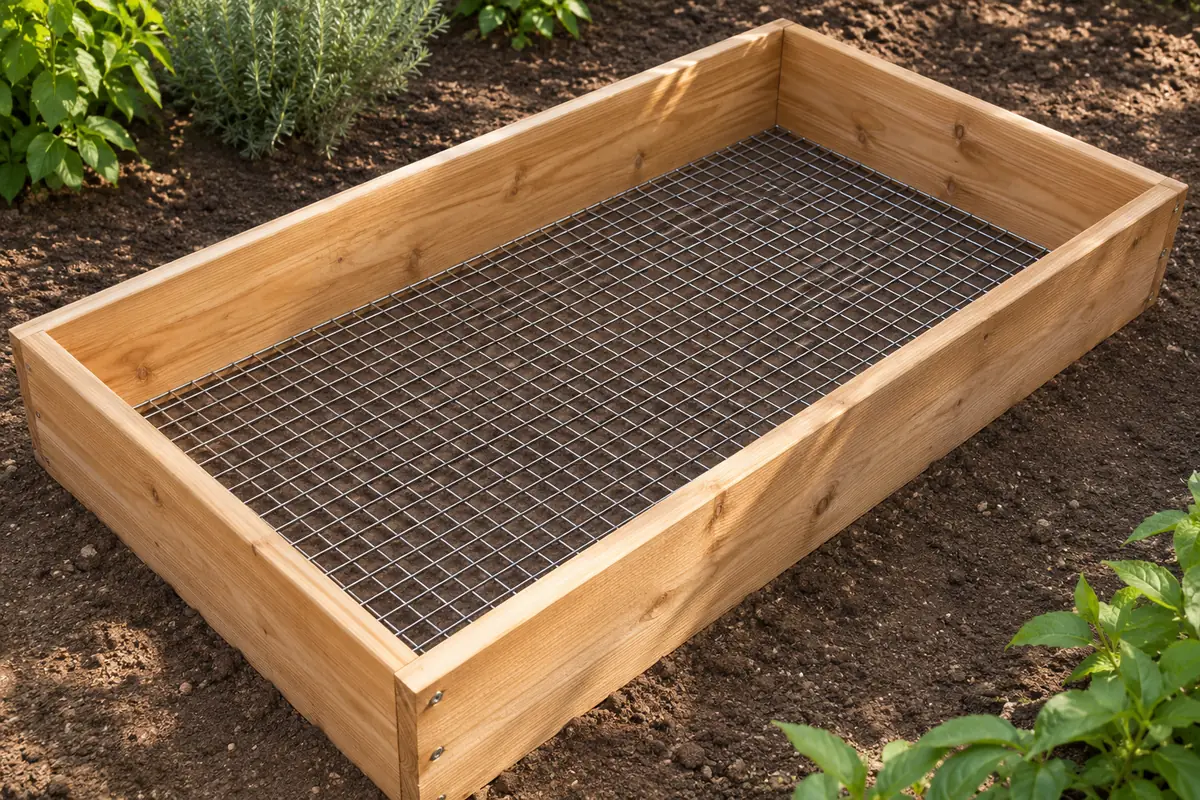
| New open-bottom vegetable bed | Full bottom liner joined to the sides | Uninterrupted attachment along the frame, including corners and any seams |
| Existing high-value bed | Retrofit liner after soil is removed or the bed lifted | A workable installation sequence around irrigation and established roots |
| Individual shrub or young tree | Open-top basket sized for the root ball and plant | Enough room for root growth, with an appropriate material and rim detail |
| Larger in-ground bed | Site-specific buried perimeter barrier | Burrow depth, ground-level routes and safe excavation around services |
Confirm the pest. Pocket gophers commonly leave soil mounds associated with an underground burrow, while different animals leave different surface signs and may reach the bed from above. A liner that works from underneath cannot keep an animal out over the rim. UC IPM’s identification and exclusion guidance is a starting point for North American gardens.[1]
Protecting a lawn is a separate layout. If a landscape contractor specifies mesh under new sod, have them coordinate the coverage, drainage, irrigation and future lawn operations. A root basket or a small patch under one part of a lawn addresses a much smaller area. Keep the maintenance plan with the landscape drawings so anyone digging later knows the mesh is there.
Choose opening size and wire material for soil contact
Washington’s Department of Fish and Wildlife gives ½ in (about 13 mm) hardware cloth as one example for a raised bed. UC IPM also discusses hardware cloth or ¾ in (about 19 mm) poultry wire for certain applications.[1][2] These examples serve different layouts and materials. Check the actual clear opening, wire diameter and construction, especially if more than one animal is causing damage.
| Wire option | When to consider it | What to check |
|---|---|---|
| Galvanized welded hardware cloth | Raised beds when a locally available roll suits the layout | Coating specification, cut edges and damage after fitting |
| Stainless welded square mesh | A long-lived, difficult-to-excavate bed where soil exposure justifies the cost | Alloy grade, welds, fixings, fertilizer or salt exposure and drainage |
| Light mesh made into a plant basket | Young plants with a temporary period of vulnerability | Growth space and local nursery guidance on the long-term effect on roots |
The University of Arizona’s garden exclusion guidance also separates raised-bed liners from baskets used around the roots of young woody plants.[3] This distinction helps when a supplier groups both items under the same name.
Metal life varies with moisture, soil chemistry, salts, fertilizer and damage at cut edges. A stainless label alone cannot predict service life below ground. Discuss the burial environment before selecting an alloy, and keep the attachment material compatible with the liner and the bed. A branded product description is also not a substitute for the clear aperture on a drawing. The wire mesh sizes guide explains how to ask for both the aperture and wire diameter.
Fit a continuous liner under a raised bed
Measure to the retention line. If the mesh folds up an inner face, measure the fold and fixing line rather than the bed’s outer nominal size. Some beds let the mesh attach to the underside of a wood frame. Others need an inside flange or retainer approved for that particular material. Check this before buying a roll that only covers the clear floor.
Join seams and close the corners. Start with a single piece if practical. If two pieces are required, design an overlap and tie or clamp the layers so the seam stays closed under handling and soil placement. Protect open cut ends. Reinforce any point where a fold, a corner or a pipe penetration interrupts the grid.
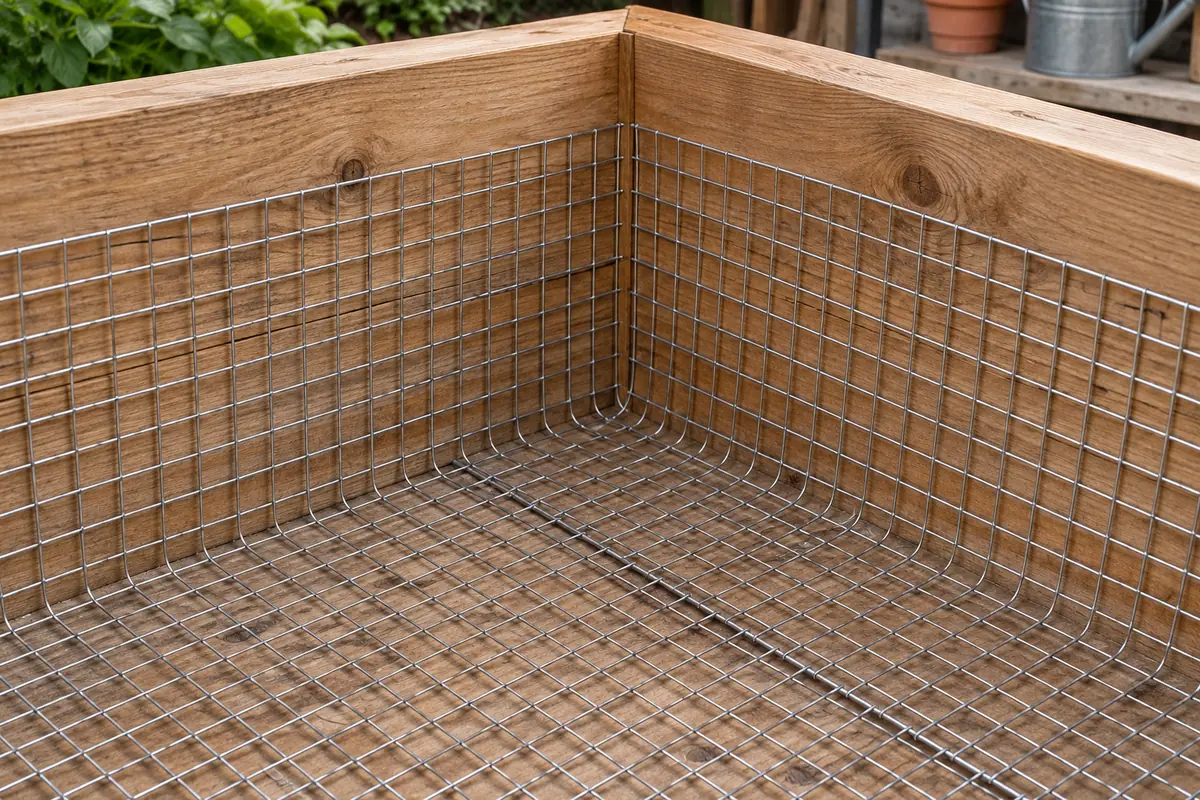
Check drainage and fit before backfilling. The mesh should preserve the intended drainage route and fit tightly to the frame. Secure light pipe sleeves or other penetrations without pinching the service line. Lay the liner flat and photograph the completed floor, corners and seams before soil goes in. The photo gives the next installer a reference if signs of damage return.
Worked example. An empty bed has a measured internal base of 48 × 96 in (about 1.22 × 2.44 m). The installer chose 2 in (about 51 mm) of turn-up on each side for a specific retainer detail. Its starting blank is 52 × 100 in (about 1.32 × 2.54 m), before corner cuts and waste. This example is a takeoff exercise. The correct fold height, fixing and overlap come from the bed detail and the mesh you order.
Give a gopher basket enough space for the root ball
Check the mature plant and its expected root growth with the nursery. A basket sized only to the current pot can crowd a growing woody plant. UC IPM discusses baskets for protecting individual plants and allows for root growth in its guidance.[1] It treats young woody plants and their initial protection needs differently from permanent liners below a garden bed.
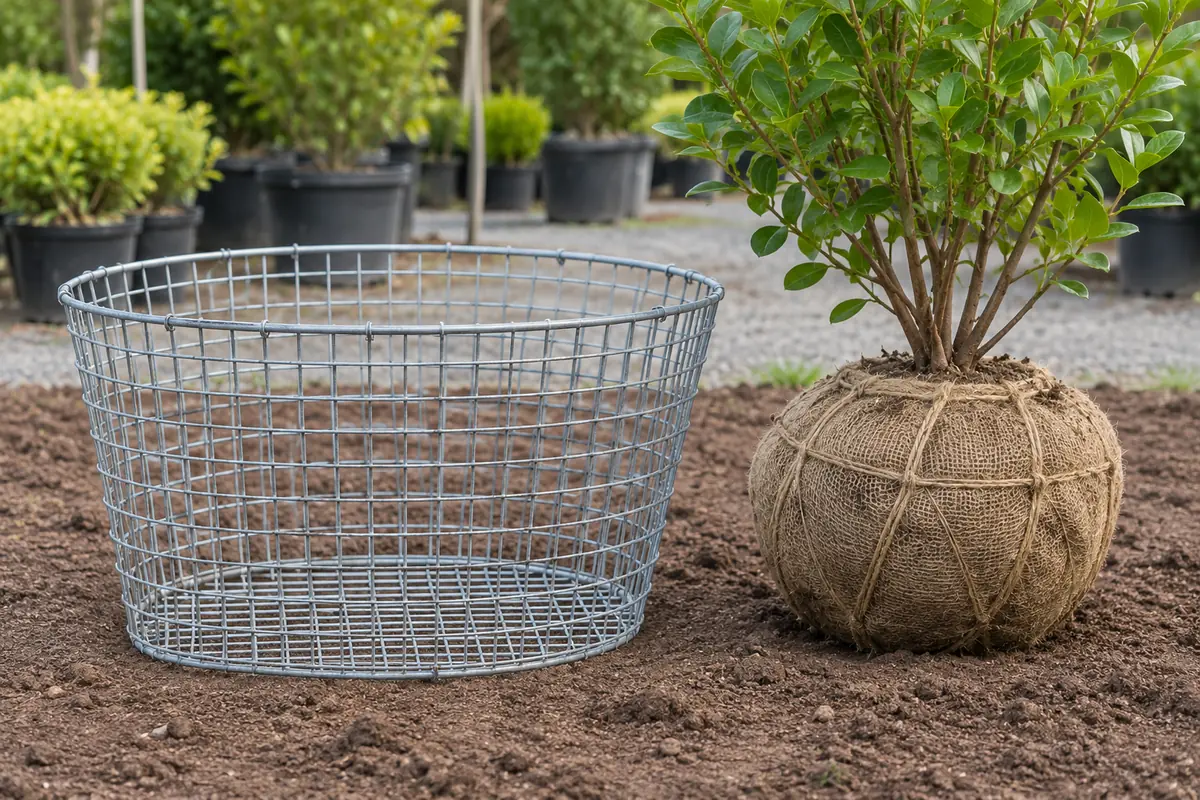
Inspect the basket and remove dangerous wire projections at the rim before lowering the plant. Set the plant at its correct planting depth and agree how the top edge will sit relative to soil. Use the nursery’s instructions when its planting method and the basket installation detail differ. Save a note of which trees or shrubs have baskets and the material used. That record can matter during transplanting or when a bed is reworked.
A basket is incomplete protection for the mature root system once roots grow beyond it. For an existing planting with recent damage, identify where the animal is active and whether excavation could damage remaining healthy roots. A retrofit may be reasonable for a removable vegetable bed and impractical around an established tree.
Prepare the mesh order and check it before filling
Send XTZ Fence the finished bed dimensions, the clear opening and diameter, soil conditions, chosen form and quantity. Show edge folds, any seams and the points where the mesh has to fit an existing frame. Ask a stainless steel welded wire mesh supplier to confirm whether a stock-width roll or cut blanks make more sense for the quantity. A narrow roll adds seam work. A wider roll can leave offcuts unless you coordinate the cutting list across beds.
Before adding soil, inspect every corner, folded edge and penetration. Mark any access path above the liner and decide how to manage it. If a mound later appears inside a lined bed, inspect gaps and displaced seams before replacing the entire mesh. Verify the pest again if the damage is mainly above ground.
Frequently asked questions
Is half-inch mesh enough for pocket gophers?
Half-inch hardware cloth is one published starting point for a fully lined raised bed. Confirm the actual clear opening and whether additional pests need exclusion. The liner’s edge, seam and material condition are just as relevant as the size printed on the package.
Can I put gopher wire in a bed that is already full?
Usually this means temporarily removing soil, lifting the bed or reconstructing it. Inspect pipes and attachments before excavation. Plan where the soil will go and whether existing plants can be moved safely. Lining a few exposed corners leaves the rest of the underside accessible.
Is stainless gopher wire always better than galvanized mesh?
Stainless steel can be worth evaluating where replacement requires extensive excavation or where exposure corrodes the selected galvanized product. Compare the actual grade, finish and fixings and ask about the soil environment. Well-specified galvanized hardware cloth is also used in published guidance.
Does gopher mesh prevent drainage through the bed?
An open steel grid leaves a path for water, although soil layers and anything placed over the mesh also affect drainage. Keep the intended route clear, especially at low points and around drain openings. Avoid leaving a path around a pipe that bypasses the mesh.
Should I put a wire basket around an established tree?
Ask the nursery or a qualified local adviser first. Excavation around a mature plant may cut roots and an existing root system may extend well beyond a practical basket. Baskets are commonly installed with the plant and sized for its expected growth.
Can the mesh also stop moles or voles?
Treat that as a separate design question. Different species tunnel differently, and some enter above the soil surface. Confirm what is doing the damage, then choose an opening and boundary layout for the species and location.
Technical sources
- UC Statewide IPM Program guidance on pocket gophers
- Washington Department of Fish and Wildlife guidance on pocket gophers
- University of Arizona Cooperative Extension guidance on garden wildlife