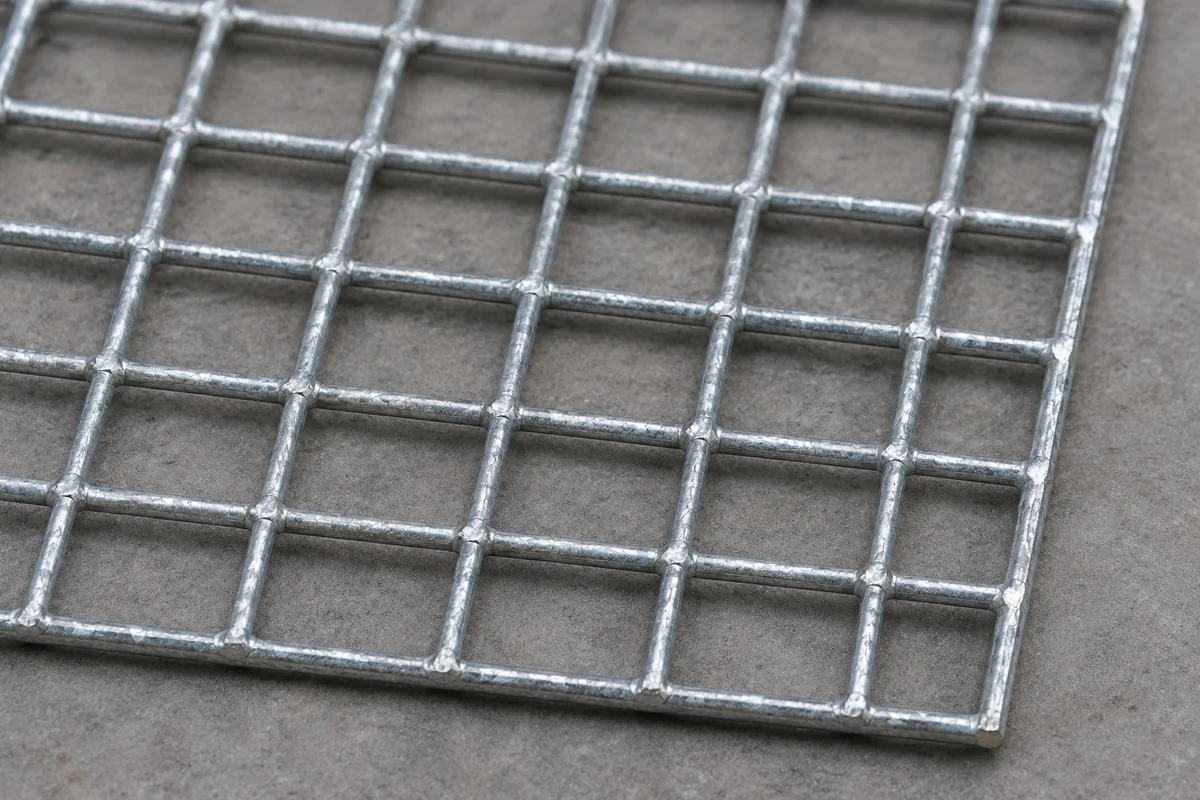
Galvanized hardware cloth is a relatively small-opening steel wire mesh protected by a zinc coating. It is sold in woven and welded constructions for screens, guards, garden work and some animal-exclusion applications. Choose it by the actual opening, wire diameter, galvanizing specification and fixing detail, with the intended exposure and use clearly stated.
Retail listings often lead with “1/4 inch,” “19 gauge” or “heavy duty.” Each describes only part of the product. A useful purchase specification also explains how those dimensions are measured and what condition the material must be in when it arrives.
What is galvanized hardware cloth?
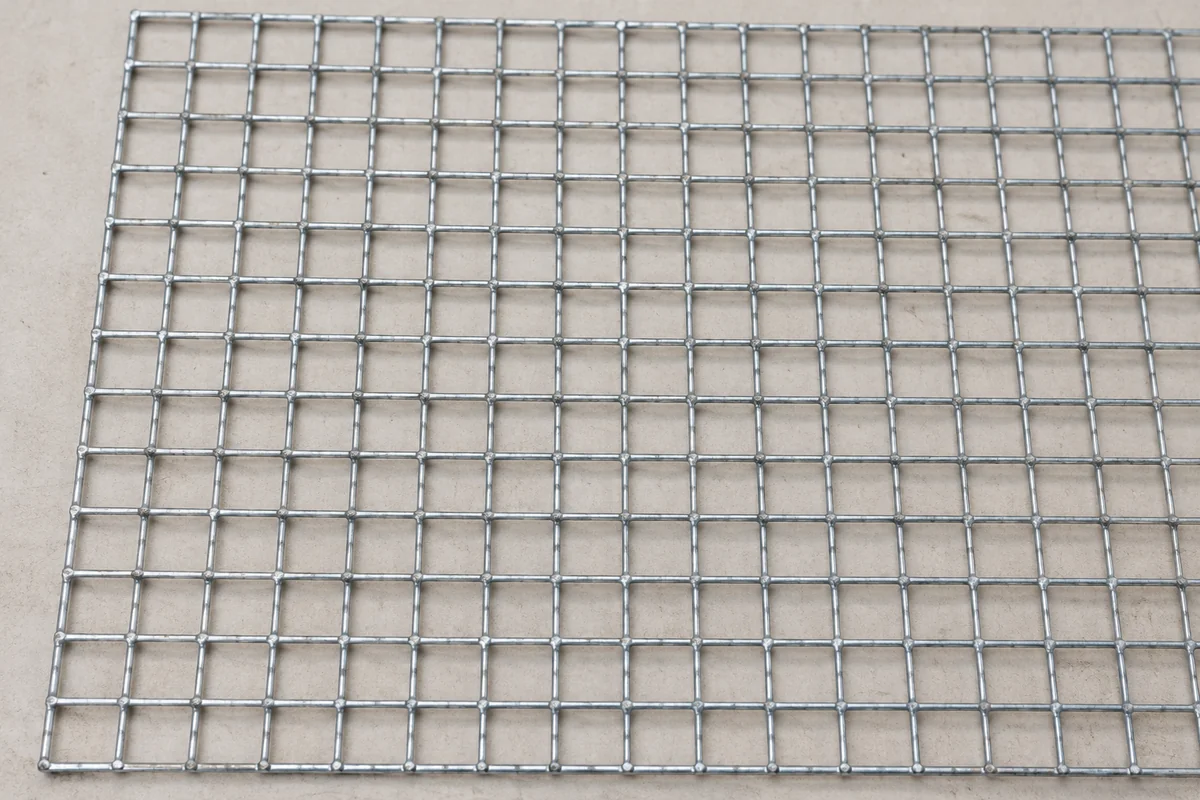
Hardware cloth is a metal mesh, despite the name. Woven versions use crossing wires; welded versions join wires at their intersections. Small square patterns are common, but the construction and dimensions should be confirmed for the particular item.
ASTM A740-21(2026) covers woven or welded galvanized steel hardware cloth. Its public abstract describes hot-dip galvanizing after weaving or welding and uses finished wire diameters after galvanizing. A retail item labelled hardware cloth should not automatically be assumed to meet that standard, especially when its stated process is galvanizing before welding.
Hardware cloth is also different from hexagonal chicken wire, flexible cable mesh and structural grating. Similar-looking rolls can have different openings, wire sizes and intended duties. Ask for the construction instead of choosing from the product name alone.
Galvanized hardware cloth sizes: opening, pitch and wire diameter
Confirm whether a nominal size describes the repeating wire spacing or the clear gap. The distinction becomes important when an opening must meet a defined limit.
| Common nominal label | Exact conversion of the stated fraction | What still needs confirmation |
|---|---|---|
| 1/8 inch | 3.175 mm | Clear opening or pitch; wire diameter and tolerance |
| 1/4 inch | 6.35 mm | Clear opening or pitch; wire diameter and tolerance |
| 1/2 inch | 12.7 mm | Clear opening or pitch; wire diameter and tolerance |
These are unit conversions, not verified clear openings for every product with that label. Read the supplier’s dimensional drawing or ask for the measurement convention in writing.
For example, assume a square grid has a 6.35 mm centre-to-centre pitch and a finished wire diameter of 0.60 mm. Its calculated clear opening is 5.75 mm. If a different product has a 6.35 mm clear opening with the same wire diameter, its pitch is 6.95 mm. Both dimensions could be loosely described as “quarter inch” in an incomplete enquiry, yet they describe different grids.
The example uses assumed dimensions and ideal geometry. It does not establish a product tolerance or suitability for a pest species. For measurement terminology, see our guide to wire mesh sizes.
Hardware cloth gauge: ask for the diameter
Gauge numbers need a named convention. Ask for the actual diameter in millimetres or inches and whether it is the base steel or the finished galvanized wire. An additional polymer layer can make that distinction more important.
Do not compare “19 gauge” and “23 gauge” products without checking their construction, opening and measurement basis. Within the same gauge convention, a lower gauge number generally means thicker wire, but the gauge alone does not establish the strength of the mesh or its fixings.
Galvanized before or after welding: what changes?
GBW and GAW describe the order of manufacture. They are useful purchasing terms, but neither replaces a coating specification or a check of the finished mesh.
| Process description | Manufacturing sequence | Questions for the supplier |
|---|---|---|
| Galvanized before welding (GBW) | Zinc-coated wire is welded into mesh | What happens to protection at the welds? Is further treatment applied? |
| Galvanized after welding (GAW) | Mesh is welded, then galvanized | What coating requirement applies, and how are openings and welds inspected? |
| Galvanized after weaving | Wire is woven, then galvanized | What finished opening, wire diameter and coating are specified? |
| Galvanized plus polymer coating | A polymer is applied over the specified substrate | What is beneath it, and what thickness, adhesion and edge requirements apply? |
Welding can disturb zinc around a joint in pre-galvanized wire. Galvanizing the completed mesh addresses the mesh after fabrication, including its crossings. The final corrosion protection still depends on the actual process, coating, exposure and damage.
Hot-dip galvanizing and electrogalvanizing should also be identified explicitly. Do not treat a silver appearance as proof of either method or a particular coating thickness. A claim such as “double galvanized” needs a measurable definition before it can be compared between suppliers.
For a standard-based order, name the applicable standard and edition, dimensions, tolerances and documentation. Ask the supplier to confirm compliance with the stated requirements rather than accepting a standards logo or an unexplained certificate.
Is galvanized hardware cloth suitable for your application?
Choose the grid and installation for the specific task. A smaller opening can help with exclusion or screening, but it also changes openness, cleaning and the amount of material available to resist damage.
| Intended use | Check before selecting |
|---|---|
| Rodent exclusion at a building opening | Target animal, verified clear gap, secure perimeter and surrounding repair |
| Poultry or animal enclosure | Animal size, predator access, wire strength, doors, ground edges and injury risks |
| Garden barrier or raised-bed protection | Target pest, contact with soil, edge detailing and maintenance access |
| Vent or opening screen | Permitted screen arrangement, required ventilation and cleaning access |
| General guard or protective screen | Load, attachment and the applicable protection requirement |
Hardware cloth for mice and other rodents
The CDC’s seal-up guidance notes that mice can pass through a hole about 1/4 inch, or 6 mm, across. It recommends durable repairs, including hardware cloth or metal for larger openings. Check the finished clear opening and every perimeter gap; the nominal fraction on the roll is insufficient evidence.
The repair also needs to stay attached. A small-aperture panel with an unsecured corner can leave an entry route. Where activity persists, review adjoining penetrations and accessible food sources, and obtain appropriate pest-control advice for the site.
Hardware cloth for coops and animal areas
Design for both containment and outside access. A mesh that keeps birds inside may allow another animal to reach through it. Check door edges, corners and the ground detail. Where animals can touch the material, inspect cut ends and the condition of the coating. Suitability for contact with feed, water or a particular species needs its own assessment.
Hardware cloth over vents
Geometric open area is only one input to ventilation. The frame, louvres, insect screen, fouling and airflow conditions can reduce useful ventilation further. Do not replace a specified vent cover with a sheet of hardware cloth without confirming the permitted arrangement and required free area. Keep any screen accessible for inspection and cleaning.
Inspect welds, cut edges and coating condition
Inspect a delivered sample against the order before cutting the full roll. Check several places across the width and along the length, using the sampling and acceptance plan agreed with the supplier.
| Receiving check | Record | Reason to investigate |
|---|---|---|
| Product identity | Construction, process description and batch reference | Delivered item differs from the approved order |
| Dimensions | Usable width, length, opening and wire diameter | Short coverage or a different measurement convention |
| Intersections | Weld condition or stability of woven crossings | Broken joints, displaced wires or loose sections |
| Surface | Coating condition, bare areas and deposits | Damage or condition outside the agreed acceptance criteria |
| Edges | Cut ends, projecting wires and roll edges | Injury risk or an edge that cannot be retained as designed |
| Documentation | Material/coating information and agreed reports | Missing evidence for a specified requirement |
A photograph cannot prove galvanizing sequence, coating mass or weld strength. Visual inspection helps identify damage and inconsistencies; use appropriate measurement or test evidence for the specified properties.
Cutting after galvanizing exposes cut wire ends and can damage adjacent coating. Agree on the edge treatment for the application. The American Galvanizers Association’s repair guidance describes methods for damaged hot-dip galvanized coatings under ASTM A780. A repair method must suit the product and access; painting a cut edge does not demonstrate that an entire mesh order meets a coating standard.
Cutting and fixing hardware cloth without leaving gaps
Measure the opening and the fixing surface before cutting. Allow enough material for the specified perimeter retention, and confirm that the fixing surface is sound. The required overlap and fastener pattern depend on the detail; there is no universal allowance for every vent, timber frame or masonry opening.
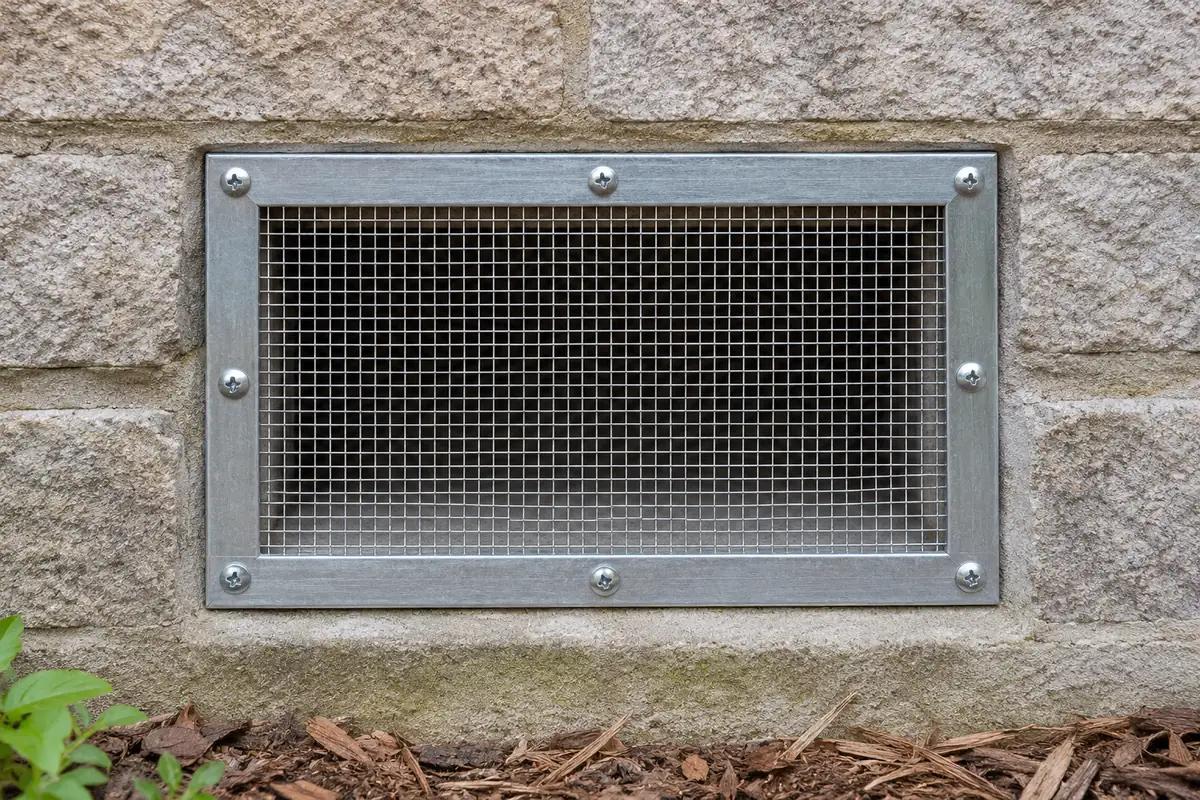
Unroll the material under control and use suitable hand and eye protection. Select cutters for the wire diameter, support the mesh to limit distortion, and remove or cover exposed sharp ends using the intended edge detail.
Retain all sides of a screen, including corners and joints. A frame or retaining strip can distribute attachment along an edge when it is designed for that purpose. Fixings should be compatible with the mesh, substrate and exposure. Check that the mesh cannot pull clear of the retaining surface under the expected duty.
After installation, look from both sides where access permits. Check around pipes, beneath doors and at any overlap. Confirm that drainage, ventilation and required access remain functional. Reinspect after disturbance or maintenance nearby.
Rust, white deposits and storage
Galvanizing provides a protective zinc layer; it does not make steel immune to corrosion. Service conditions, coating condition and damage affect performance, so a single lifespan claim is not a sound basis for every project.
White or grey powdery deposits may be wet storage stain. The American Galvanizers Association’s storage guidance explains the risk when moisture is trapped against galvanized surfaces without adequate air circulation. Store material dry, allow drainage and avoid leaving it tightly bundled in damp conditions.
Record significant deposits or damage on arrival and ask the supplier to assess them against the specification. White staining alone does not establish that the steel beneath has failed, but heavy or persistent deposits should not be ignored. Confirm an appropriate assessment and treatment before installing affected material.
When to consider stainless steel instead
Consider a stainless alternative where the specification calls for a particular stainless grade, appearance or maintenance approach. Match the opening and finished construction first. A stainless material name cannot compensate for an oversized gap or weak attachment.
XTZ Fence is a stainless steel welded wire mesh manufacturer offering rolls, sheets and cut panels. For a fixed small-opening screen, discuss the actual aperture, wire diameter, material grade and edge detail. Compare a known stainless specification with the proposed galvanized product under the same service conditions.
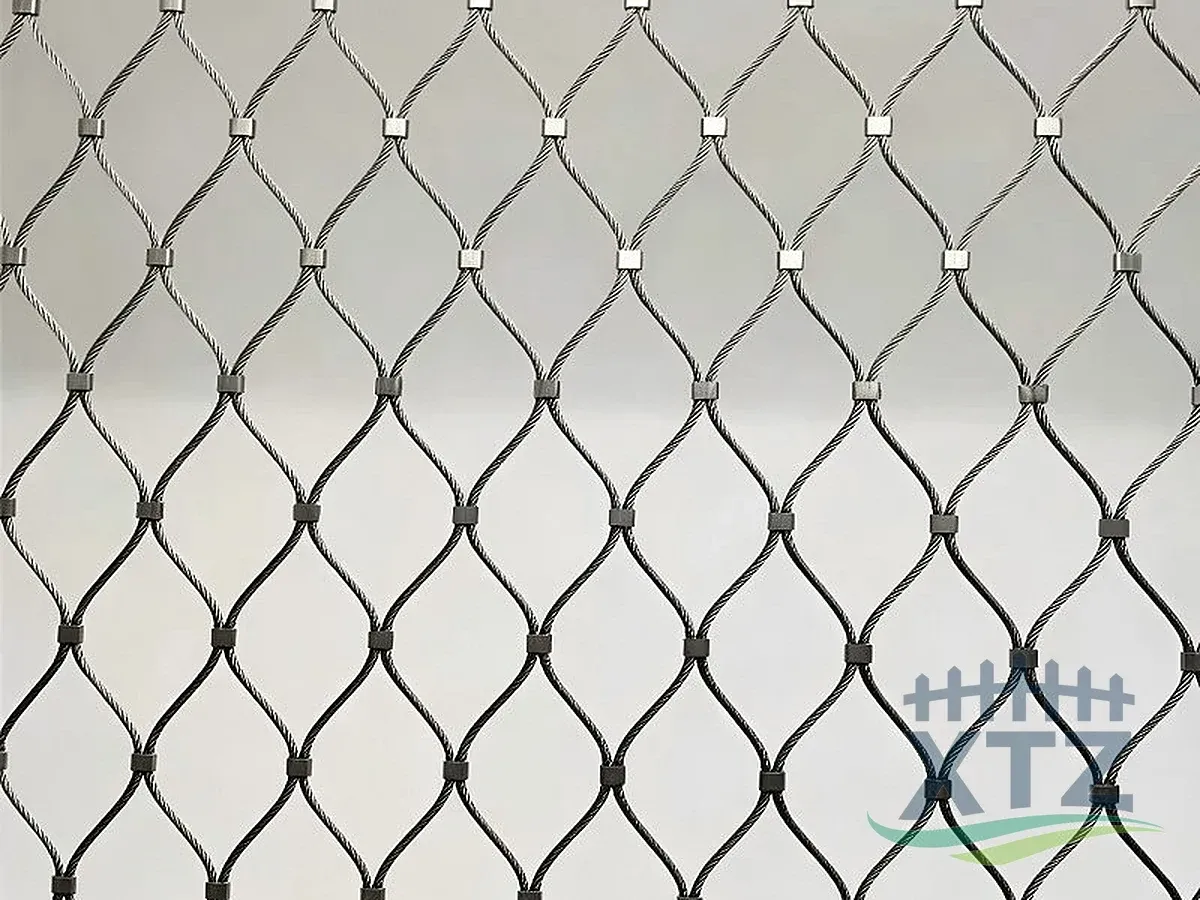
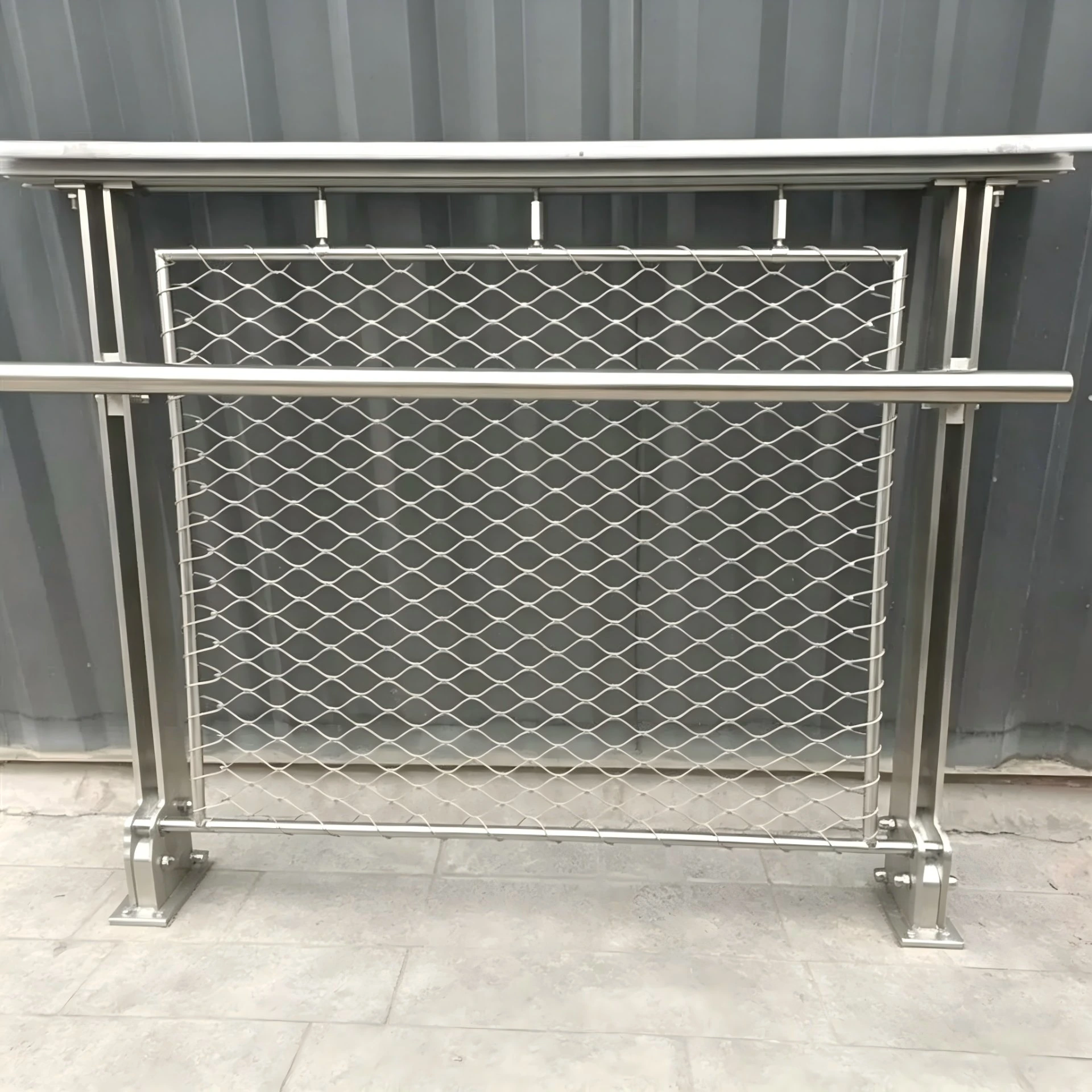
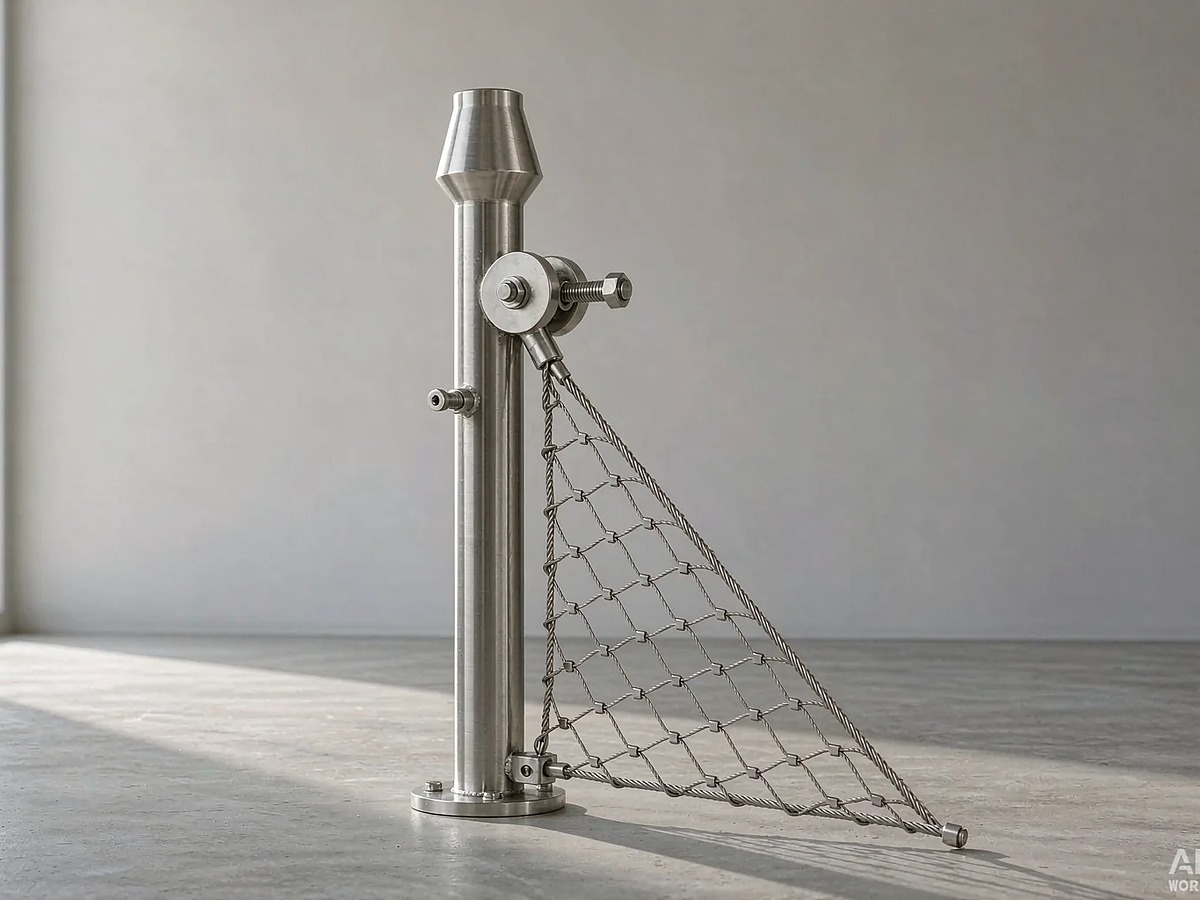
Larger architectural and fence applications may call for a different construction. XTZ’s stainless steel cable mesh uses flexible diamond-pattern rope mesh. A stainless steel mesh railing also includes the frame and connections. These are options for appropriately designed infill and barrier projects; they should be assessed separately from fine-aperture hardware cloth used at rodent entry points.
For a stainless mesh quotation, send XTZ Fence the opening size, wire diameter, piece or roll dimensions, intended use, exposure and mounting requirements.
Galvanized hardware cloth FAQ
Is 1/4-inch hardware cloth better than 1/2-inch?
It depends on the task. A smaller clear opening can address a tighter exclusion or screening requirement, while reducing openness at a given wire size. Confirm what the nominal fraction measures and check the target animal or screening duty. Neither label establishes wire strength, corrosion protection or the security of the installed perimeter.
Is all galvanized hardware cloth welded?
No. Hardware cloth is available in woven and welded constructions. ASTM A740 covers both within its stated requirements, and supplier ranges vary with wire size and opening. Request the actual construction and finished dimensions. A woven product’s edge and crossing behaviour should be considered in the installation detail as well as its nominal opening.
Is galvanized after welding always the best choice?
GAW applies protection after the mesh is welded, which addresses a useful concern at the crossings. The complete choice still depends on coating requirements, environment, handling and cost. Ask how protection at joints is achieved and verified. Process wording alone cannot establish the corrosion resistance or lifespan of two different finished products.
Will hardware cloth stop rats, mice and snakes?
A single product label cannot establish suitability for every species. Identify the target animal, required clear opening, wire strength and likely routes around or beneath the material. Secure the whole perimeter and maintain the repair. Recommendations for one species or life stage should not be transferred to another without checking the relevant requirements.
Can galvanized hardware cloth be buried?
Some installations place galvanized mesh in contact with soil, but performance depends on soil chemistry, moisture, coating and damage. Agree on the material and detail for that exposure and allow for inspection or replacement where practical. Do not apply a generic outdoor lifespan to buried wire or assume that every galvanized finish is suitable.
What information should a hardware cloth quote include?
It should identify the construction, opening convention, wire diameter, galvanizing process, finished dimensions, tolerances and quantity. Add edge requirements and any applicable standard or test documentation. State the intended use and exposure. That gives suppliers a common scope and makes differences in price easier to trace to actual product differences.
Further reading and related topics
For a construction comparison, read the XTZ guide covering crimped woven wire mesh. Further topics include Welded Wire Fence: Types, Sizes, Cost and Installation Guide, Galvanized Before vs After Welding: A Mesh Inspection Checklist and How to Measure Clear Openings in Hardware Cloth.
Sources
- ASTM A740-21(2026): galvanized hardware cloth: public scope and abstract, including woven and welded constructions.
- CDC: how to seal up to prevent rodents: entry-point dimensions and repair guidance.
- American Galvanizers Association: repairing hot-dip galvanized steel: coating repair methods.
- American Galvanizers Association: storage: moisture, ventilation and wet storage stain.