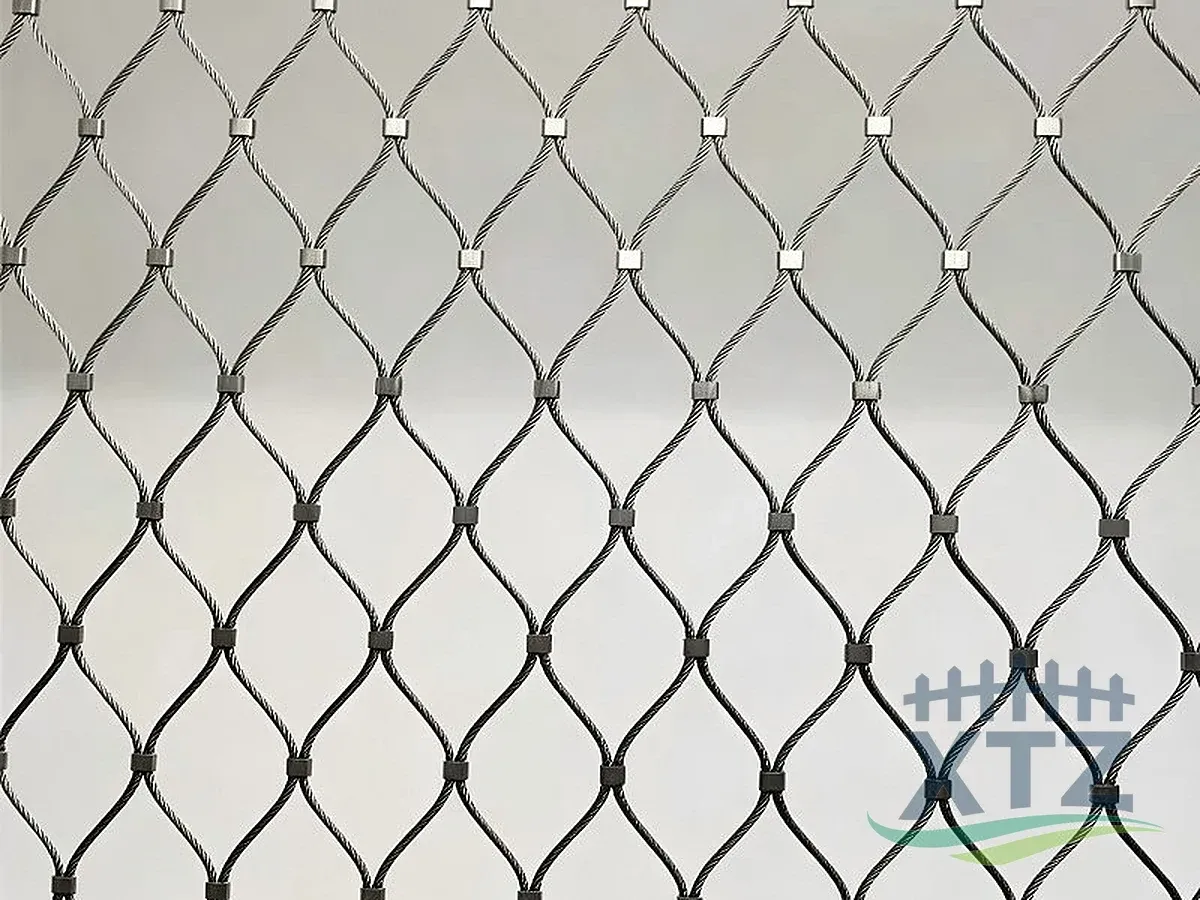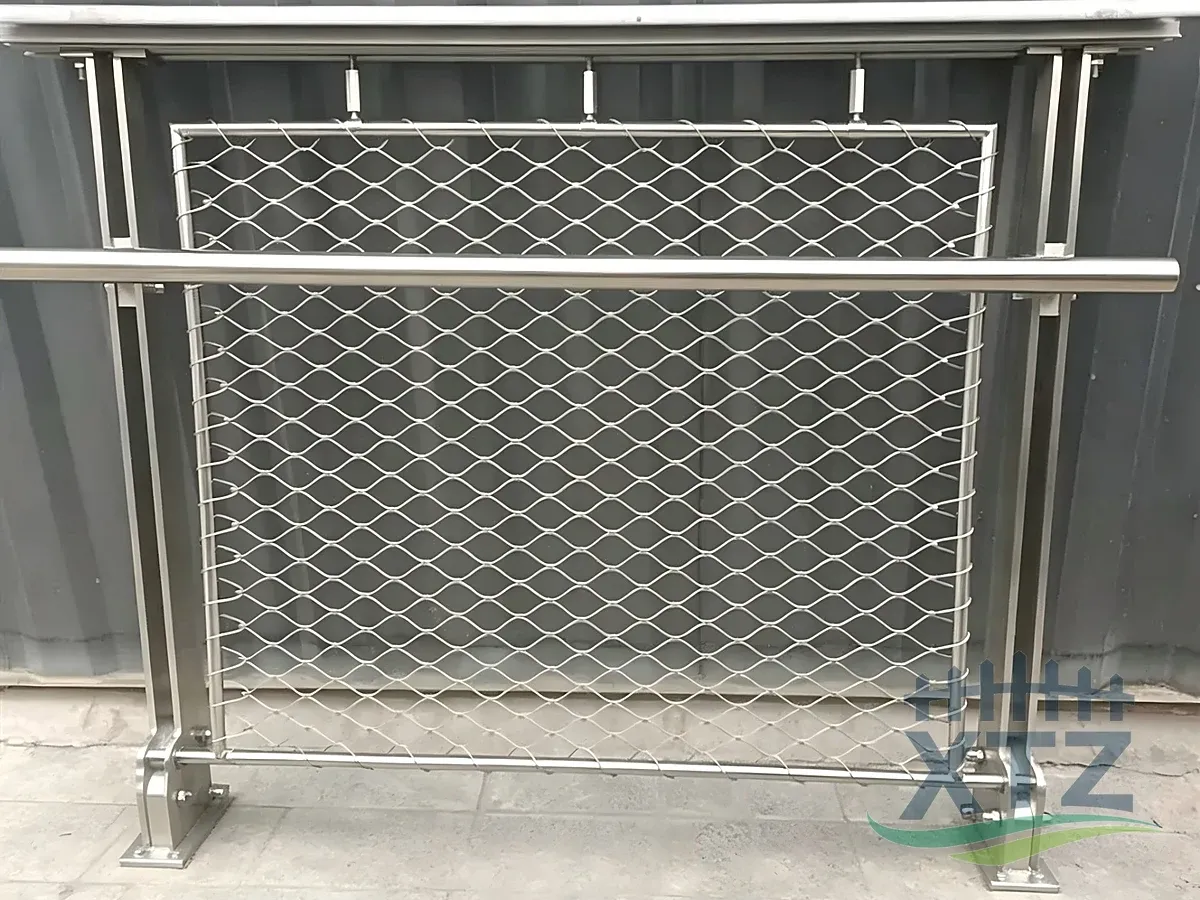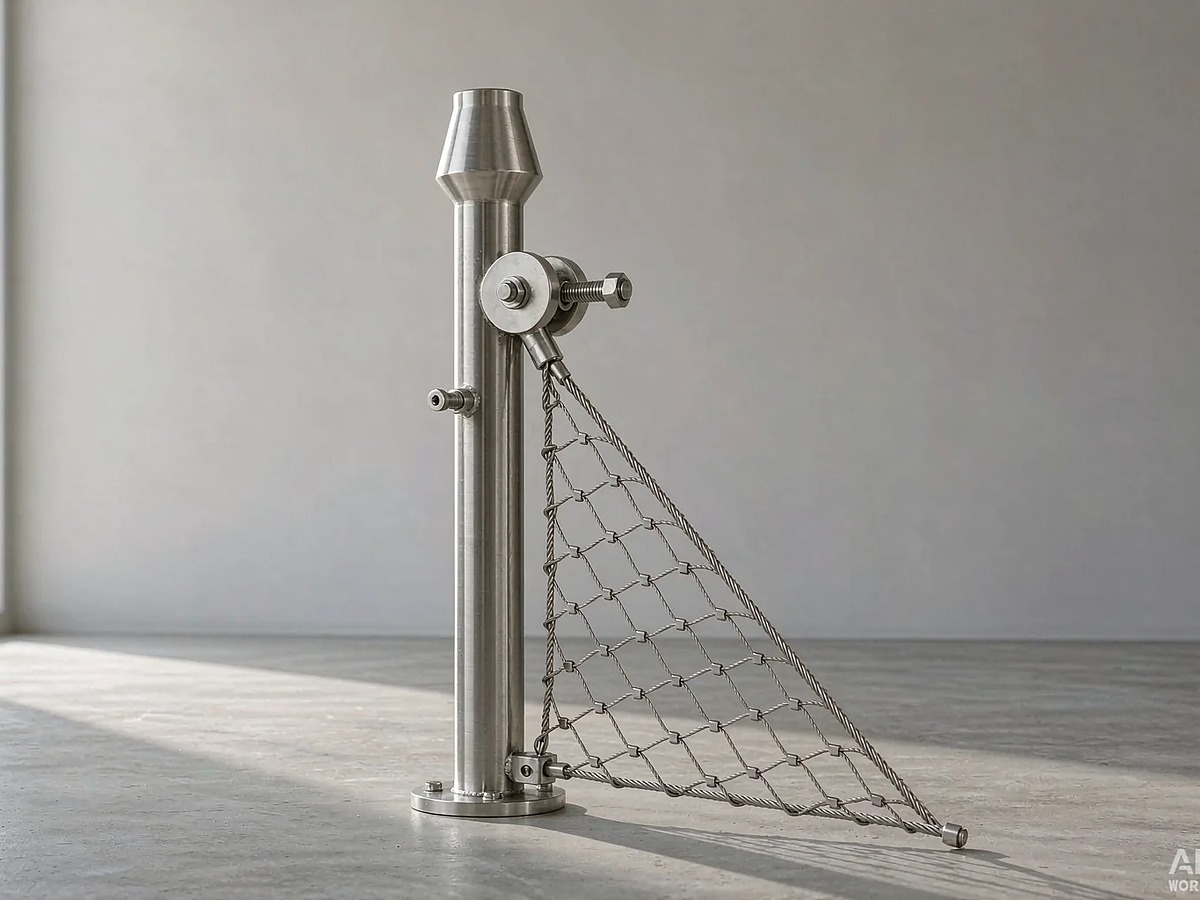
Choose woven wire mesh by matching its weave and crimp to the required opening, wire size and finished panel support. Check the material in both directions, then confirm the cut dimensions and edges. For architectural work, approve a sample in the intended lighting before committing to a roll or panel order.
For a comparison of mesh families across building applications, see wire mesh for architecture.
What is woven wire mesh?
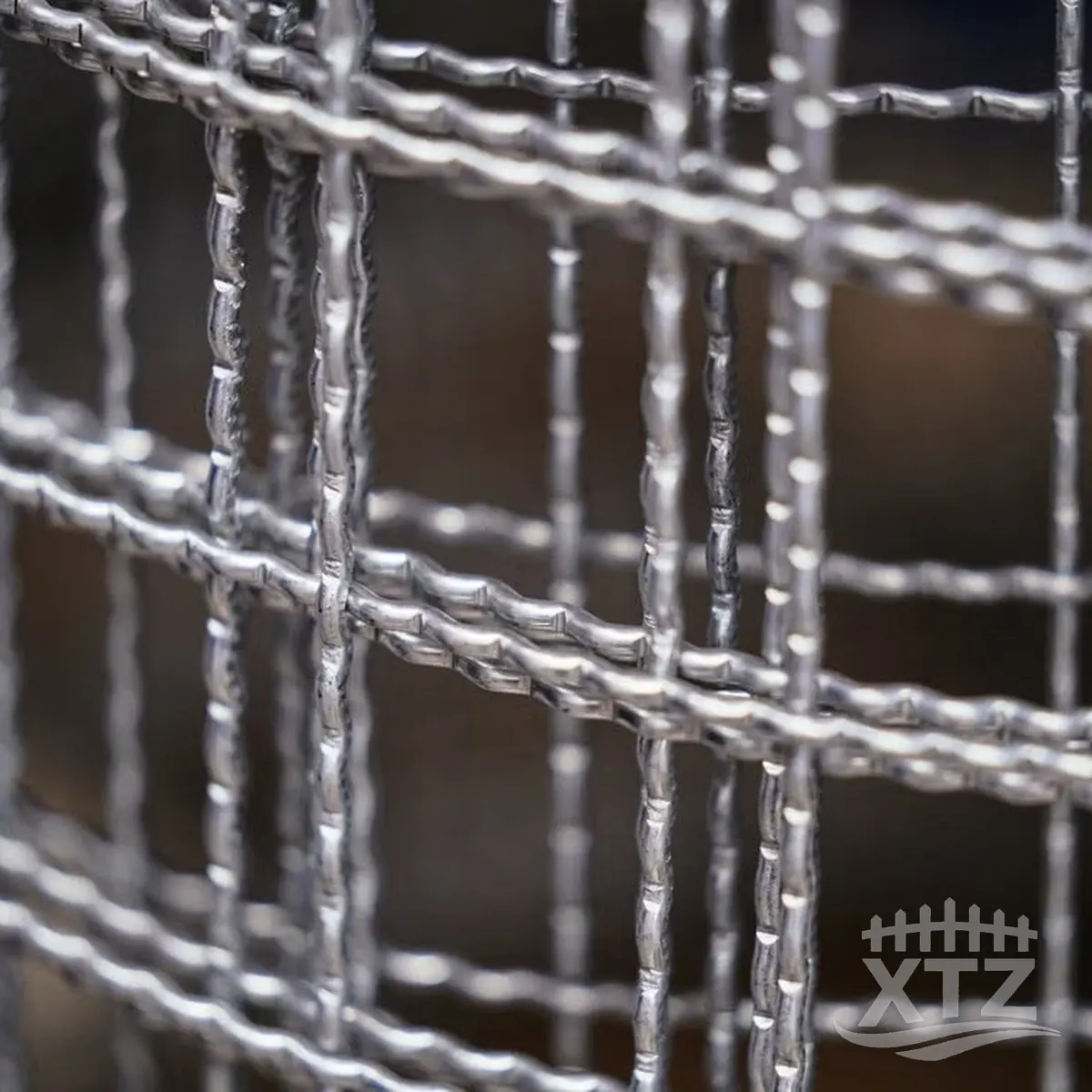
Woven wire mesh consists of wires interlaced in two directions, commonly called warp and weft or shute. Follow one wire across a sample: in a plain weave it alternates over and under the crossing wires. This produces a texture that differs from the fused intersections of welded mesh and the continuous strands of expanded metal.
Many coarse architectural meshes use pre-crimped wire. The bends are formed before weaving to locate the crossing wires. The resulting geometry depends on the crimp profile as well as the weave. A photo taken straight on may hide that distinction, so inspect the edge and reverse face too.
XTZ's stainless steel crimped wire mesh page currently lists plain crimp and lock crimp constructions, with rolls, flat panels and cut-to-size pieces. Other weave types below are industry options to understand, rather than an assertion that every type is available from XTZ.
Compare weave and crimp separately
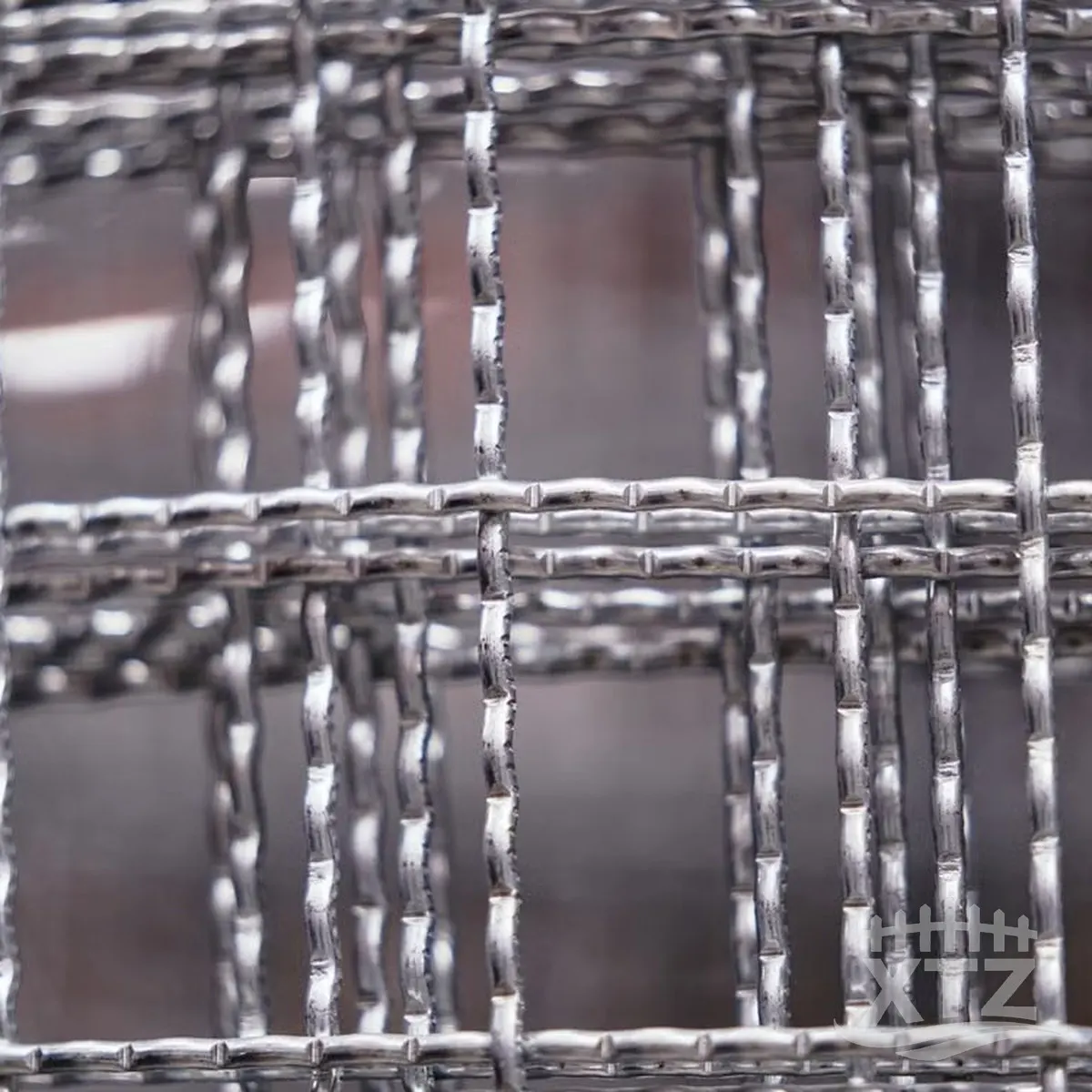
A weave describes how wires cross. A crimp describes the bends that position those wires. Keeping the two terms separate makes a specification easier to check.
| Structure | What to look for | Selection question |
|---|---|---|
| Plain weave | Alternating over-and-under crossings | Does the opening and wire combination provide the required appearance and handling stability? |
| Twill weave | A repeating over-two, under-two sequence in a common twill construction | Is a denser cloth or a different wire-to-opening relationship required? |
| Plain crimp | Regular bends associated with the crossings | Is the sample sufficiently stable for the intended panel and edge support? |
| Lock crimp | Defined bends locating wires at intersections | Is resistance to wire movement important in the selected coarse mesh? |
| Intermediate crimp | Additional waves between intersections | Does the more pronounced surface texture suit the opening and design? |
| Flat-top crimp | Crimp concentrated on one side | Which face must present the smoother surface? |
| Dutch weave | Closely arranged wires of differing dimensions or spacing | Is the requirement filtration rather than a visibly open architectural grid? |
Lock crimp does not mean that several wires must be bundled together at each crossing. Ask for the actual profile and approved sample. Likewise, a weave name does not establish the load capacity of a finished panel. The supplier's mesh construction and measurement guide is a useful reference for the distinction between styles.
Read the size correctly: opening, pitch and mesh count
A clear opening is the space between adjacent wires. Pitch measures from the center of one wire to the center of the next parallel wire. Wire diameter is the thickness of the round wire itself; a flat wire needs both width and thickness.
For a regular square mesh made with equal round wires, the nominal relationship is:
Pitch = clear opening + wire diameter.
If mesh count is expressed per inch, the corresponding nominal clear opening in millimeters is 25.4 ÷ mesh count − wire diameter. This relationship assumes a regular square mesh and consistent units. It should not be applied to Dutch filtration mesh, cable mesh or an irregular decorative pattern.
For example, a nominal 4-mesh square cloth with 1.0 mm wire gives a calculated opening of 5.35 mm. This is an explanatory calculation, not an XTZ stock specification. Production tolerances and the measurement method still need agreement.
| Specification | What the buyer should state | Why it matters |
|---|---|---|
| Clear opening | Width and height, with units | Defines the actual gap |
| Wire dimensions | Diameter in each direction, or flat-wire width and thickness | Affects visual mass and panel behavior |
| Weave and crimp | Named structure plus sample or drawing | Prevents substitution with a similar-looking mesh |
| Mesh count | Count in each direction where relevant | Helps identify cloth but does not replace wire size |
| Material | Required alloy and verification documents | Establishes the material basis |
| Finished size | Width × height, quantity and tolerance | Defines the supplied item |
| Orientation | Warp direction, top and visible face | Controls pattern alignment |
| Edges | Cut, retained, framed or another agreed treatment | Controls fit and handling |
For the same regular square geometry, projected open area can be estimated as [opening ÷ (opening + wire diameter)]² × 100%. At a 5 mm opening and 1 mm wire, that is approximately 69.4%. This geometric estimate does not establish airflow, acoustic performance or the appearance at an oblique angle.
Match the mesh to its application
For a tensioned surface that needs to follow an irregular boundary, compare stainless steel cable mesh with a rigid woven panel. The cable opening, perimeter restraint and installed geometry require a separate specification.
| Application | Prioritize | Check before approval |
|---|---|---|
| Interior partition | Pattern scale, transparency and finish | Both faces, frame depth, rattle and accessible edges |
| Cabinet insert | Fine visual detail and manageable weight | Recess depth, cut size, retaining method and aligned patterns |
| Architectural infill | Stable panel geometry and suitable support | Openings, connections and project performance requirements |
| Feature wall or ceiling | Texture and lighting response | Joint alignment, access and attachment details |
| Industrial screening | Aperture consistency and service conditions | Particle characteristics, loading, wear and cleaning |
Architectural woven metal mesh is often selected at close viewing distance. A wire that appears delicate in a sample may disappear visually across a large room, while a bold crimp can dominate a small cabinet. Review the sample at the expected viewing distance.
When the finish and texture drive the decision, compare stainless steel decorative mesh. When the design calls for continuous formed diamonds, consider stainless steel expanded metal mesh. These constructions have different edge and dimensional conventions, so they should not share an unmodified purchase specification.
Choose a supply form that fits fabrication
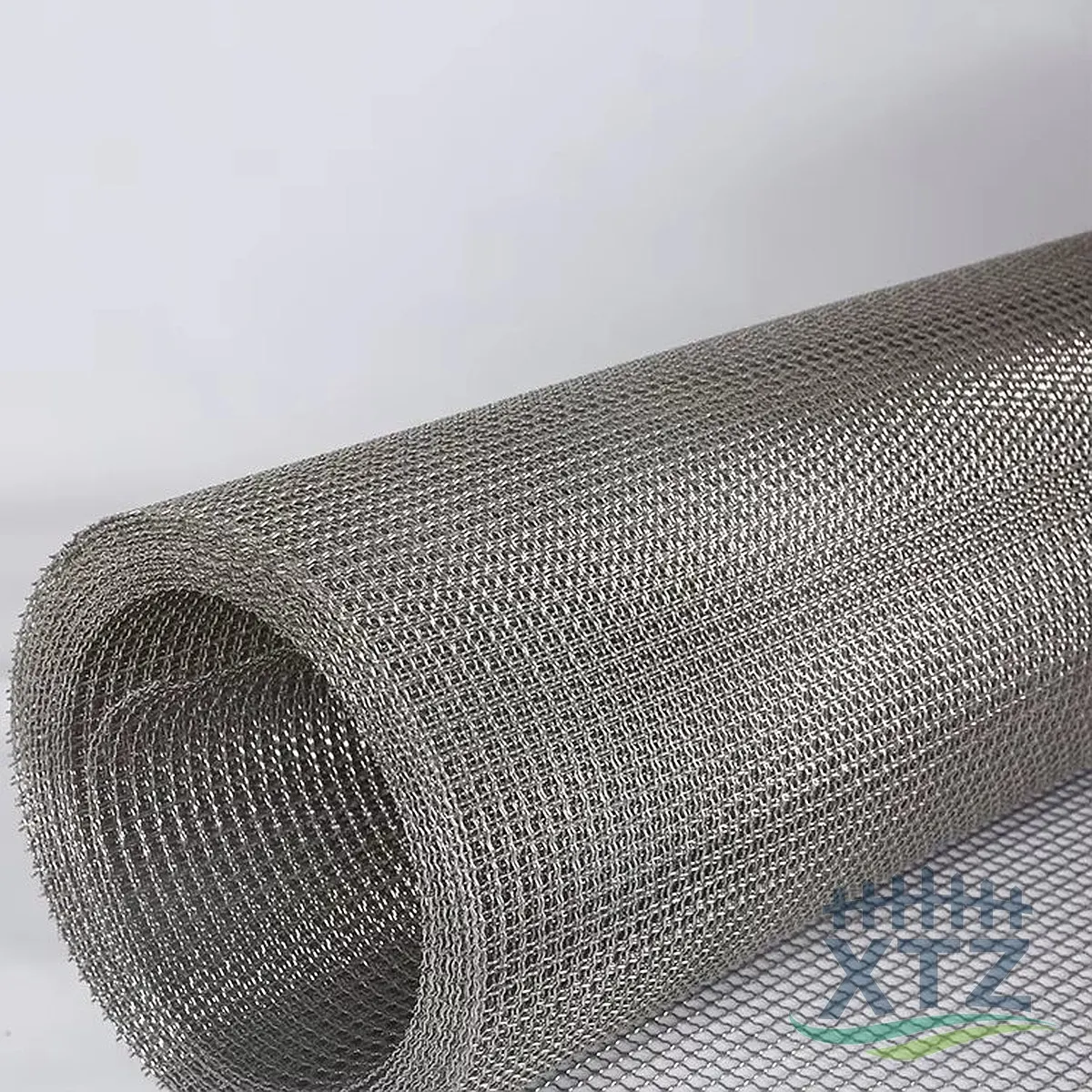
Rolls
A roll can be useful when several sizes will be cut from one material. Confirm roll width and length, handling requirements and the condition expected after unrolling. Include cutting allowance and pattern direction in the nesting plan. Do not assume every heavy or rigid woven mesh can be supplied as a convenient roll.
Cut sheets
Cut-to-size sheets reduce workshop cutting, but the purchase dimensions must be unambiguous. Distinguish the visible opening in the frame from the overall mesh insert. Agree tolerances, squareness and how the edge intersects the weave. A sheet cut through the middle of an opening will finish differently from one cut beside a wire.
Custom panels
For woven wire mesh panels, provide the frame section and retaining detail. State whether the supplier is quoting mesh only or a complete assembly. If welding or coating is involved, confirm its sequence and the approved appearance afterward. Keep a marked sample for comparison with the finished delivery.
Prepare an enquiry that can be quoted accurately
A useful enquiry reads: “Woven stainless mesh for interior partitions; pattern and grade to be confirmed from attached sample reference; required clear opening and wire dimensions shown on drawing; panel sizes and quantities per schedule; vertical warp orientation; edges retained in the detailed frame.”
Add the destination, required delivery sequence, finish reference and packing requirements. Identify critical dimensions and the sample approval date. Ask the supplier to list any proposed substitutions explicitly, including changes in wire size, crimp, finish or panel format.
For stainless woven wire mesh, material grade and finish deserve separate entries. “Silver” describes appearance and cannot establish the alloy. Avoid inferring material from a photograph or magnet response alone; request the agreed material documentation where required.
Frequently asked questions
Is woven mesh stronger than welded mesh?
There is no useful universal ranking. Performance depends on wire size, opening, alloy, connections and support conditions. Woven and welded intersections also behave differently. Compare the actual assemblies against the intended loads and permissible deflection rather than selecting a construction from a general strength claim.
What is the difference between plain crimp and lock crimp?
Plain crimp uses a regular bent-wire profile, while lock crimp has a shaped intersection intended to locate crossing wires more firmly. Their suitability depends on the particular opening and wire dimensions. Confirm the crimp with a close-up sample and the supplier's drawing before approving a substitution.
Does mesh count tell me the hole size?
Only when wire dimensions and the counting convention are also known. Two meshes with the same count can have different clear openings because their wires differ in thickness. For rectangular mesh, state both directions. For a decorative pattern, a dimensioned repeat drawing may be more useful than a mesh count.
Can woven metal mesh be used for cabinet doors?
Yes, an appropriate woven panel can be retained within a cabinet frame. Check its thickness, weight, edge condition and the available recess. The retaining method should prevent movement without distorting the pattern. Review all neighboring doors together so the dominant wire direction and repeat alignment stay consistent.
What should I inspect on delivery?
Check the agreed material identification, opening, wire dimensions, panel size, orientation and edge treatment. Compare the finish with the retained sample under consistent lighting. Record damage, distortion or loose edge wires before fabrication. Use the agreed tolerances and inspection method rather than inventing acceptance limits after delivery.
Send XTZ Fence the opening, wire dimensions, weave reference and panel schedule, together with the intended application. A clear edge section will help resolve whether rolls, cut sheets or finished panels fit the project best.