A keeper ordering a flight enclosure and a roofer closing a gap under solar panels might both ask for “bird mesh.” The keeper needs a surface that birds can live against, sometimes climb and sometimes chew. The roofer needs a narrow screen that follows an uneven roofline and can come off for maintenance. Those two orders should look quite different.
Choose bird mesh by what happens at the barrier
| Where it goes | What to compare first | Detail to check |
|---|---|---|
| Framed aviary wall or service door | Welded bird cage wire | Clear opening, wire diameter and cut ends at the frame |
| Walk-through aviary with curved walls or an overhead span | Stainless steel rope mesh | Installed diamond dimensions and perimeter support |
| Loading bay or sheltered building recess | Purpose-made bird exclusion netting | Smallest visiting species and maintenance access |
| Gap beneath a solar array | A fitted wire skirt and compatible clips | Roof profile, corners and panel servicing |
| Seasonal fruit protection | Wildlife-appropriate crop netting over a frame | Visibility, opening size and loose edges |
A tree-tube cap is a useful example of how specific these products get. It covers the mouth of a seedling guard. A roll sold for that job tells you very little about how an aviary roof will behave across a span.
Welded wire or cable mesh for a permanent aviary?
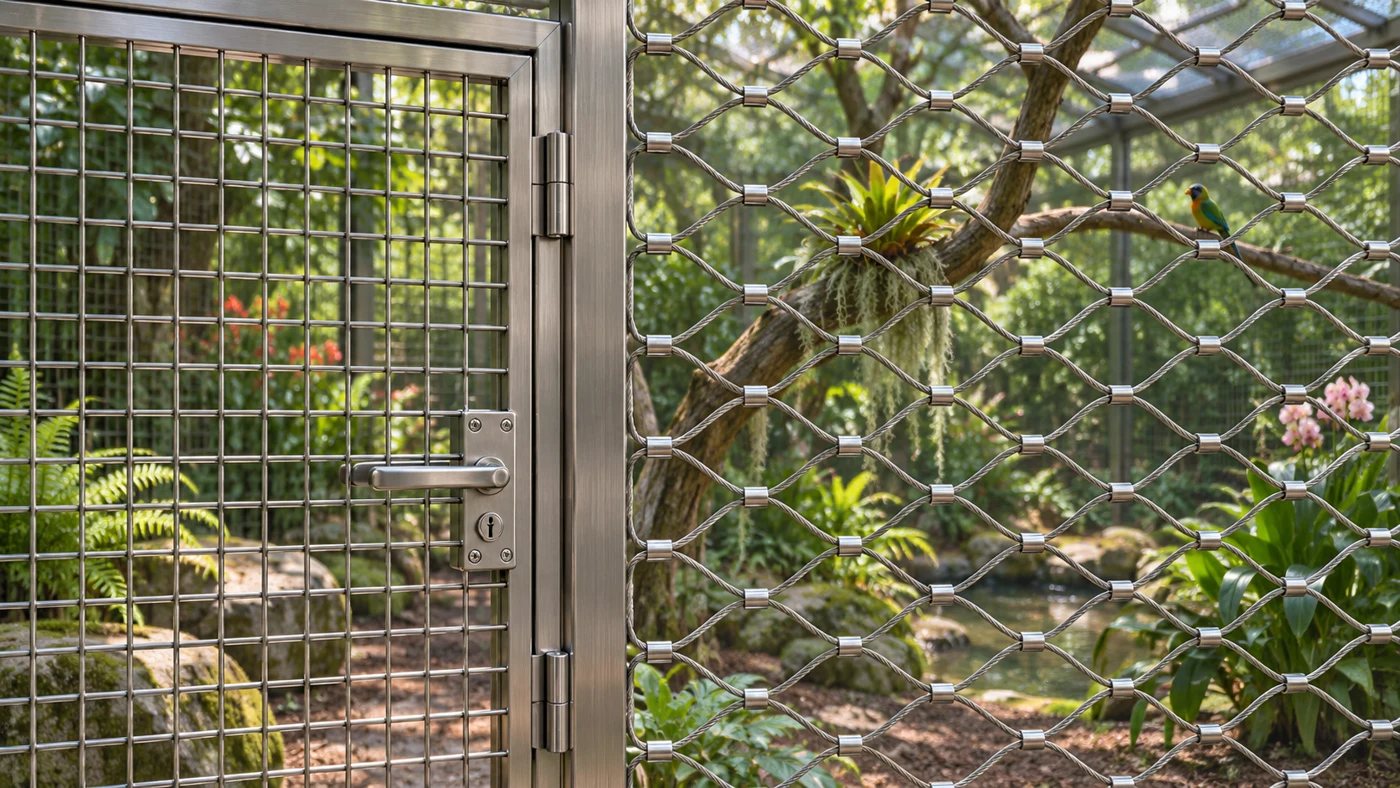
On a rectangular keeper door, welded wire gives the fabricator a regular grid to cut and capture inside a frame. Ask a stainless steel welded wire mesh supplier for the clear opening, wire diameter and a sample with the proposed edge finish. Handle the framed edge as well as the face. A smooth sheet can still leave a sharp tail beside a latch.
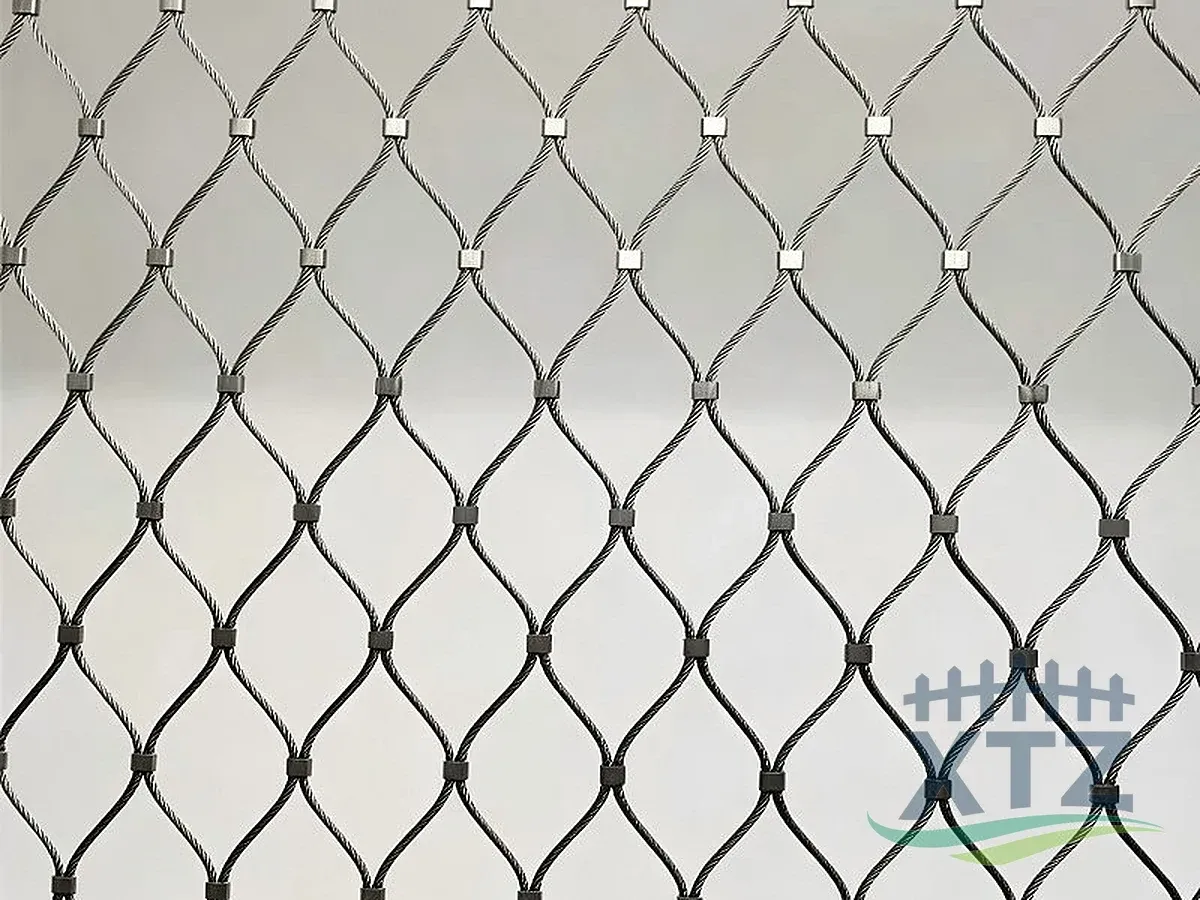
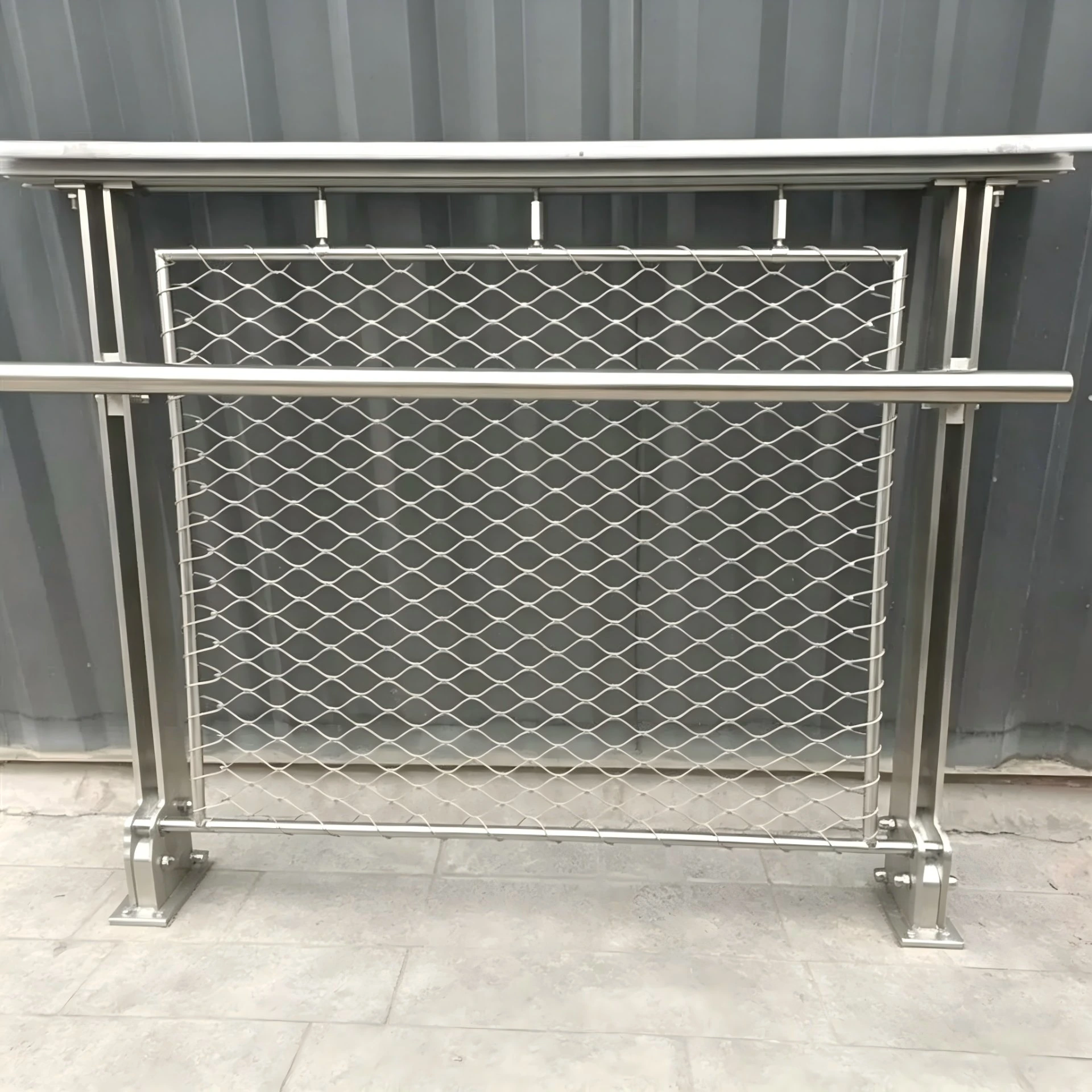
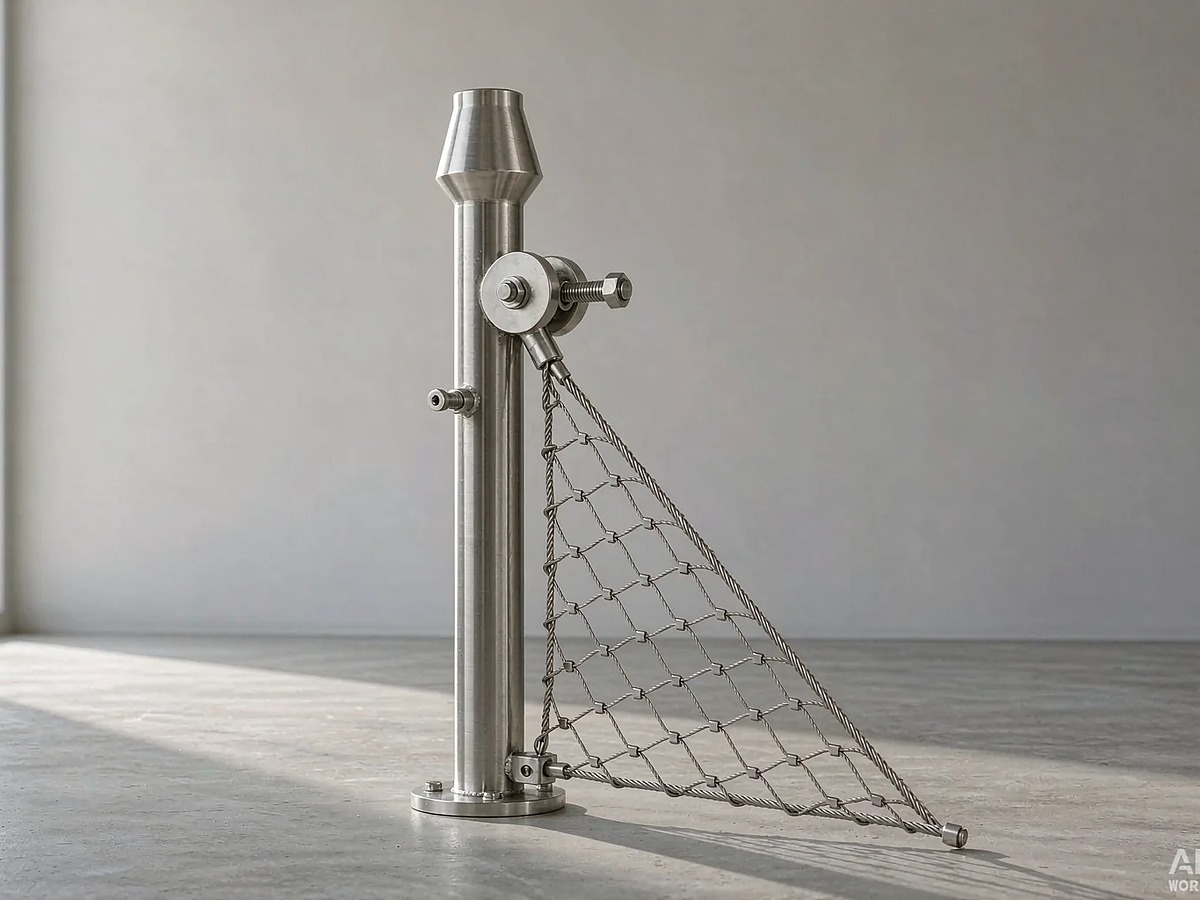
For a curved flight or a tall viewing face, stainless steel cable mesh can follow the enclosure geometry. Its diamond pattern changes as the panel is spread. A drawing should show the orientation of the diamonds, the cable diameter, both installed diagonals and how the edge meets its support. For an overhead span, have the support and anchor loads checked for the site.
Buying parrot cage wire adds a different question: what can the bird reach with its beak? Include clips, sleeves and coatings in the material review. Have the keeper or avian veterinarian assess the sample for the species before ordering the full run. For mixed collections, include juveniles and the smallest birds that will actually use the flight.
How to measure the opening a bird will encounter
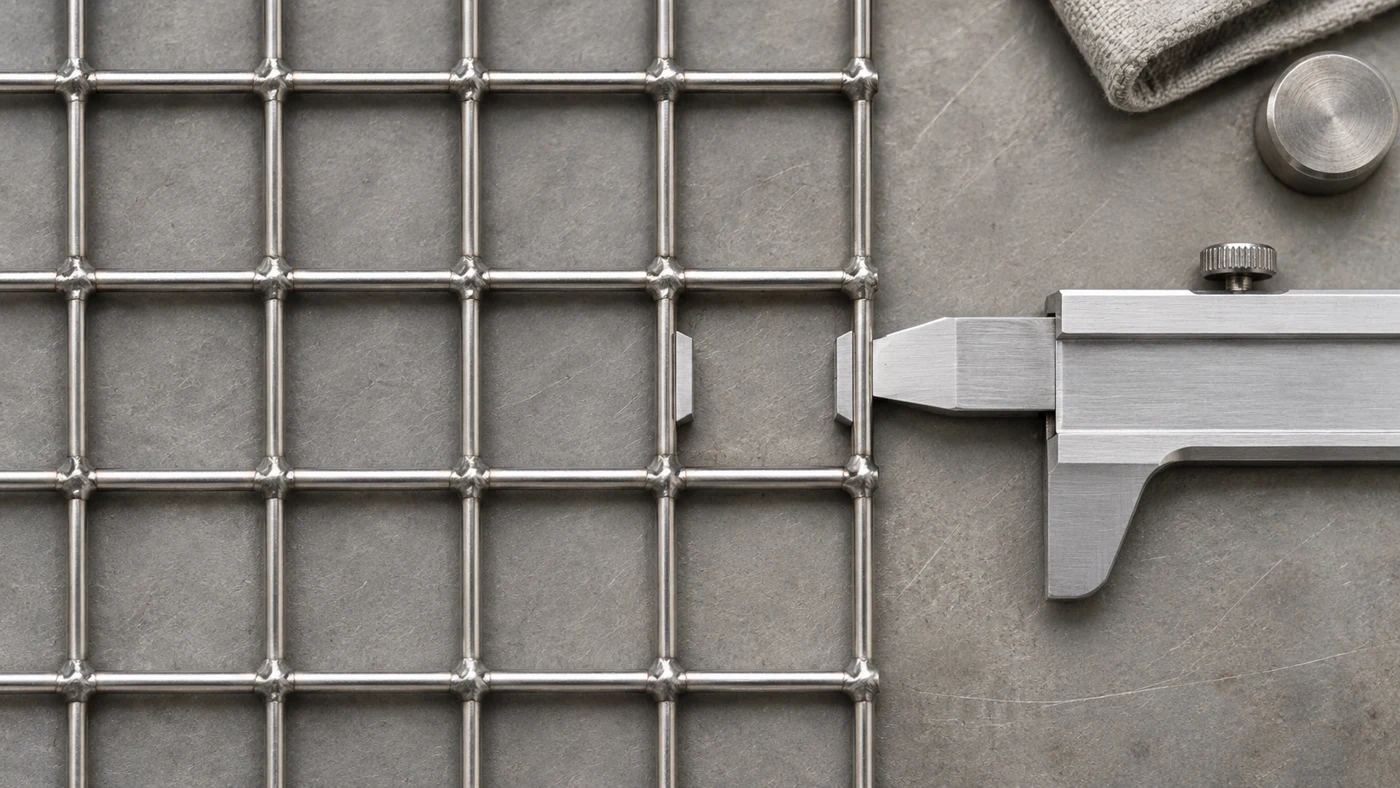
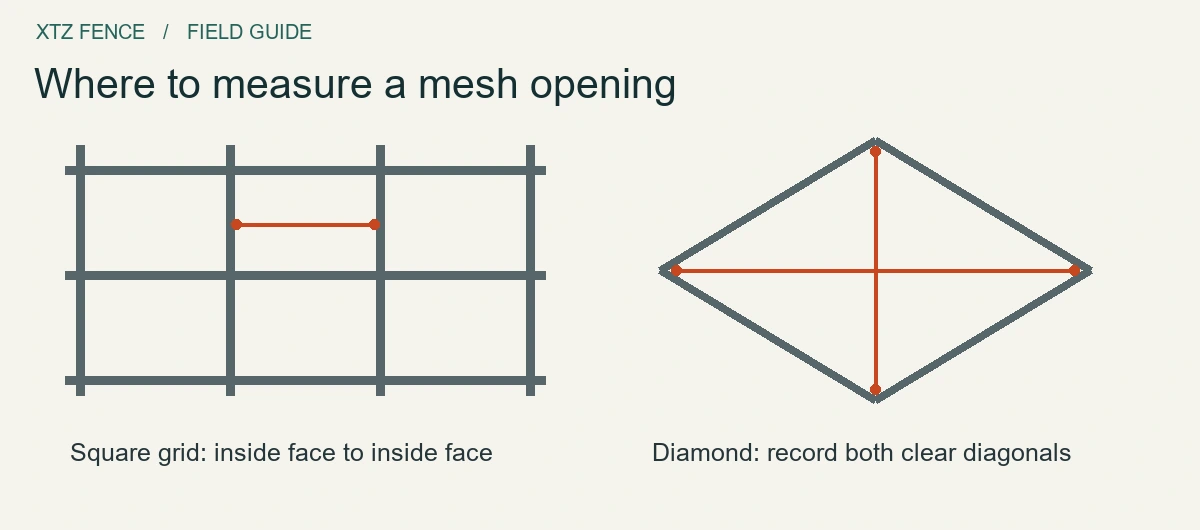
Put the measuring jaws against the inside faces of two opposite wires. A square grid with 25 mm center-to-center spacing and 2 mm wires has about 23 mm of clear space. Two suppliers can therefore both quote “25 mm mesh” and deliver visibly different openings. Ask each one to mark its measuring points on the same sketch.
With a flexible panel, take the measurements on a sample held in the proposed installed shape. Check another opening near the border, where lacing can pull the diamonds out of shape. Then check the hinge side of the door with the leaf closed. A well-specified panel does little for a flight with a larger gap at the sill.
When bird exclusion netting makes more sense
Under a loading canopy, the birds usually approach from outside. Identify which birds use the space before choosing the opening. A 2-inch (about 51 mm) net sold for pigeon exclusion can leave a route for smaller birds. An opening quoted for a warehouse pest-control job is also a poor starting point for specifying a captive bird’s enclosure.
Trace the perimeter on a photograph. Mark beams, pipes and the point where a technician reaches the lights. Include a service opening there. Before closure, check the void for birds and active nests. After work on the lights, someone needs to close the access panel and check the seam.
A solar array calls for a different detail: a narrow perimeter skirt that fits the dips in the roof and allows servicing. Have the installer check attachment compatibility with the panel manufacturer. For garden fruit, support the net above the crop and secure the edges. Local wildlife guidance matters here. Victoria, Australia, for example, specifies openings of 5 × 5 mm or less at full stretch for netting used to protect household fruit trees and similar plants. That figure belongs to that use and jurisdiction.
What to put in a bird mesh quotation request
Send one marked-up view for each wall, roof and door. Give clear frame dimensions, identify the bird species, mark the smallest permitted opening agreed with the keeper, and say which side birds or predators can reach. Include the exposure, cleaning routine and any requirement to remove a panel. A keeper working from a ladder will want the replaceable section identified before a repair is needed.
For example, a request for a 3 m × 2 m keeper door could ask for a framed welded panel, a sample corner showing the enclosed cut ends, and a drawing of the closed hinge and threshold gaps. The same dimensions for a cable panel would also need diamond orientation, edge attachment and installed aperture. Give XTZ Fence those details when comparing metal options so the quotations cover the same assembly.
Questions buyers ask about bird mesh
Can one aviary net stop predators and contain birds?
Check the two jobs separately. An aperture that contains the resident birds can still allow a paw through. Ask the keeper to identify reach-through points near perches and feeding stations. The remedy may be a stand-off barrier or a change in perch position.
What should staff inspect after installation?
Walk the perimeter, cycle each door and look closely at bottom corners, lacing and access seams. Record the installed openings at those points for comparison after storms or repairs. If a strand breaks or a fastening loosens, secure the affected area before returning birds to it.
Recommended reading
- Aviary mesh selection for enclosure projects
- How to read wire mesh sizes
- 304 vs. 316 stainless steel cable mesh
Source
Agriculture Victoria — Protecting fruit trees and wildlife (household fruit-netting guidance).