Chicken wire can discourage squirrels from digging in some garden beds, but it is a poor default for permanent exclusion from a building or valuable crop enclosure. Check the opening, wire condition and complete enclosure. A squirrel may enter through a gap, lift an edge or climb over the top without chewing through any wire.
Can squirrels chew through chicken wire?
Light, damaged or corroded poultry netting can be breached. A claim that squirrels either can or cannot chew through all “chicken wire” ignores the product’s diameter, construction and condition. The useful question is whether the installed barrier can resist the access attempt at that location.
Ordinary chicken wire is a flexible hexagonal mesh. It is easy to shape around plants, but that flexibility can also allow an unsupported edge or opening to move. A larger opening may admit an animal or let it reach a crop before the wire itself suffers damage.
Look at the evidence before selecting a replacement. Loose fixings, a lifted bottom edge and a genuinely damaged wire call for different repairs. A hole in a barrier is not proof that an animal cut through sound metal.
Separate garden digging protection from building exclusion
A temporary cover over newly planted soil has a narrower job than a permanent screen over an attic opening. Choose the barrier around the actual damage you are trying to prevent.
| Situation | What the barrier must do | Common oversight |
|---|---|---|
| Freshly planted pot or bulb bed | Discourage access to loose soil during a defined growing stage | Unsecured edges or mesh that traps expanding stems |
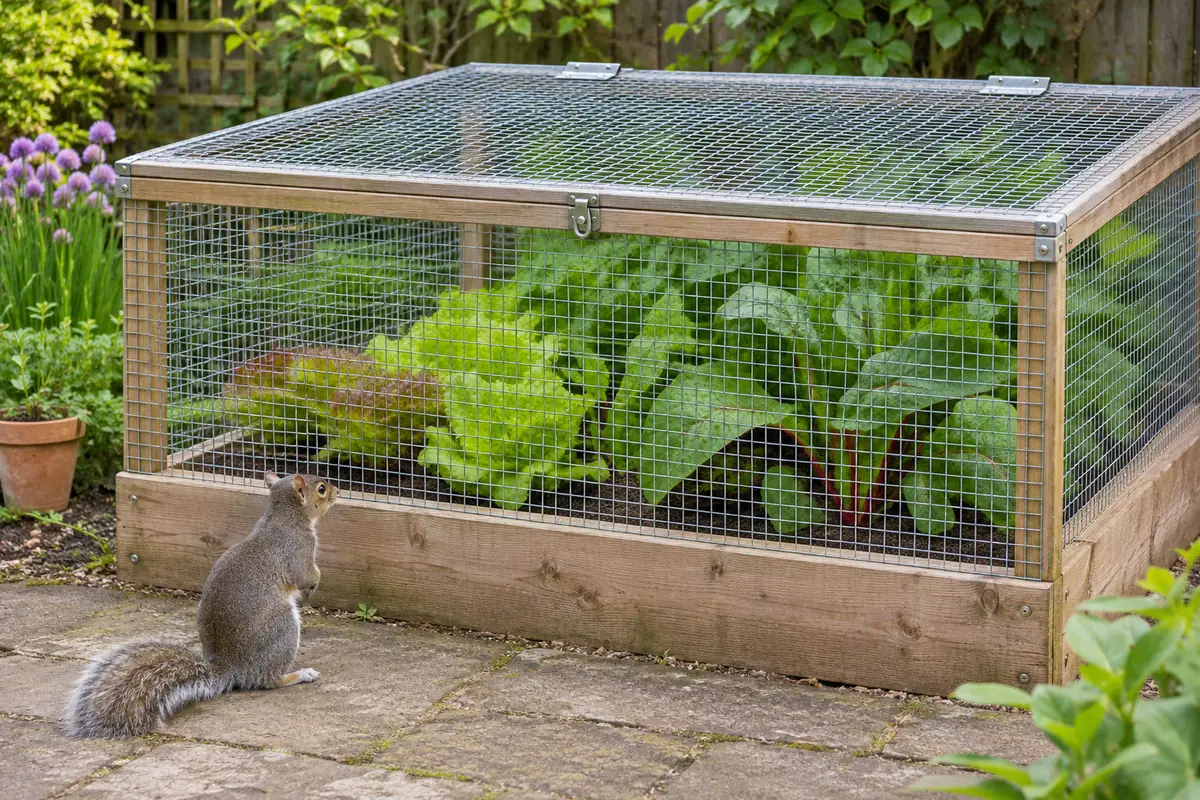
| Ripening vegetables or fruit | Prevent entry and access to the crop as it grows | An open top, a loose lid or fruit resting against the mesh |
| Attic, soffit or wall opening | Close an entry route after occupancy and building condition are checked | Covering occupied nests or fixing mesh into rotten trim |
| Vent or chimney | Exclude wildlife while preserving the opening’s intended function | Restricted airflow, lint buildup or an unsuitable cover |
An Extension response about squirrels disturbing garden pots describes poultry wire as a temporary way to protect freshly disturbed soil. That is a different recommendation from selecting a permanent building-exclusion screen. Remove or adjust a temporary cover before it constrains plant growth or obstructs normal maintenance.
For a fully protected crop area, account for the top and the access lid. A tall side fence around a small bed may still be open to a climbing tree squirrel. Leave enough internal space that developing fruit and shoots do not sit against the barrier.
Choose clear opening, wire diameter and material
Obtain the clear opening in both directions, the actual wire diameter and the mesh construction. Product names, gauge numbers and an unscaled photograph leave too much unspecified.
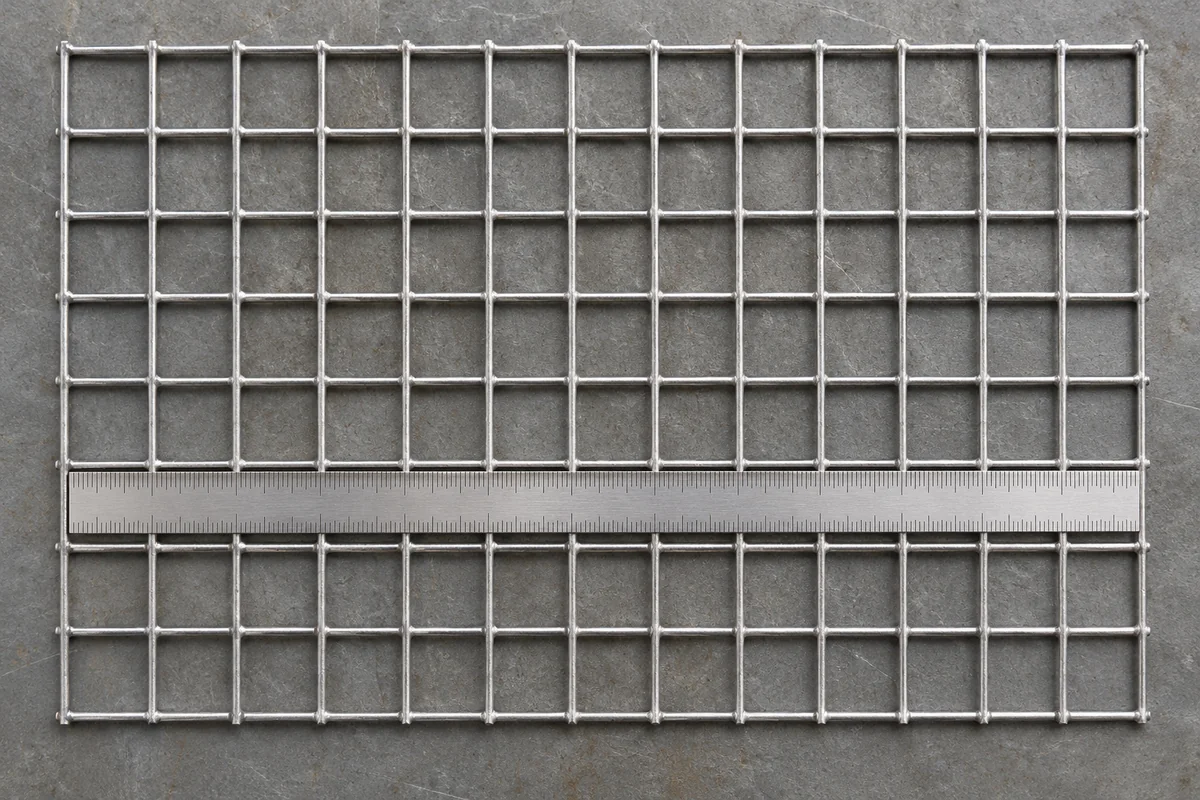
University of Missouri Extension describes half-inch hardware cloth for attic vents and similar openings. An Extension response to a raised-bed enclosure question recommends half-inch openings or less for that garden situation. Those examples identify a useful comparison range; they do not establish one universal specification for every squirrel species, young animal or additional pest.
Quarter-inch mesh is another option where a smaller opening is needed. Check its wire diameter too. A finer opening can come with a lighter wire, and the whole sheet may need closer support. Measure an unfamiliar sample before assuming that its nominal mesh label describes the empty space.
For a plain square grid, center spacing equals clear opening plus wire diameter. Record each value separately when comparing wire mesh size. If a supplier labels a square mesh by count, ask how that count is measured and obtain the actual aperture.
Galvanized steel and stainless steel are different material choices. Check coating condition on galvanized mesh, especially at cuts and bends. For stainless, specify the grade and the exposure. Neither material name guarantees that a loose edge, failed weld or unsuitable attachment will resist an animal.
Diagnose how the squirrel crossed the barrier
Photograph the disturbed area before removing it. Inspect the route around the opening as well as the wire itself. If you cannot identify what failed, replacing the panel with a similar one may preserve the same access route.
| What you find | What to investigate | Repair direction |
|---|---|---|
| Intact mesh beside a gap | Door fit, corners, wall junctions or omitted panels | Close the bypass and support its edges |
| Bottom edge lifted from the soil | Insufficient restraint or an unaddressed digging route | Resolve the ground connection for the animal and site |
| Mesh pulled away from a frame | Fixing withdrawal, rotten wood or a loose lap | Repair the substrate and improve edge retention |
| Distorted openings or failed crossings | Wire diameter, mesh construction, weld condition and unsupported span | Review the mesh specification and supporting structure together |
| Broken wire or obvious metal damage | Corrosion, earlier cuts, repeated flexing and the actual animal activity | Replace damaged material and address the identified cause |
| Crop damage with an intact enclosure | Reach-through, fruit against the mesh or an animal already inside | Check internal clearance, occupancy and all access routines |
This inspection separates barrier coverage from material strength. A stronger wire can help with a deformation problem; it cannot close a lid that somebody leaves open. A smaller aperture may reduce an entry route while leaving the lower edge completely unsecured.
Detail a garden cage for the crop and the person using it
Use a frame that keeps the mesh supported when the lid opens and closes. A loose cover draped over plants is difficult to inspect and can move when the crop is watered or harvested.
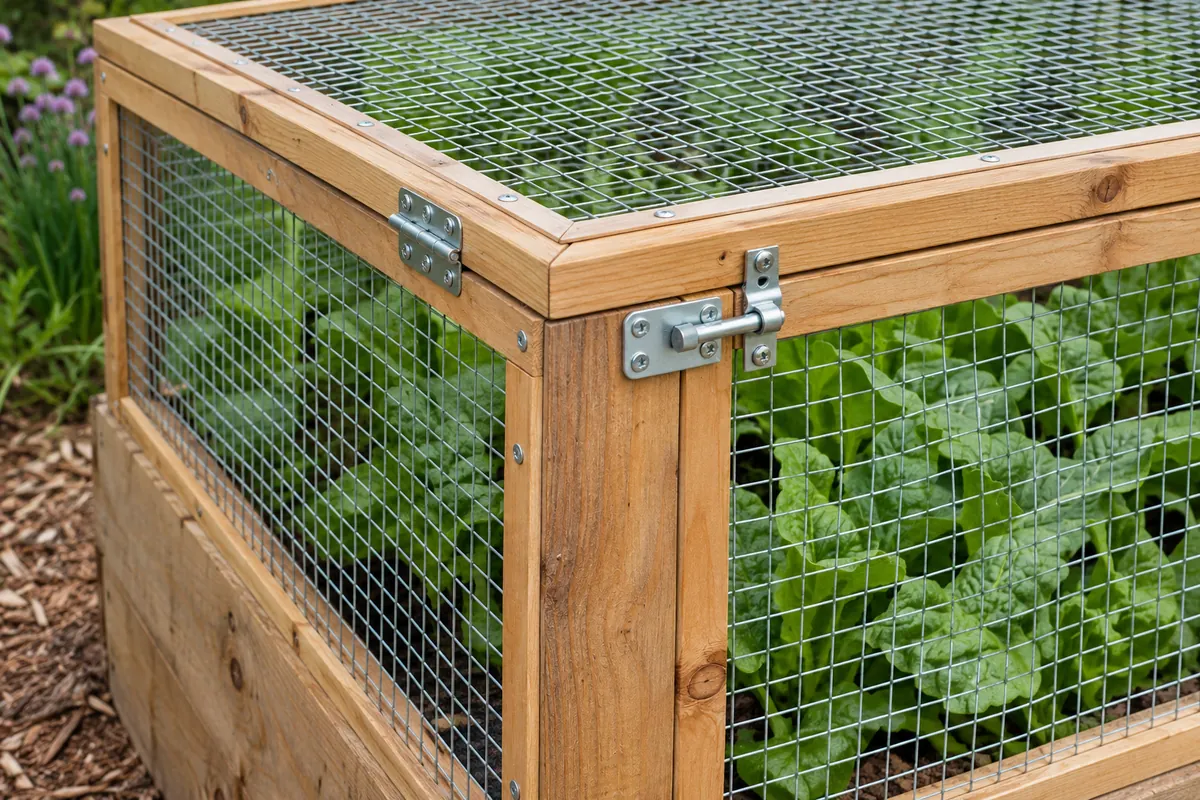
Plan the enclosure’s working height and access before cutting mesh. Check that a gardener can reach the plants without detaching a wall, that a lid has room to swing and that heavy covers can be handled safely. Repeatedly bending back a cut wire edge creates a maintenance problem.
Keep lid edges, corners and any opening for irrigation continuous when closed. Protect cut wire ends beneath a retaining strip or another appropriate edge detail. Check the underside of the frame, including the space where a raised bed meets uneven ground.
Reassess the enclosure as plants mature. Stems thicken, branches lean and fruit can grow into the wire. Allow room for those changes without leaving a large permanent access gap. Remove discarded ties and loose netting that can catch wildlife.
Check occupancy before closing a building opening
Confirm that squirrels and dependent young are outside before sealing an access route. Noise, nesting material, repeated movement or uncertainty about an active nest are reasons to seek an appropriate wildlife professional.
Cornell IPM’s exclusion guidance asks whether the animal is inside, whether young may be present and whether the proposed method is lawful before structural openings are closed. Repair the damaged building component too. Mesh fixed to decaying trim may pull away with the trim attached.
Use details appropriate to the opening’s function. An attic ventilation screen needs its required air path. A dryer exhaust, flue or equipment vent has different constraints and should not receive an improvised screen that collects debris or restricts discharge.
Tree squirrels and ground squirrels also need different assessments. UC IPM’s ground squirrel resource describes their burrowing behavior and the limitations of exclusion. Identify the animal before transferring a tree-squirrel garden detail to a ground-squirrel problem.
Compare barrier costs using the same supply scope
Compare the finished barrier, including the frame, lid, fasteners, ground detail and maintenance access. A lower price per roll can be offset by extra seams, unusable offcuts or a frame that needs replacing.
For mesh quotations, provide the clear opening, wire diameter, material, finished panel dimensions, quantity, edge finish and intended support spacing. Add a sketch of each corner and opening. If the supplier proposes a different mesh, ask which specified field changes.
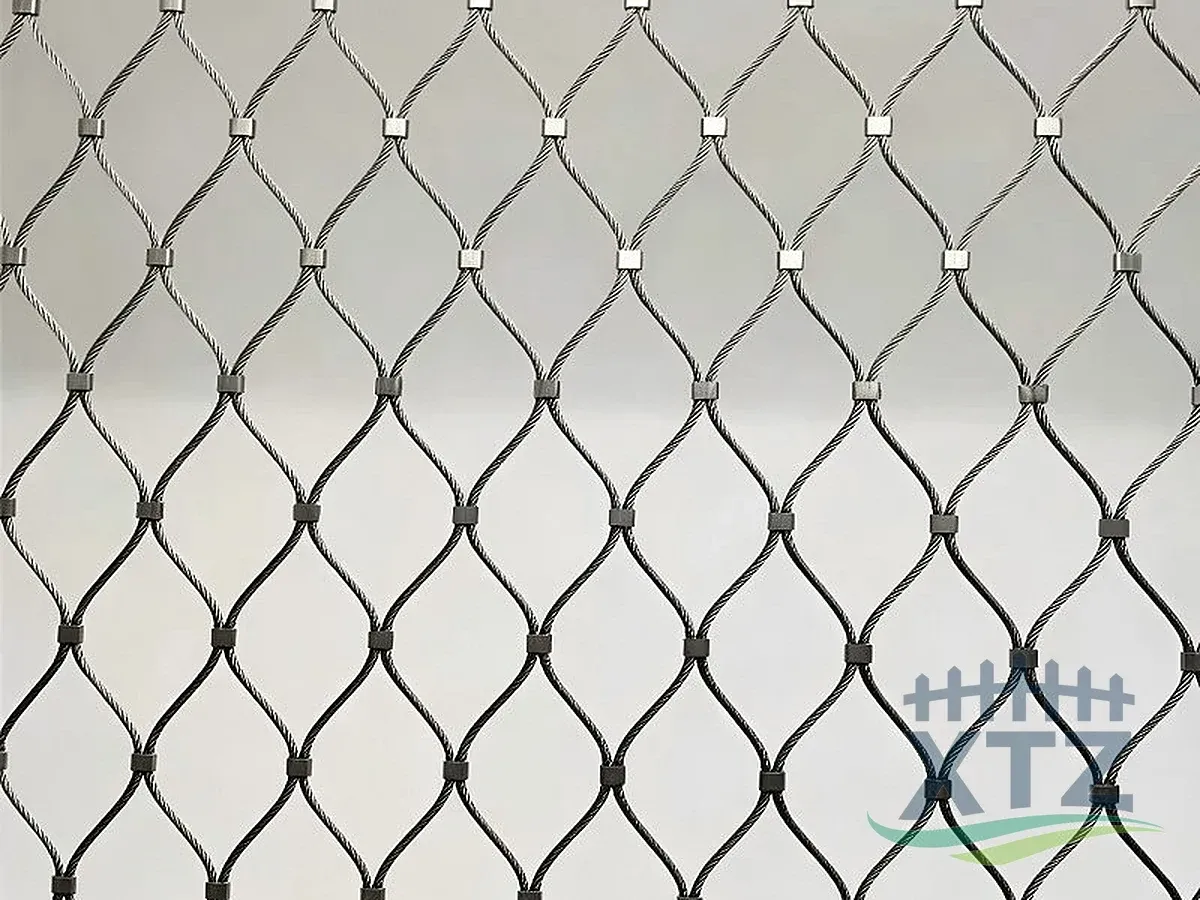
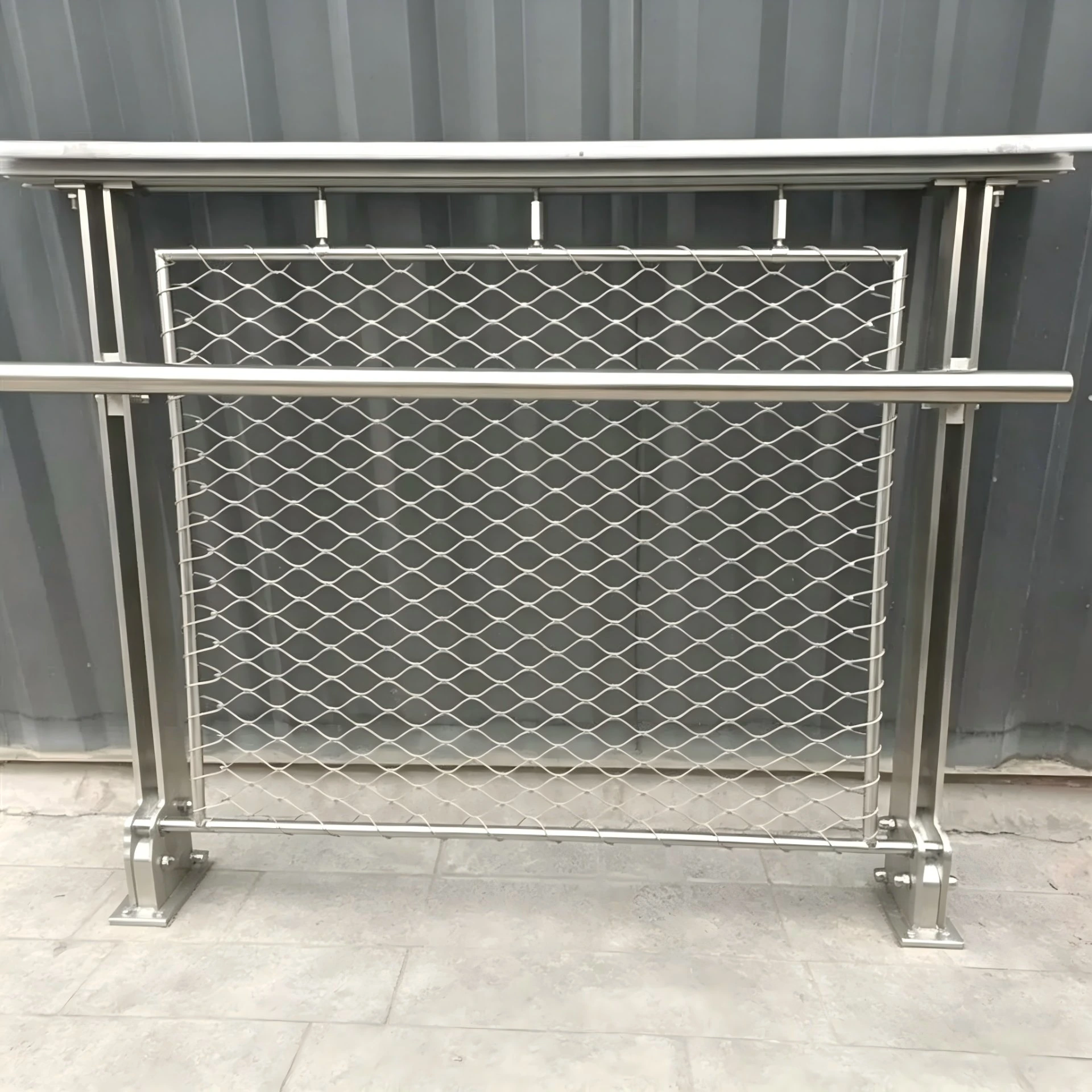
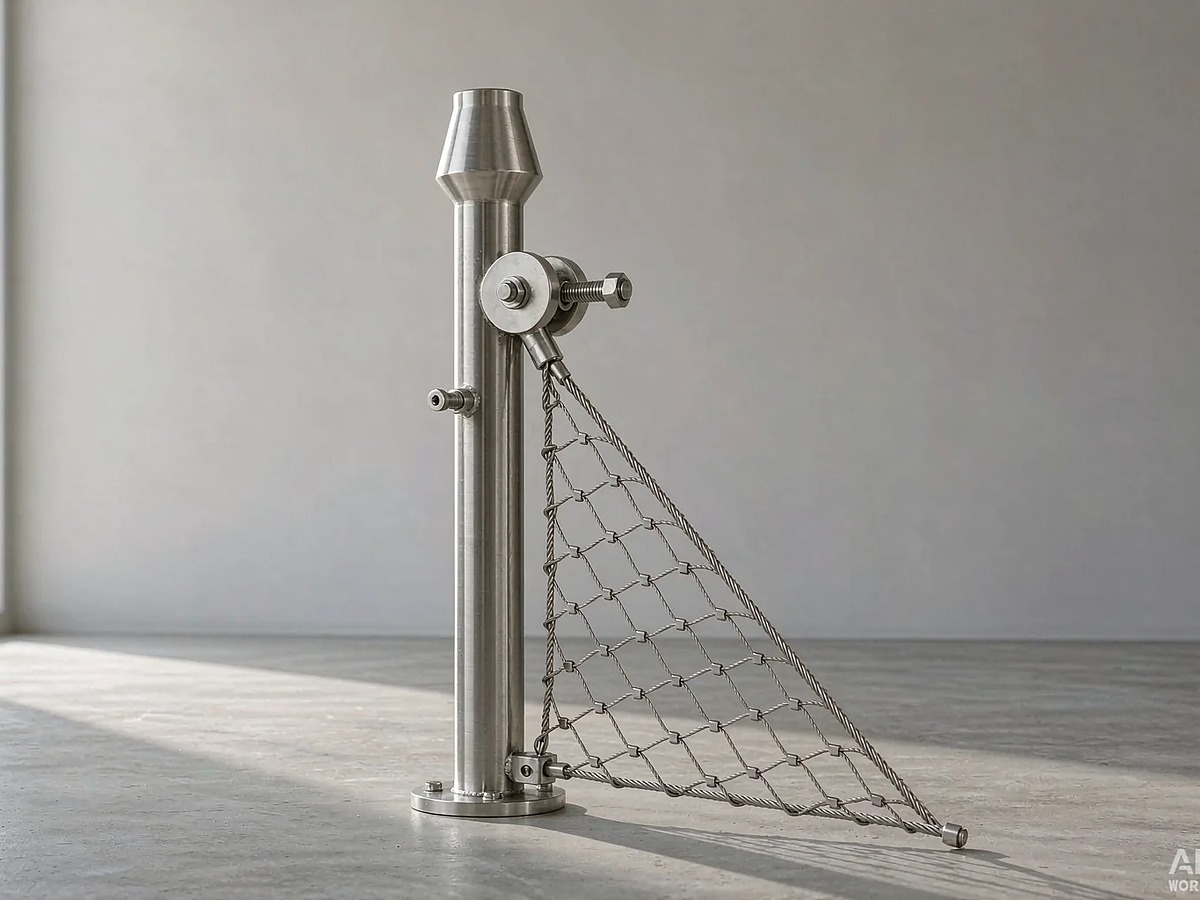
Discuss custom screen components with XTZ Fence, a stainless steel wire mesh manufacturer. Confirm the proposed specification and supply scope before treating a general industrial mesh as a squirrel barrier. Do not infer exclusion performance from a photograph of an unrelated railing or large enclosure.
Chicken wire for squirrels: common questions
Will chicken wire stop squirrels digging in pots?
It can discourage digging when fitted as a secure temporary cover over vulnerable soil. Check the edges, protect plants from sharp cuts and adjust the cover as stems grow. This limited use does not establish that the same light wire is appropriate for permanent exclusion from an attic, soffit or a crop enclosure exposed to repeated attempts.
Is quarter-inch or half-inch mesh better for squirrels?
Select the opening for the animal and the location, then compare wire diameter and support. Extension examples use half-inch hardware cloth for certain building openings and half-inch or smaller mesh for a garden enclosure. Smaller openings may address other pests or smaller entry routes, but a thin wire and loose fixing can still undermine the barrier.
Can a squirrel climb a wire fence?
Tree squirrels are capable climbers, so increasing a small garden fence’s height does not create a closed enclosure. Check branches, neighboring structures, corners and the top. For a vulnerable crop cage, provide a properly fitted lid or roof suited to the design. Inspect the enclosure as vegetation grows and creates new access opportunities.
Do I need a wire roof over a raised bed?
If tree squirrels are entering over the sides, the barrier needs an overhead closure or another effective access detail. The cover must still allow safe gardening, plant growth and normal maintenance. Decide whether the task is temporary soil protection or season-long crop exclusion, because the access and clearance requirements differ.
Should I seal a hole as soon as I find a squirrel entry?
Check whether animals or dependent young remain inside first. Sealing an occupied cavity can leave a different problem in the building. Identify the active route and obtain suitable wildlife assistance when needed. Once the opening is ready to close, repair the supporting material and retain the mesh around its complete edge.
Does stainless steel mesh last forever outdoors?
No fixed service life follows from the name alone. Grade, moisture, salt exposure, deposits, wire condition and attachments affect the installed barrier. Inspect it regularly and after damage or building work. Replace compromised material and correct loose edges. A corrosion-resistant alloy still needs a sound frame and a complete enclosure.
Keep small-pest screens separate from larger enclosure systems
For a custom stainless screen enquiry, send XTZ Fence photographs of the site, the animal identified, the damage observed and a dimensioned fixing sketch. State whether you need mesh, cut panels or a framed component.
If the wider project includes a separate architectural or large-animal enclosure, consider XTZ Fence’s stainless steel cable mesh within that scope. Its stainless steel mesh railing systems also have their own opening, support and connection requirements. Their suitability for those uses does not establish suitability for excluding squirrels.
Further reading and topics to explore
XTZ Fence’s Rodent Wire Mesh: Openings, Materials and Installation covers mice, rats and building gaps. Further useful subjects include a seasonal checklist for garden-cage lids, maintaining plant clearance around mesh and recording the condition of wildlife-exclusion repairs.