Discoloration of stainless steel can come from surface deposits, iron contamination, coastal tea staining or heat-created oxides. Brown marks do not automatically mean the wrong alloy, and rainbow colors do not always mean harmless staining. Identify the exposure, location and surface condition before cleaning. Pits, damaged wires or recurring corrosion need closer assessment.
Identify the discoloration before choosing a cleaner
Use the mark’s location and history to narrow down the cause. Color helps describe a symptom, but it cannot confirm alloy grade, corrosion depth or whether a welded part is fit for service.
| What you see | Possible explanation | Useful next check |
|---|---|---|
| White or gray drying marks | Mineral deposits or cleaning residue | Water source, rinse method and whether a mild wash removes the deposit |
| Orange spots after cutting or building work | Embedded carbon-steel particles or other contamination | Nearby grinding, shared brushes, dirty handling equipment and storage conditions |
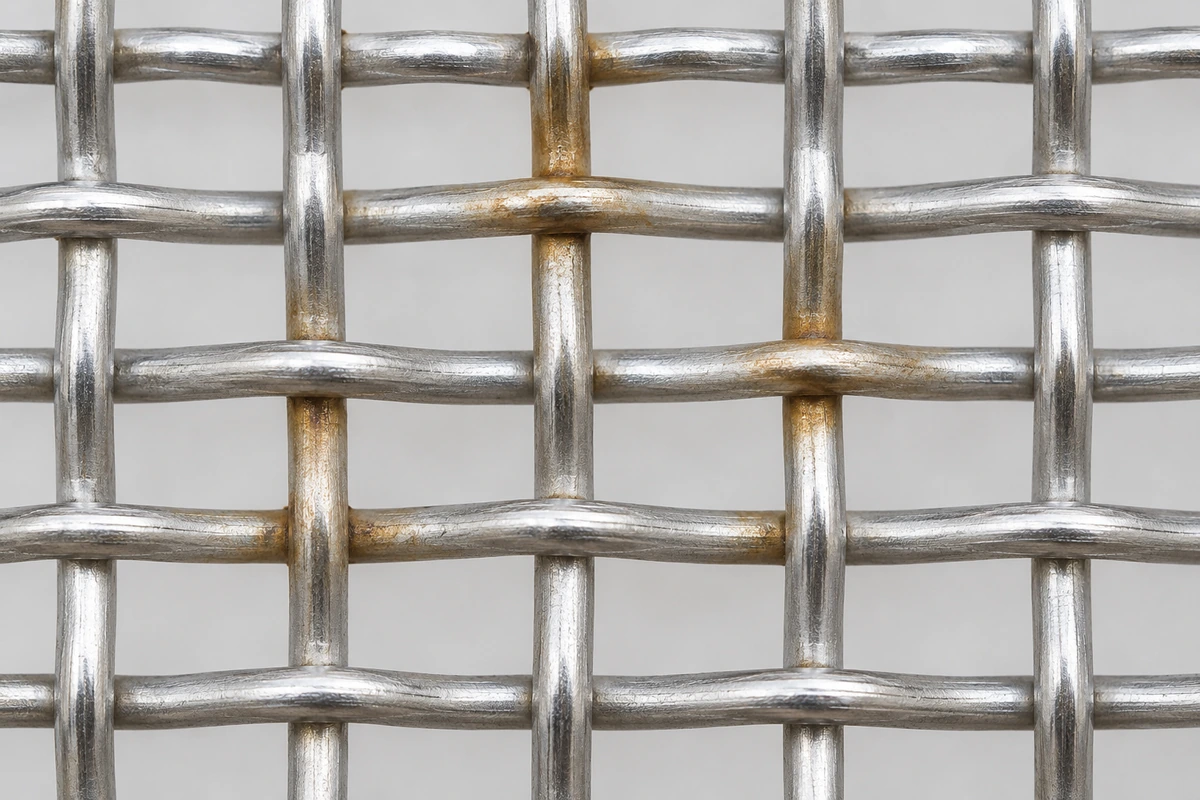
| A brown film on outdoor mesh | Tea staining associated with the exposure and surface condition | Salt deposits, sheltered areas, drainage, finish and cleaning history |
| Straw, blue or purple bands beside a weld | Heat tint formed during fabrication | Welding and post-weld finishing records; the intended corrosion service |
| Dark pits, crevices or local metal loss | Possible localized corrosion or another form of damage | Cleaned-surface inspection and an appropriate technical assessment |
| A rainbow film inside a stainless pan | A thin surface film associated with heating or use | The cookware manufacturer’s care instructions, rather than an industrial weld-cleaning procedure |
Take photographs before treatment, including a wider view of the location. Record the alloy if known, installation date, recent welding or grinding, and any cleaner used. Check both faces of the mesh, the frame, fasteners and areas sheltered from rain. A surface that looks clean from the front may retain deposits at wire intersections or behind clamps.
Why stainless steel can develop brown stains outdoors
Stainless steel resists corrosion through a thin protective surface film, but its condition still depends on the alloy and environment. Salt, contamination and retained moisture can create local problems, especially where deposits remain undisturbed.
ASSDA describes tea staining as surface discoloration that is generally an appearance issue, with its development affected by the environment, grade, surface finish and detailing.[1] That description should not be extended to every brown mark. After cleaning, visible cavities, wire thinning or cracking require a separate assessment.
Mesh has many intersections and fixing points. Some are difficult to rinse, and sheltered sections can miss the natural washing that exposed sections receive. A brown band below a clamp or along a lower rail may therefore point to a local retention problem rather than a uniform problem across the whole panel.
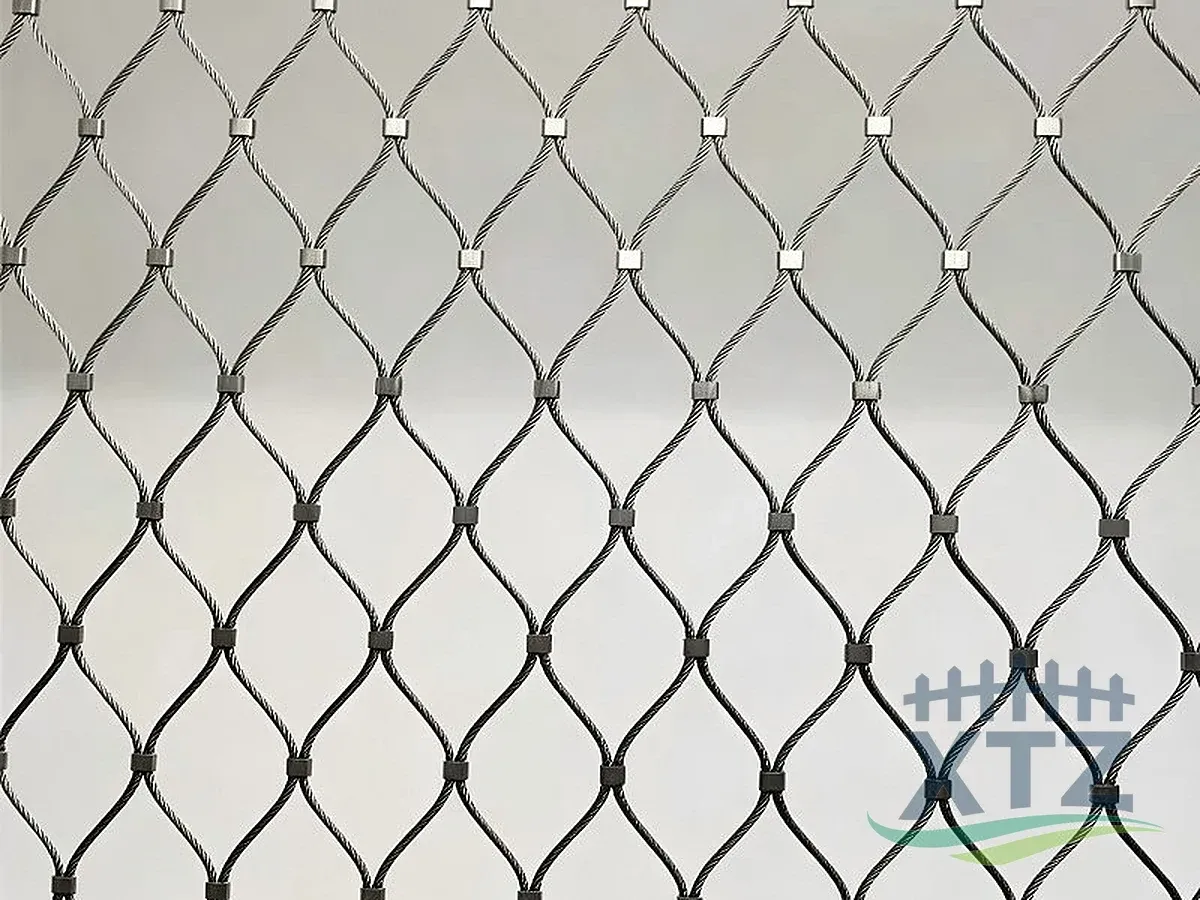
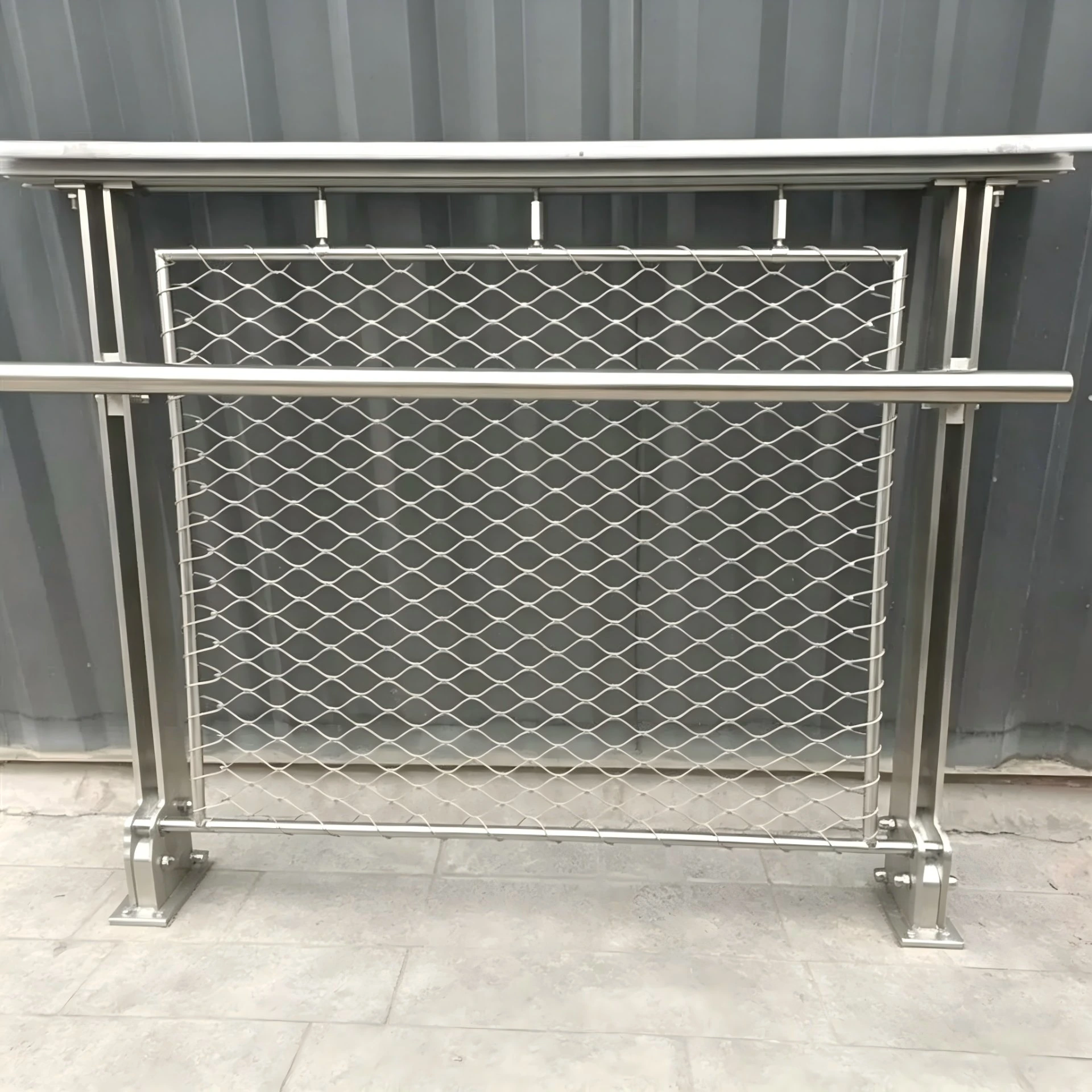
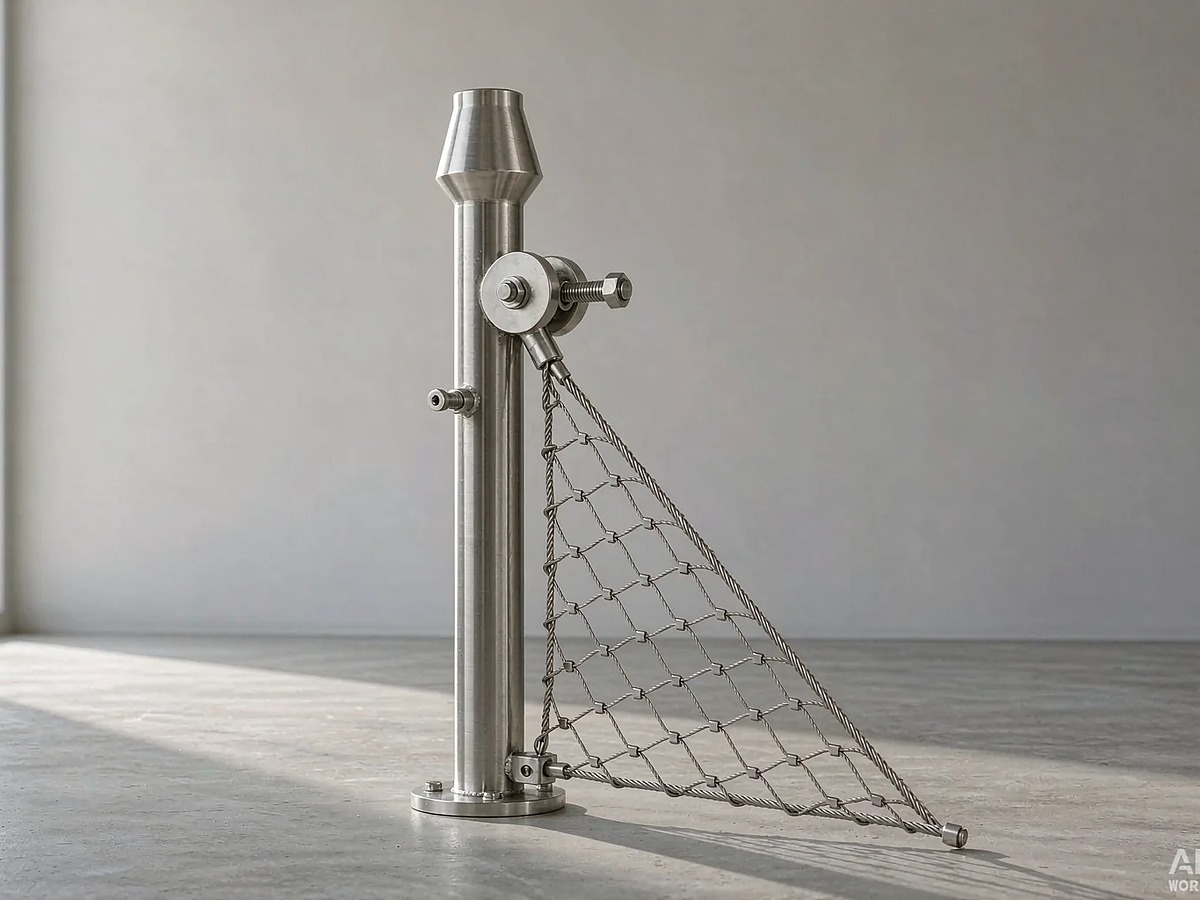
On stainless steel cable mesh, include the rope strands, ferrules and perimeter attachments in the inspection. For a stainless steel rope mesh fence, extend that check to the frame, posts and base connections. Photograph deposits before cleaning, then assess the accessible surfaces without loosening or disturbing tensioned fittings.
Review the complete assembly when specifying stainless steel decorative mesh for exterior use. Include finish, edge treatment and access to both sides, as well as the nominal alloy. A sample approved in a showroom does not establish the maintenance needed at a coastal site.
Start with cleaning that suits the finish and the contamination
Begin with a gentle, controlled wash on a small area. Stronger treatment should follow an identified problem and a compatible procedure, rather than a sequence of household chemicals.
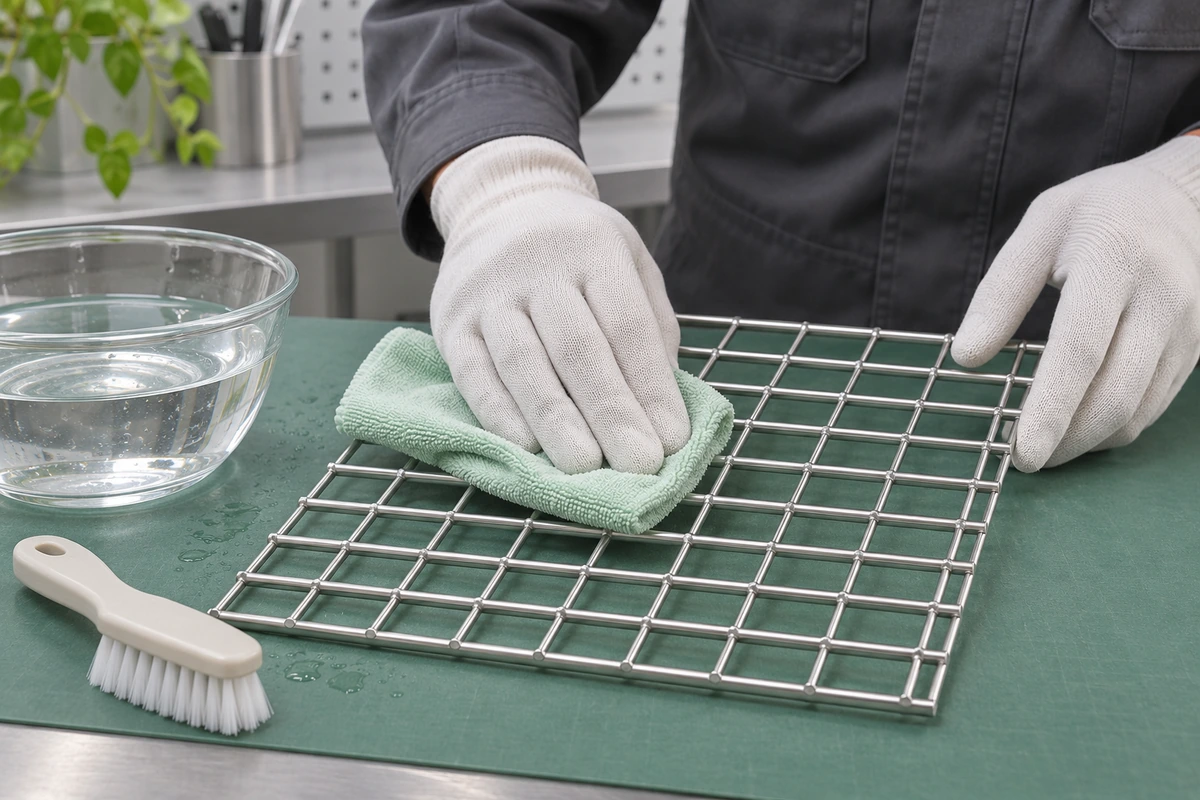
- Check the fabricator’s care instructions and the cleaner’s label. Protect adjacent materials and arrange safe access to the panel.
- Remove loose dirt without dragging abrasive grit over the finish. Use clean water and a clean, soft cloth or soft nylon brush.
- Wash with mild detergent, working gently with a directional finish where one is present. Reach intersections without bending fine wires.
- Rinse away the cleaner thoroughly and dry accessible surfaces to limit new water marks.
- Inspect the dry area before extending treatment. Record whether the stain lifted, remained or exposed an underlying pit.
This mild wash follows the routine approach described by BSSA.[2] If it does not remove the mark, ask the supplier about a stainless-compatible treatment for the identified deposit. Colored coatings, polished finishes and nearby sealants may impose additional limits.
Avoid carbon-steel wool and brushes previously used on ordinary steel. Keep bleach and hydrochloric-acid masonry cleaners away from decorative stainless surfaces; inappropriate products can cause staining and pitting.[2] Do not mix cleaners or make acid-cleaning recipes on site. Industrial pickling products require trained handling and a defined treatment and rinse process.
For stainless steel welded wire mesh, examine the junctions after cleaning as well as the straight wires. Dirt removal alone does not establish that a weld or a damaged wire retains its required performance.
Weld heat tint needs a different assessment from surface deposits
Heat tint near a weld is an oxide formed during heating. In corrosion-sensitive service, restoring the required condition can involve treating the heat-affected surface, rather than merely making its color less visible.
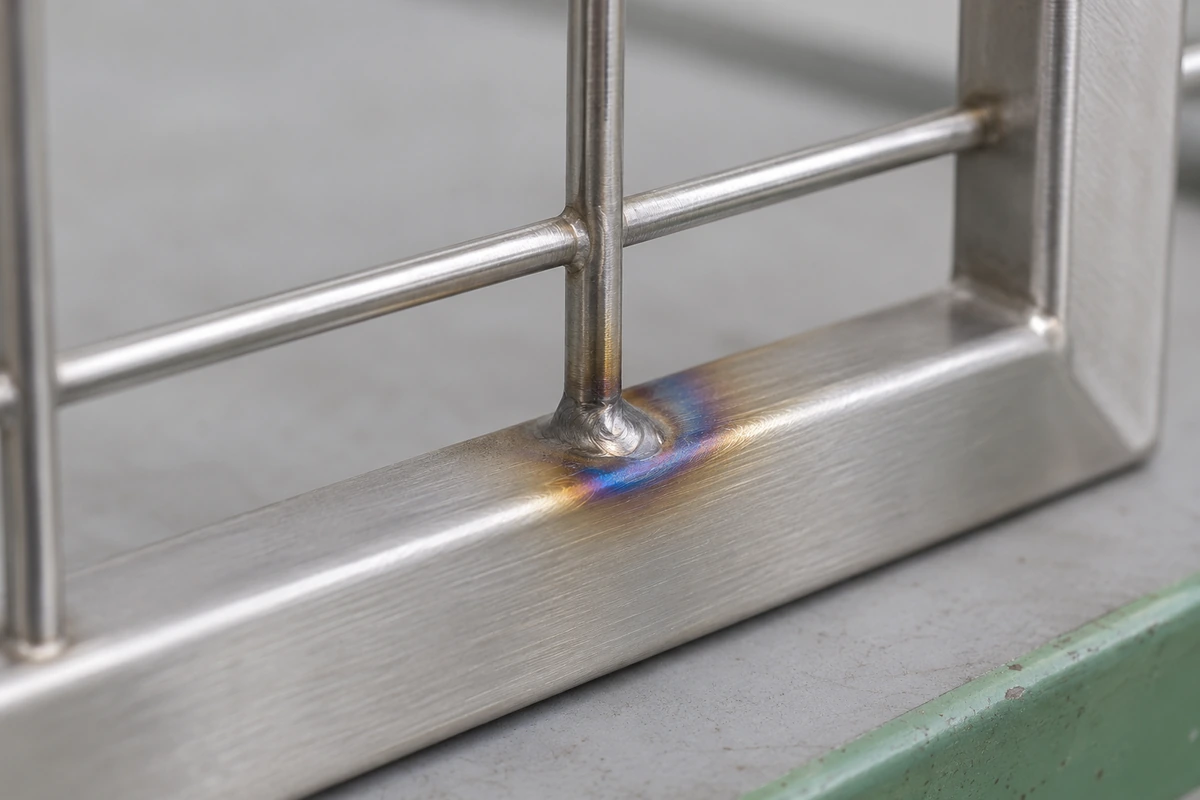
BSSA explains that heat-tint formation can leave the metal immediately below the oxide depleted in chromium, reducing corrosion resistance in an aqueous environment. Post-weld cleaning should be selected for the intended service; appearance alone is an inadequate acceptance test.[3]
Discuss the treatment with the fabricator. Mechanical finishing, pickling, electrochemical cleaning and electropolishing have different effects on oxide removal, underlying metal and appearance. Passivation and pickling are distinct operations; specifying “passivated” does not, by itself, show that visible heat tint and the affected layer have been removed.
Access matters on a mesh panel. A procedure that reaches one face of a frame joint may not reach the back of the weld or a tight wire intersection. Agree the treated area, final appearance, cleaning verification and any service-specific acceptance requirements before finishing a production batch.
Do not use a generic stainless steel heat-discoloration chart as a thermometer. Color depends on more than temperature, including atmosphere, time and surface condition. It cannot establish weld quality or remaining corrosion resistance from a photograph.[4]
304 versus 316: better resistance still needs good detailing
Grade 316 contains molybdenum and is commonly considered where chloride exposure makes 304 less suitable. It remains a material-selection decision, rather than a promise that a panel will never discolor.
The molybdenum addition helps improve resistance to localized corrosion in chloride-containing conditions, as ASSDA’s material-selection discussion explains.[1] Actual performance also depends on the chemical exposure, temperature and local geometry. A sheltered, salt-contaminated crevice can be more demanding than a nearby surface washed by rain.
When comparing quotations, request the alloy designation and the finish, then ask how fabrication contamination and weld discoloration are controlled. Check the frame and fixings too. Mixing a well-specified mesh with unidentified fasteners can leave the assembly difficult to evaluate.
The same review applies to a stainless steel perforated sheet or a framed stainless steel crimped wire mesh panel. Sheet margins, woven intersections and welded junctions have different cleaning access and water-retention details. Choose the construction for its job and provide a workable maintenance route.
Prevent repeat staining during fabrication and service
Investigate why a stain returned before repeating the cleaning process. Otherwise, a cleaner may remove the evidence while the same contamination or moisture source remains.
During fabrication, separate stainless material from carbon-steel grinding dust, dirty benches and shared abrasive tools. Keep stored mesh off contaminated surfaces and protect it during nearby masonry work. Agree the final cleaning and finish before handover.
During installation, detail joints so water and dirt can escape where the design permits. Leave access to sheltered faces and clamps. When cleaning is difficult or a panel is permanently inaccessible, review that constraint during material selection rather than leaving it to the maintenance team.
In service, base the cleaning interval on observed deposits and exposure. Inspect earlier after construction dust, salt spray or chemical splashes. Document the products used and changes in appearance; a recurring mark in exactly the same location can help identify a retained-moisture or contamination source.
For an XTZ Fence material or replacement enquiry, provide the mesh construction, alloy, finish and exposure, with photographs of the affected area and its fixings. Include any known cleaning or fabrication history. A replacement specification should address those conditions as well as the panel’s dimensions.
Stainless steel discoloration questions
Does brown discoloration mean stainless steel is rusting?
It may indicate surface contamination, tea staining or corrosion of the stainless itself. Brown color alone cannot distinguish them. Clean a small area using a compatible method, then examine the underlying surface. Persistent cavities, metal loss or damage at wires and joints need technical assessment. A removable rust mark does not, by itself, identify the alloy.
How do I remove discoloration from stainless steel?
Identify the likely cause, check the finish’s care instructions and begin with mild detergent, a soft clean cloth, thorough rinsing and drying. If the mark remains, choose a stainless-compatible treatment for that specific deposit with supplier advice. Weld heat tint, damaged coatings and pitting require different decisions from routine dirt or water marks.
Is rainbow discoloration on a stainless steel pan the same as weld heat tint?
Both involve surface appearance, but they should not receive the same service assessment. A cookware manufacturer’s instructions may address a rainbow film from normal use. A fabricated weld exposed to water or chemicals may need a controlled post-weld treatment to restore corrosion performance. Do not transfer cookware cleaning advice to an industrial weld or mesh assembly.
Can 316 stainless steel become discolored?
Yes. Grade 316 offers a useful increase in corrosion resistance over 304 in many chloride-containing conditions, but deposits, crevices, unsuitable chemicals and poor finishing can still cause problems. Check the exposure and assembly details before deciding that a grade change alone will prevent recurrence. Cleaning access and compatible fasteners remain part of the specification.
Should I scrub a stainless mesh panel with steel wool?
Avoid ordinary carbon-steel wool because it can leave iron contamination on the surface. A soft nylon brush or clean cloth is a better starting point for routine cleaning, subject to the finish supplier’s instructions. Abrasives can also change the appearance of polished or decorative surfaces. Test a small area and avoid tools used on carbon steel.
When should a stained panel be replaced?
Replacement depends on the underlying condition and service requirement, rather than the color alone. A superficial stain may be treatable, while broken wires, deteriorated welds, significant pitting or an unsuitable alloy may justify further action. Have safety-related panels assessed by a qualified person. Establish the cause before ordering a like-for-like replacement that may develop the same problem.
Technical sources
- ASSDA: Tea Staining (coastal discoloration, material selection and detailing).
- BSSA: Cleaning Methods for Stainless Steel (routine cleaning and incompatible cleaning agents).
- BSSA: Post Weld Cleaning and Finishing of Stainless Steels (heat tint and post-weld treatment).
- BSSA: Heat Tint Colours on Stainless Steel (the effect of heating conditions and surface finish on color).