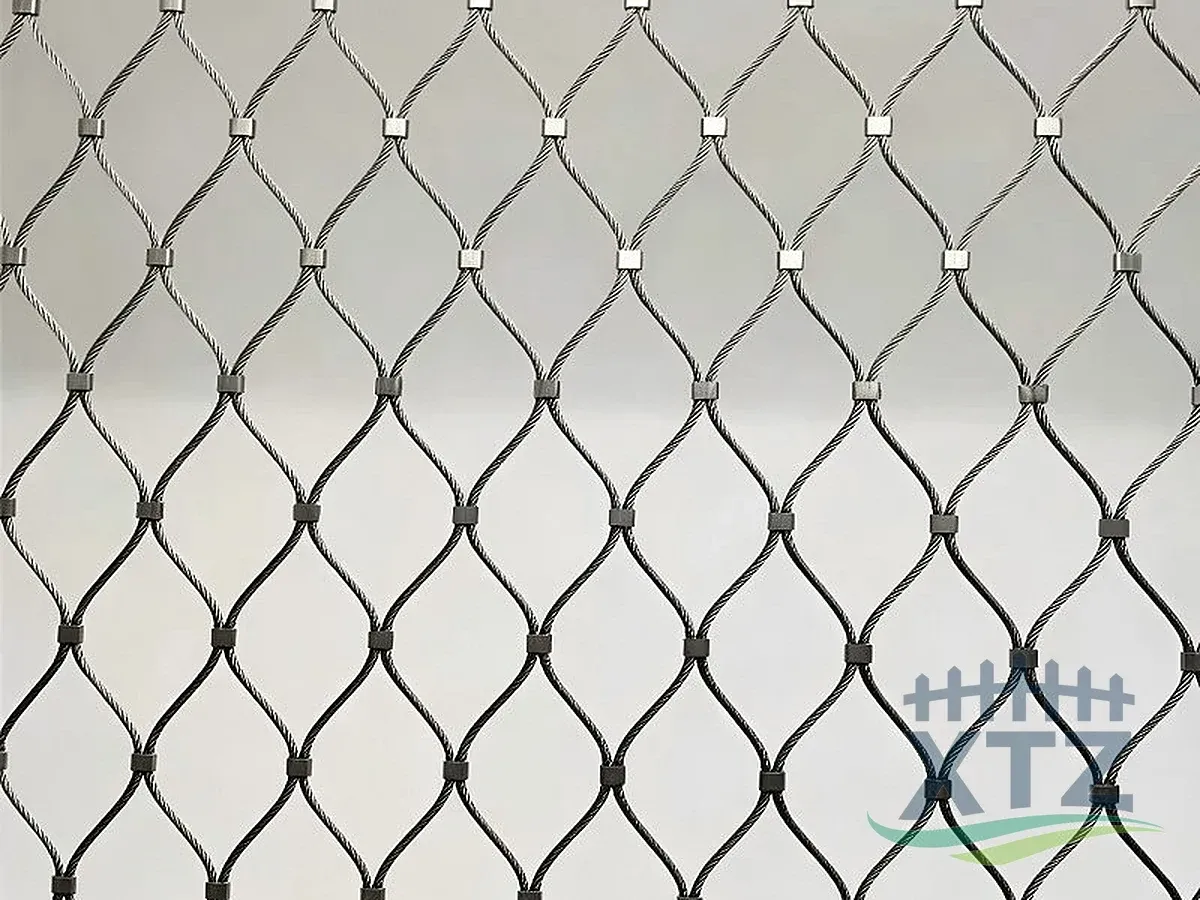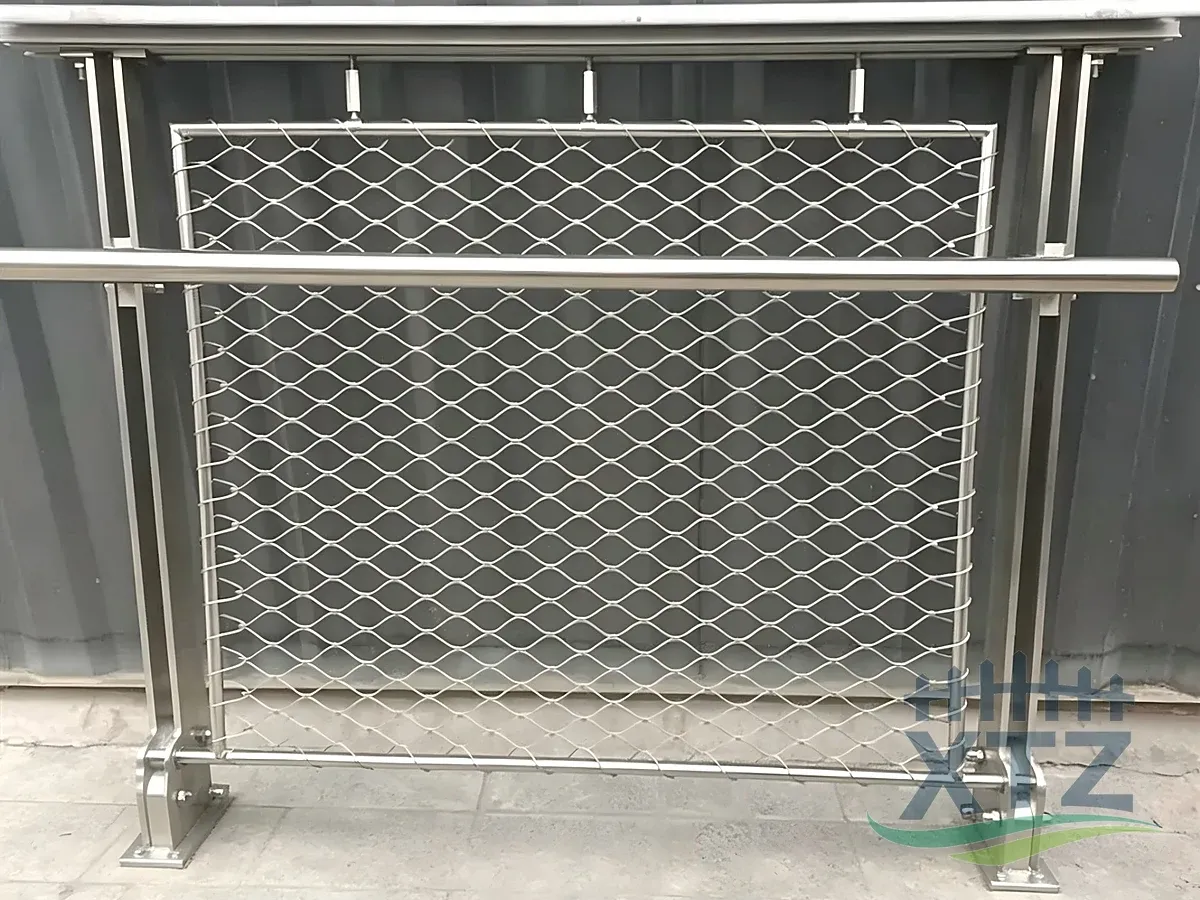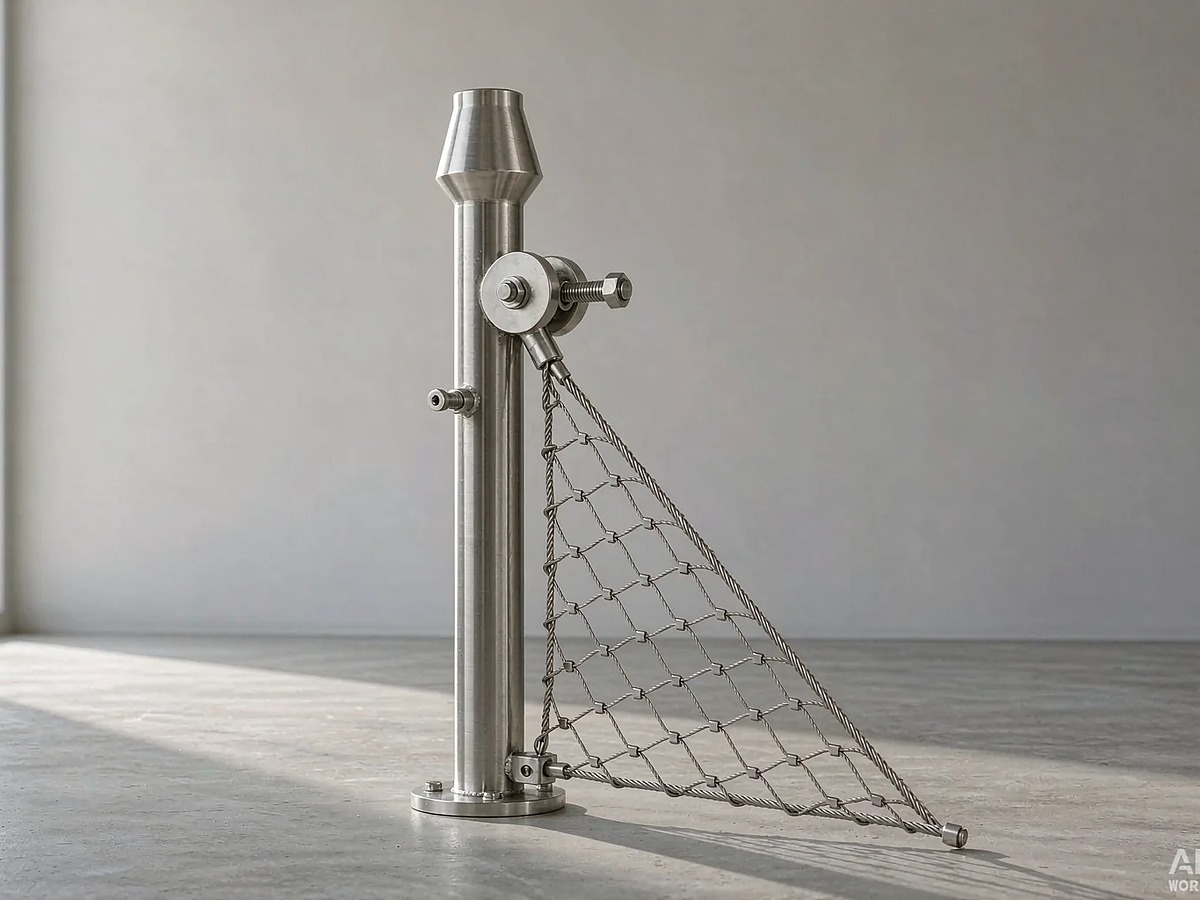
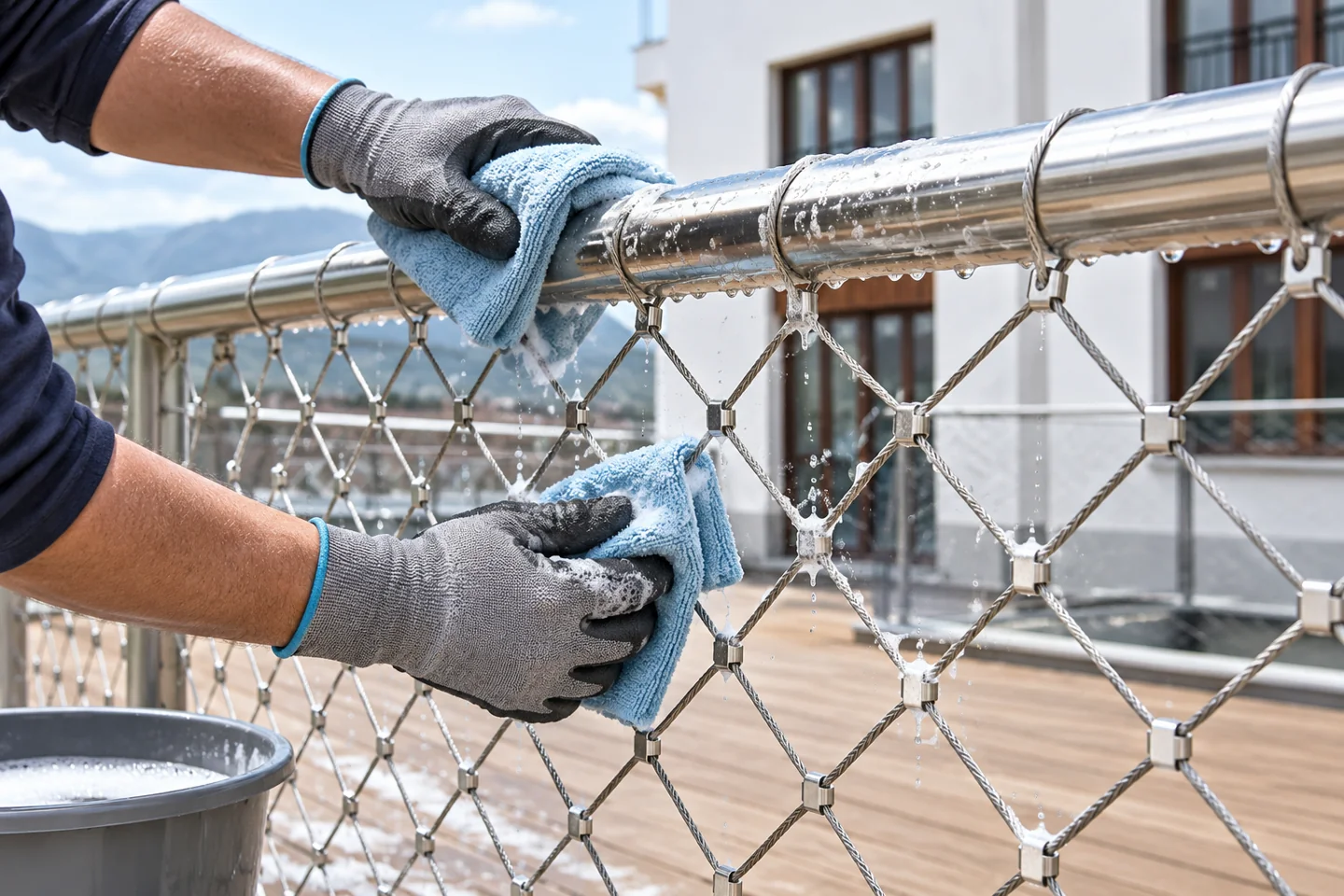
Clean stainless steel cable mesh with fresh water, a mild detergent approved for the finish, and a soft cloth or non-metallic brush. Rinse thoroughly so deposits and detergent leave the surface. Check ferrules, border connections and supports during cleaning. Salt exposure, sheltered locations and surface condition determine how often the system needs attention.
Start by identifying the mesh and its finish
These instructions cover routine care of exposed stainless steel rope mesh. A blackened, painted or otherwise treated surface may need a different cleaner. Confirm the finish before treating the whole panel, and test an approved product in an inconspicuous area.
XTZ’s stainless steel cable mesh is supplied for applications ranging from architectural infill to enclosures. Cleaning access differs between a removable panel and a large tensioned installation. Plan safe access before work begins; do not lean against, climb or loosen the net to reach another area.
A practical cleaning sequence
- Inspect before washing. Photograph staining, damaged strands, distorted openings and loose connections. Keep people away from a compromised barrier until it has been assessed.
- Rinse off loose dirt. Use clean fresh water to carry away dust and surface salt. Work from the upper area down so dirty runoff does not repeatedly cross clean sections.
- Wash gently. Apply a compatible mild detergent with a soft cloth or non-metallic brush. Work around the cable intersections and accessible border details without pulling the mesh out of shape.
- Rinse completely. Remove detergent and loosened deposits from both faces where accessible. A damp wipe alone can spread contamination.
- Dry accessible details and record the result. Use a clean soft cloth where practical, especially around fittings. Compare persistent marks with the photographs taken before cleaning.
Choose treatment by what you can actually see
| Condition | Initial response | When to stop |
|---|---|---|
| Dust, fingerprints or light grime | Fresh water and a finish-compatible mild detergent | The surface scratches or the finish changes |
| Salt residue | Thorough fresh-water washing, including sheltered details | Deposits remain trapped in inaccessible connections |
| Brown surface staining | Clean gently, then inspect and seek a suitable stainless treatment if marks persist | You see pits, broken strands or recurring localized attack |
| Cement, paint or adhesive contamination | Identify the contaminant and ask for a compatible removal method | Removal would require aggressive scraping or unapproved chemicals |
Brown marks do not establish whether the cause is surface contamination, tea staining or deeper corrosion. Do not assume cleaning has restored strength. Pitting, strand damage and deterioration around fixings require assessment.
The Australian Stainless Steel Development Association’s exterior cleaning guidance recommends removing deposits, rinsing after treatment and taking extra care with coloured surfaces. It also advises against bleach and chloride-containing masonry cleaners.
Products and methods to avoid
Keep ordinary steel wool and carbon-steel brushes away from the mesh. They can damage the finish and introduce iron contamination. Do not use hydrochloric-acid brick cleaner or household bleach as a routine stainless cleaner. A strong chemical chosen for a wall or floor may damage nearby stainless components.
High-pressure washing needs approval for the installed assembly and its finish. A jet can drive contamination into details or affect coatings and adjacent materials. Routine cleaning should not require altering cable tension. Acid cleaning, pickling and passivation belong with a specialist who understands the product and disposal requirements.
How often should cable mesh be cleaned?
Set the interval from site conditions and review what the first inspections reveal. Coastal spray, de-icing salt, industrial deposits and areas protected from rain can all increase the need for manual washing. An exposed panel and a sheltered panel on the same building may behave differently.
For a new installation, record its initial condition and inspect after early exposure to the local environment. If deposits return before the planned visit, shorten the interval. Keep the date, cleaner, photographs and any repair action in the maintenance record. A universal quarterly or annual promise would overlook those differences.
Inspect the complete barrier while it is clean
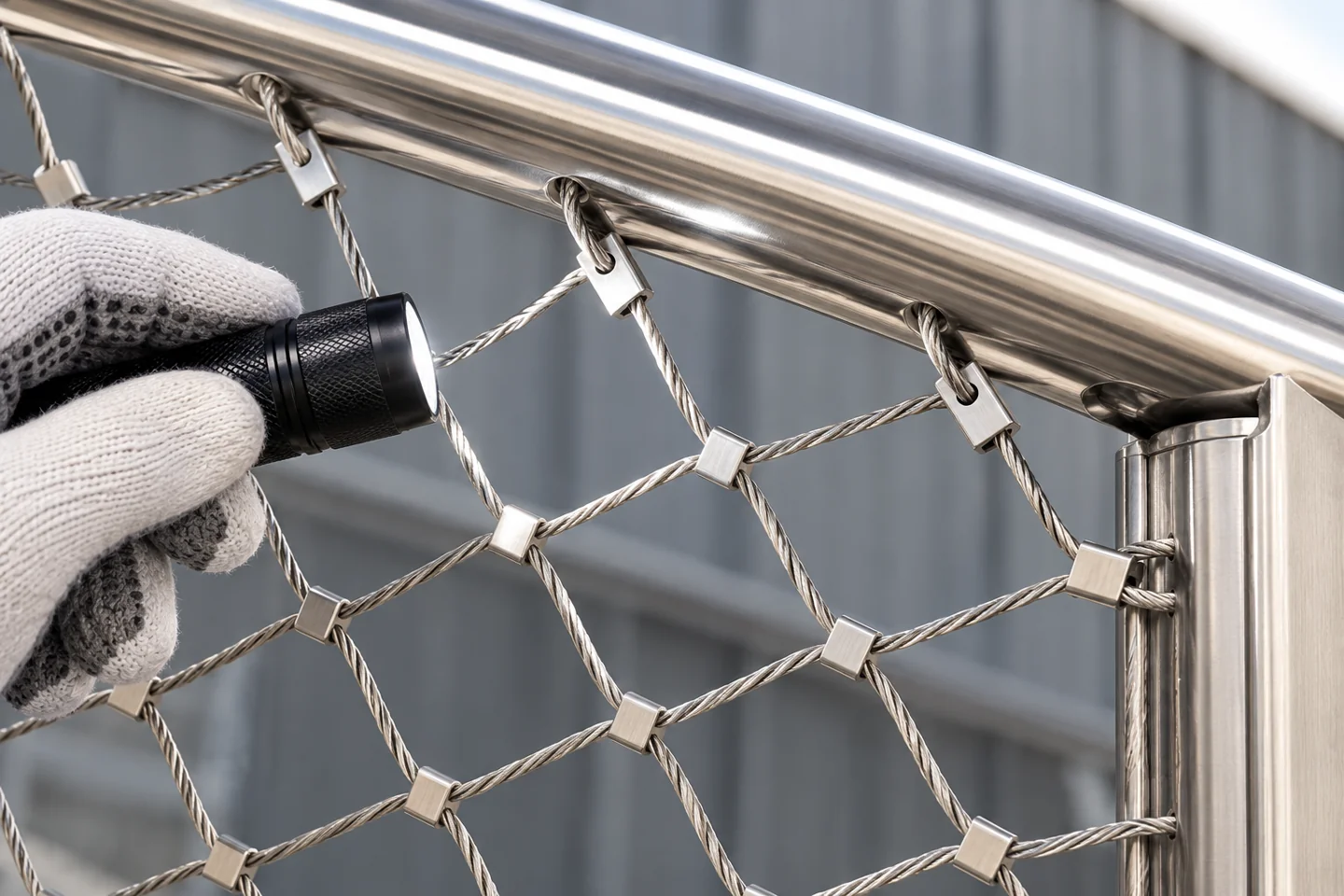
Look for broken wires, displaced ferrules, abnormal sag, changing openings, damaged lacing and movement at the frame or post connections. Check accessible anchors for visible deterioration without disturbing them. Maintenance instructions should identify which observations require the installer or engineer.
A framed rope mesh fence panel also has frame corners, mounting brackets and fasteners to check. A clean net does not compensate for a loose frame or unsuitable anchorage. Avoid retensioning an existing system by feel; follow the approved procedure.
Frequently asked questions
Can stainless steel cable mesh rust?
Stainless steel can stain or corrode under unsuitable exposure, contamination or maintenance conditions. Material grade, finish and connection details affect performance. Wash deposits away and investigate persistent local damage rather than treating every brown mark as harmless.
Can I use a pressure washer?
Only when the assembly and finish supplier permit it. Confirm the equipment, operating method and nearby materials first. A fresh-water rinse and gentle manual wash are the starting point for routine care.
Is 316 mesh maintenance-free?
No. Its improved resistance to chlorides does not prevent deposit buildup or eliminate inspection. Coastal and sheltered installations still need a maintenance plan.
Should I tighten the mesh after cleaning?
Cleaning is an opportunity to observe tension-related changes, not an instruction to adjust the system. Report abnormal slack or distortion and follow the original installer’s procedure.
What should I send XTZ when asking about a stain?
Send close and overall photographs, the material and finish records if available, site exposure, previous cleaning products and the installation date. Include photographs of affected fittings and adjacent building materials.
For a new XTZ project, include access and cleaning requirements alongside the panel dimensions, application and destination. Those details help define a system that can be maintained after installation. Related reading: 316 Stainless Steel Cable Mesh and 304 vs 316 Stainless Steel Cable Mesh For a new project, send those requirements to the XTZ project desk so the finish and access detail can be fixed before production.