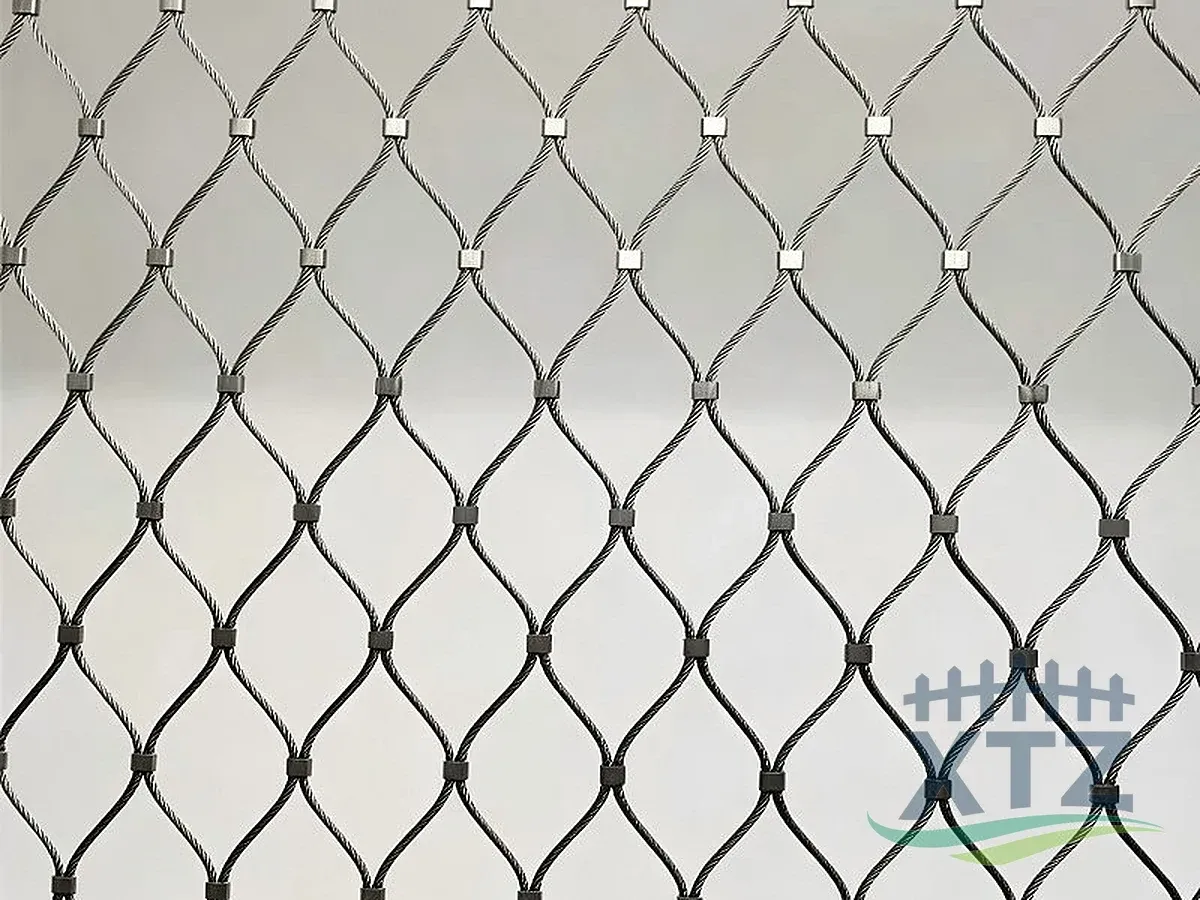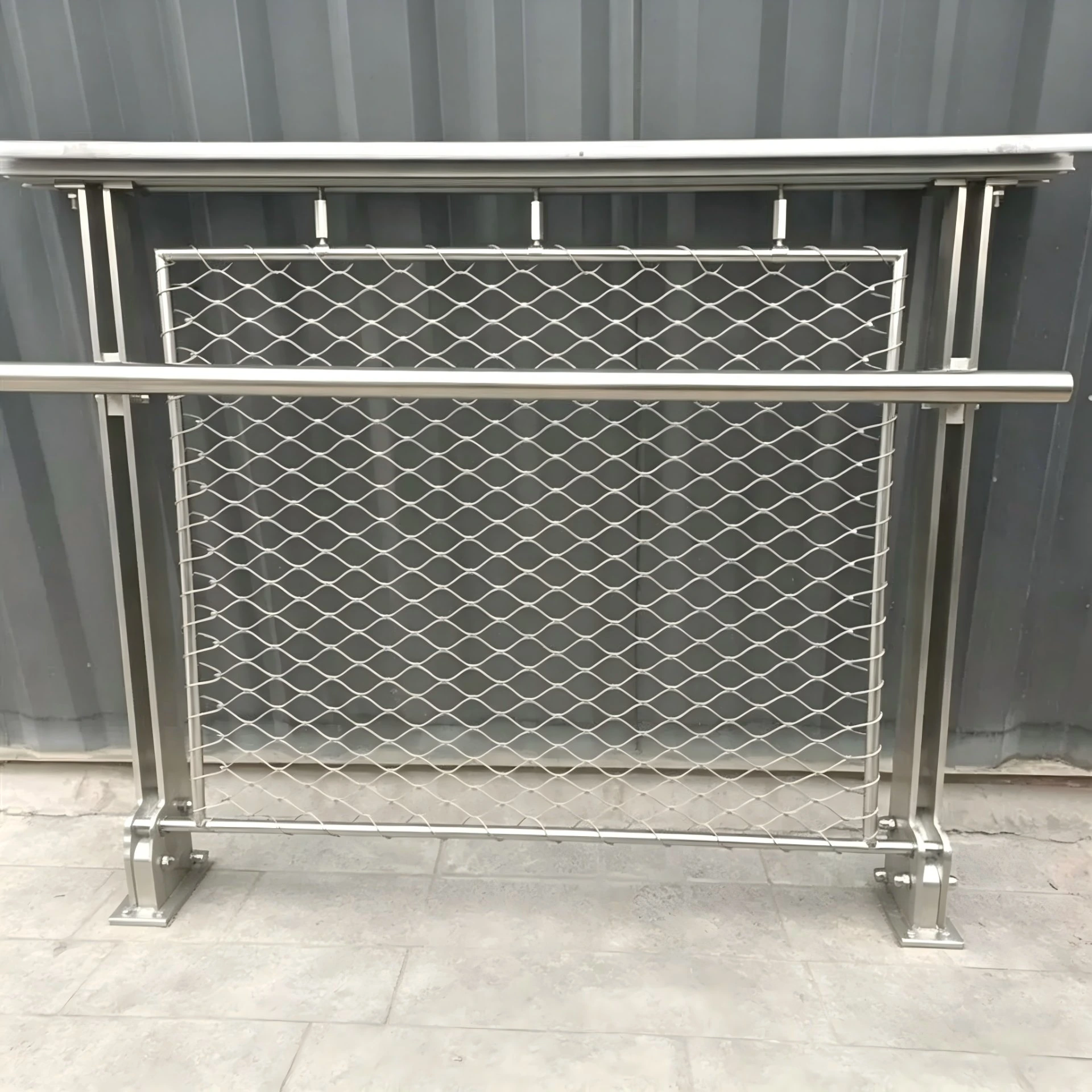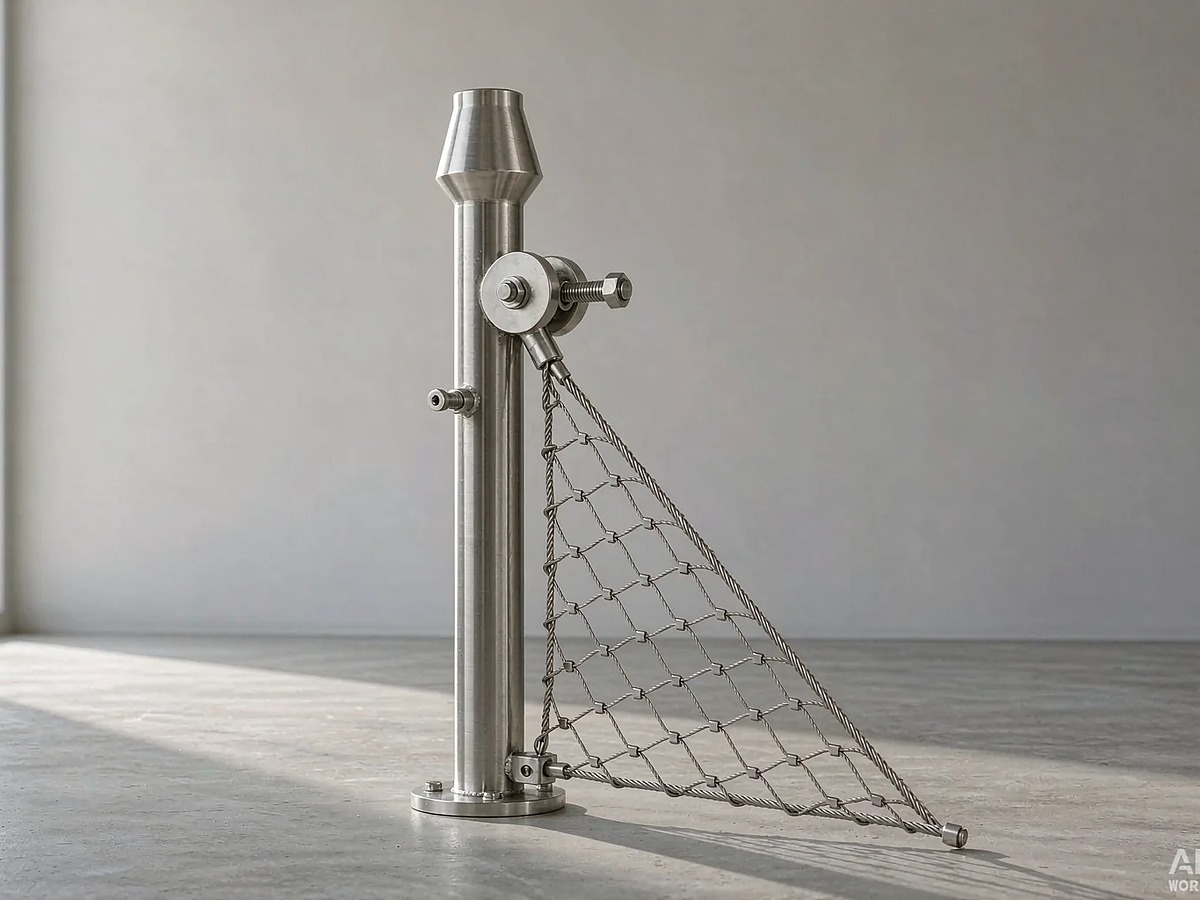
Stainless steel diamond mesh describes an opening shape shared by several different products. Expanded metal is slit and stretched from sheet; chain-link mesh interlocks single wires; cable mesh uses wire ropes; and woven diamond cloth interlaces wires in a diamond orientation. Identify the construction before comparing openings, prices, fixing systems or suitability for a project.
What does “stainless steel diamond mesh” mean?
A diamond-shaped opening does not identify how the mesh was made. A close-up of the junction usually gives a clearer answer than a distant photograph: look for continuous sheet strands, interlocked wire spirals, wire-rope connections or a woven crossing.
The wording also varies between suppliers and markets. “Stainless diamond mesh,” “stainless steel diamond wire mesh” and “stainless steel chain mesh” can describe overlapping product families. An enquiry should include a construction name, an annotated drawing and a close-up reference.
| Product family | What you can see | Specification to check first |
|---|---|---|
| Expanded metal | Flat strands and integral bonds formed from one sheet | Raised or flattened form, opening/pitch convention and strand dimensions |
| Chain-link mesh | Single bent wires interwoven as adjoining spirals | Wire diameter, specified mesh measurement and edge finish |
| Cable mesh | Stranded wire ropes connected by ferrules or a hand-woven construction | Rope diameter, connection type and installed geometry |
| Woven diamond cloth | Separate wires crossing in a diamond-oriented woven pattern | Weave, wire diameter, clear opening and edge capture |
These constructions can share a similar visual pattern while behaving differently in cutting, framing and tensioning. Specify the product family before asking for a substitute.
Expanded metal: diamonds cut and stretched from sheet
Expanded stainless steel mesh starts as sheet that is slit and stretched into a continuous network. The strands remain joined at integral bonds. It has no separate wire strands to weave or weld together at each opening.
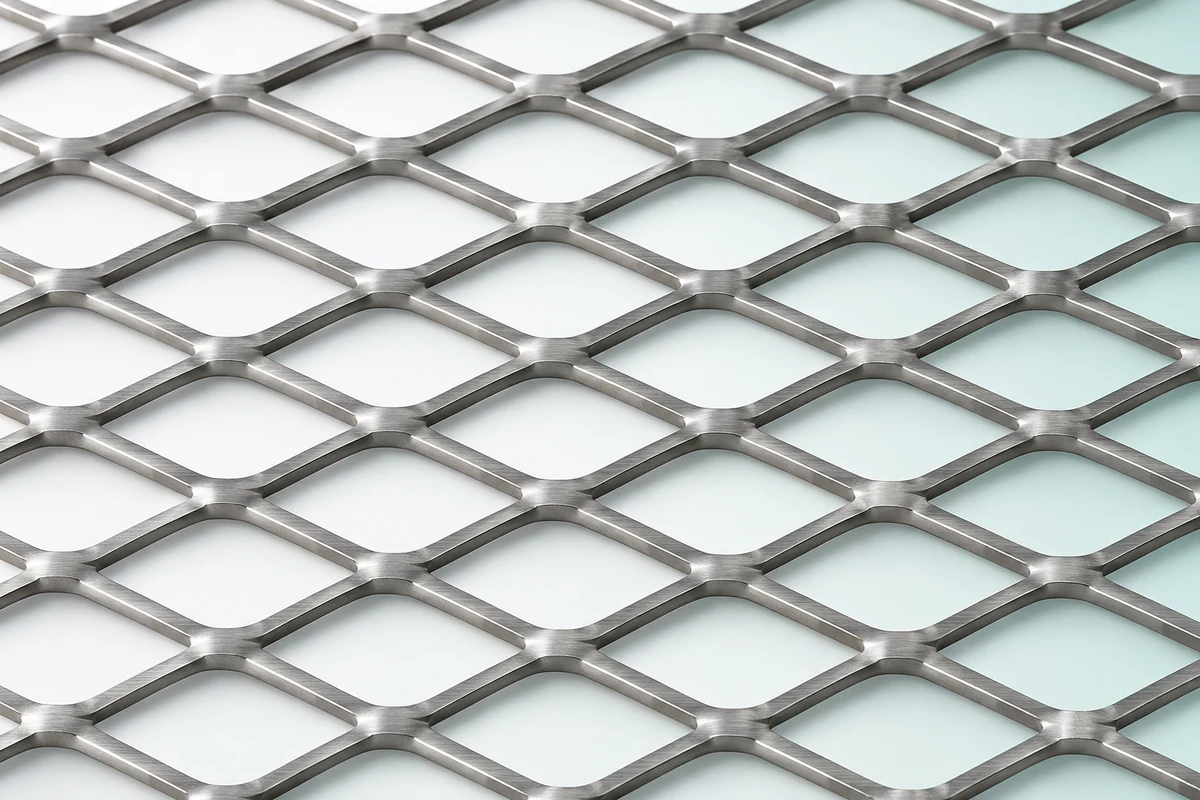
Raised mesh retains the three-dimensional form produced during expansion. Flattened mesh is rolled to produce a flatter profile. Compare the final thickness, strand width, edge condition and sheet orientation when selecting material for a frame or a screen.
An expanded metal mesh panel can suit a fabricated screen or enclosure where a sheet-based product is appropriate. XTZ Fence’s range includes custom openings, strand widths and sheet sizes. The guide to raised expanded metal explains the form in more detail.
Do not infer a walking-load rating from the diamond pattern. A load-bearing walkway needs the relevant section, support span, connection details and verified capacity. Thin decorative mesh and heavy expanded grating have different duties.
Chain-link mesh: interwoven wire for fence runs
Stainless steel chain link mesh uses bent single wires interwoven into a repeating diamond pattern. It is typically installed with posts, tensioning components and suitable top and edge restraints. Specify the fabric together with the surrounding fence system.
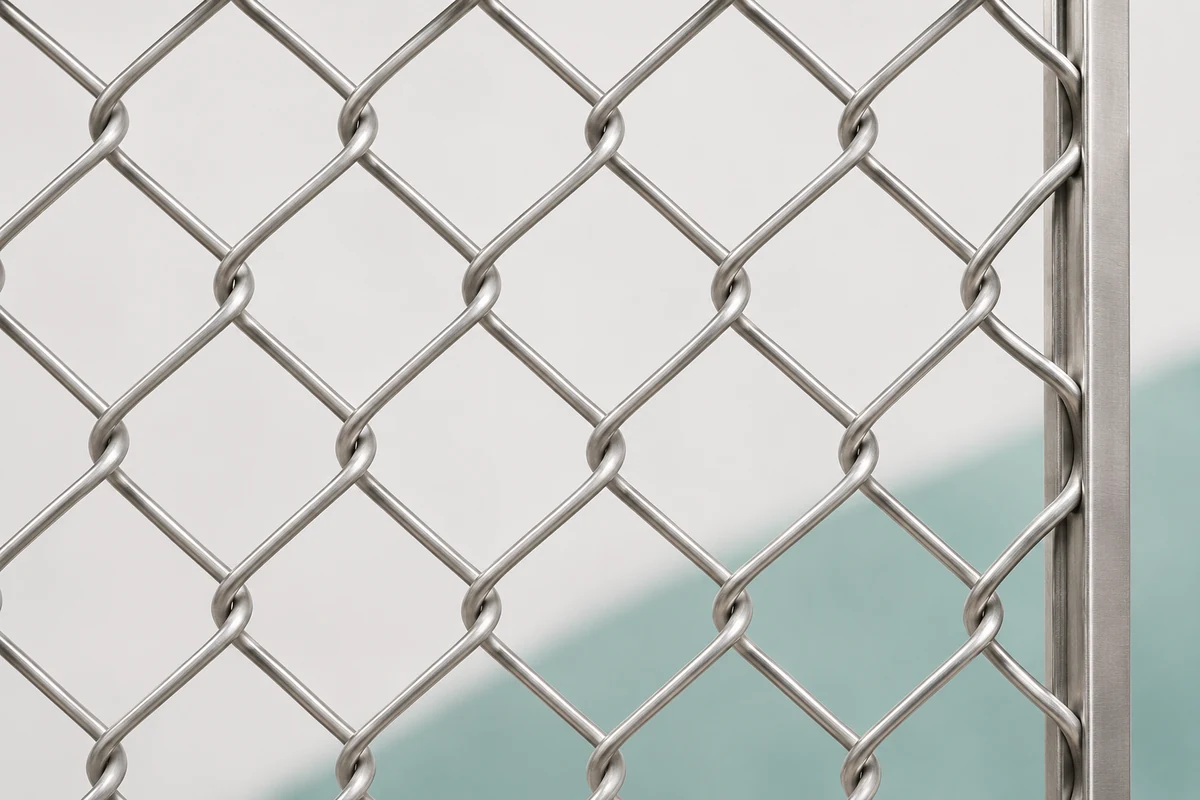
For a stainless steel chain link fence, identify wire diameter, mesh size, fence height, roll or panel length, edge finish and fittings. XTZ Fence lists 304 and 316 grade options with project-specific mesh rolls and framed panels.
A smaller opening may change visibility and the objects that can pass through, but it does not by itself establish an anti-climb or security rating. Gates, posts, ground clearance and installation quality also affect the finished boundary. State the actual containment or security requirement on the project specification.
Cable mesh: flexible diamonds for tensioned infill
Cable mesh uses stranded stainless steel wire rope. Ferruled versions join rope runs with pressed sleeves; hand-woven versions use a different connection detail. The net is installed to a defined perimeter and geometry.
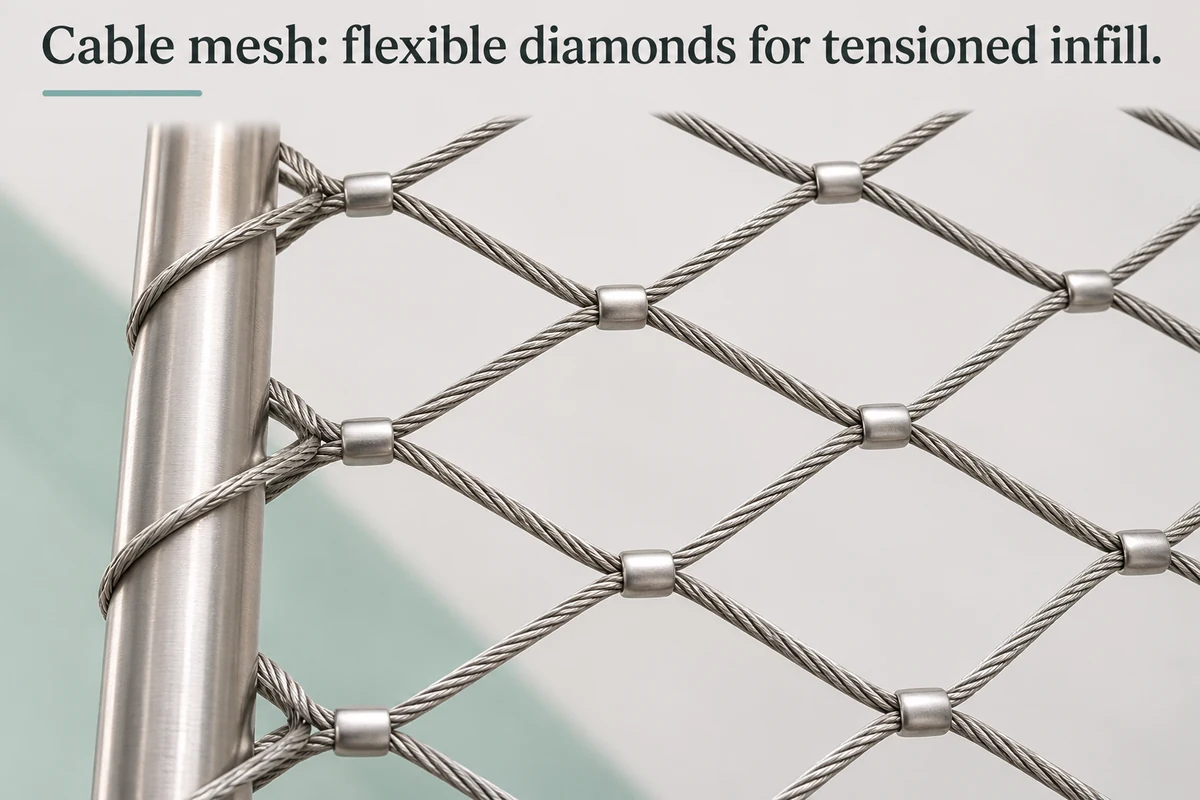
The flexible construction can accommodate shaped architectural infill, enclosures and plant-support applications when the system is designed for the duty. XTZ Fence’s stainless steel cable mesh page covers ferrule and hand-woven constructions with custom cable diameters.
The opening changes as a flexible net is spread or tensioned. Record the reference angle or installed opening dimensions, the perimeter shape and the edge connection. A loose sample measured on a bench may not reproduce its installed geometry.
For a balustrade or fall-protection application, the mesh, border cable, frame, anchors and supporting structure need a coordinated design. A rope diameter or material grade alone cannot establish that the complete barrier meets a project’s requirements.
Woven diamond mesh and diamond mesh lath are also different
Woven diamond cloth interlaces wires in a diamond orientation and can be used in decorative panels, partitions and other fabricated screens. Inspect the wire crossings and confirm the weave rather than assuming it is chain link. Its measurement convention should appear on the drawing. [1]
For decorative metal screen mesh, compare the pattern, clear opening, wire diameter, panel stiffness and edge capture. Confirm the requested weave and supply scope for the project; a visual reference is useful alongside dimensions.
Diamond mesh lath is a plaster or coating carrier, commonly made from expanded sheet. Its purpose and installation requirements differ from an exposed fence or an architectural infill panel. ASTM C847 addresses metal lath for plaster applications; a diamond-shaped opening does not make a general-purpose mesh suitable for that duty. [2]
If a drawing calls for stainless steel render or plaster lath, specify that product and the compatible coating system. Replacing it with a visually similar fence mesh can change the keying, fastening and service behaviour.
How to measure stainless steel diamond mesh
Record the direction, endpoints and condition of each measurement. A long diagonal, a short diagonal, a centre-to-centre pitch and a clear opening are different dimensions.
| Construction | Measurements to record | Frequent ambiguity |
|---|---|---|
| Expanded metal | Long and short pitch, clear opening, strand width, strand thickness and sheet orientation | Using pitch as the clear opening, or mixing raised thickness with strand thickness |
| Chain link | Opening measured by the specified supplier or standard convention, wire diameter and fabric dimensions | Quoting an unmarked diagonal instead of the required mesh measurement |
| Cable mesh | Rope diameter, connection type, opening dimensions, reference angle and finished perimeter | Comparing loose and installed net dimensions without recording the spread |
| Woven diamond cloth | Clear opening, wire diameter, weave and panel orientation | Assuming the opening is defined in the same way as a chain-link or expanded product |
A dimensioned sketch removes much of this uncertainty. If you need the sheet-based method, the guide to how to measure expanded metal shows how to distinguish pitch, opening and strand dimensions. For the other constructions, agree on the supplier’s measurement convention before comparing samples.
304 or 316: match the grade to exposure
Consider 304 for many relatively mild environments and evaluate 316 where chlorides raise corrosion concerns. Salt exposure, retained dirt, finish quality and cleaning access can affect either grade. Neither alloy removes the need to assess the installation environment. [3]
Review the fasteners, frames, cables and other contacting materials as well as the mesh. Drainage, crevices and isolated contact points can affect durability. Confirm the grade and specified finish in writing; polished appearance is not a reliable material check.
Which diamond mesh fits the application?
Begin with how the mesh must behave in the installed assembly. A rigid fabricated panel, a continuous fence run and a tensioned flexible net have different support and fabrication requirements.
- For sheet-based screening, evaluate expanded metal with the required openness, edge finish and frame.
- For a perimeter fence, evaluate chain-link fabric together with posts, tensioning, gates and ground details.
- For shaped or tensioned infill, evaluate cable mesh with its perimeter, geometry and connection design.
- For a decorative woven panel, evaluate the weave, visual openness, stiffness and edge capture.
- For plaster backing or a coating carrier, specify an appropriate lath and installation system.
Then review visibility, access, cleaning and the objects or animals to retain. A security, structural or containment requirement needs evidence for the actual system. General descriptions such as “strong” or “weather resistant” are insufficient for that assessment.
What changes the price of stainless steel diamond mesh?
Compare prices within the correct product family. Expanded sheet thickness and strand dimensions, chain-link wire diameter, cable and connection details, and woven-wire specifications affect material use and processing in different ways.
Supply format matters as well. A roll, a cut sheet, a framed panel and an installed fence system include different work. State quantities, finished dimensions, tolerances, edge preparation, grade, finish, destination and packing requirements in one enquiry. Confirm which fittings or frames are included.
Send XTZ Fence a close-up of the required structure and an annotated drawing, followed by the installation purpose and quantity. Those details help identify the correct mesh family before dimensions and quotation scope are agreed.
Stainless steel diamond mesh FAQ
Is diamond mesh the same as expanded metal?
The phrase can describe expanded metal, but it also appears in chain-link, cable-net and woven-cloth descriptions. Expanded metal has continuous flat strands formed from a slit-and-stretched sheet. Inspect the junctions and specify the construction when asking for a quotation or replacement.
What is the difference between chain-link mesh and cable mesh?
Chain-link mesh interlocks bent single wires. Cable mesh uses stranded wire ropes joined by ferrules or a hand-woven connection. Their edge details, tensioning and installed geometry differ, so select them as complete systems for the intended fence, enclosure or infill application.
Can diamond mesh be used as a balcony barrier?
A suitable mesh system can be evaluated for balcony infill, but opening shape alone does not establish suitability. Confirm the required opening limits, loads, deflection, perimeter support and anchors against the project requirements. The supplier and designer need the complete barrier details before a specification is approved.
Does smaller diamond mesh mean a stronger panel?
Strength depends on more than opening size. Strand or wire section, construction, material condition, support span and connections all matter. Compare documented performance for the required configuration. A smaller opening can change containment or appearance without establishing the load capacity of the installed assembly.
Should diamond mesh be supplied in rolls or panels?
Choose the format around transport, installation and fabrication. Chain-link fabric is often supplied in rolls, expanded metal commonly in sheets, and cable mesh to a specified perimeter and geometry. Ask whether cutting, flattening, borders, frames or fittings are included in the proposed supply.
Can stainless steel diamond mesh replace plaster lath?
Only use a product suited to the specified plaster or coating system. Diamond mesh lath has its own material and installation requirements. A similarly shaped chain-link, cable or decorative mesh does not establish equivalent keying, support or fastening performance.