
A chimney spark arrestor uses a screen to limit the escape of larger sparks while allowing flue gases to discharge. Its opening size, free area, material and cleaning access must match the applicable code and chimney system. An insect screen or a wildlife guard is not automatically a suitable substitute.
This guide is for comparing mesh specifications and preparing an OEM inquiry. Confirm the locally adopted code edition, amendments and appliance or chimney manufacturer’s instructions before selecting a cap. Factory-built and listed systems may require their own approved components; a generic mesh specification does not establish compliance.
Chimney Spark Arrestor Openings and the IRC Reference
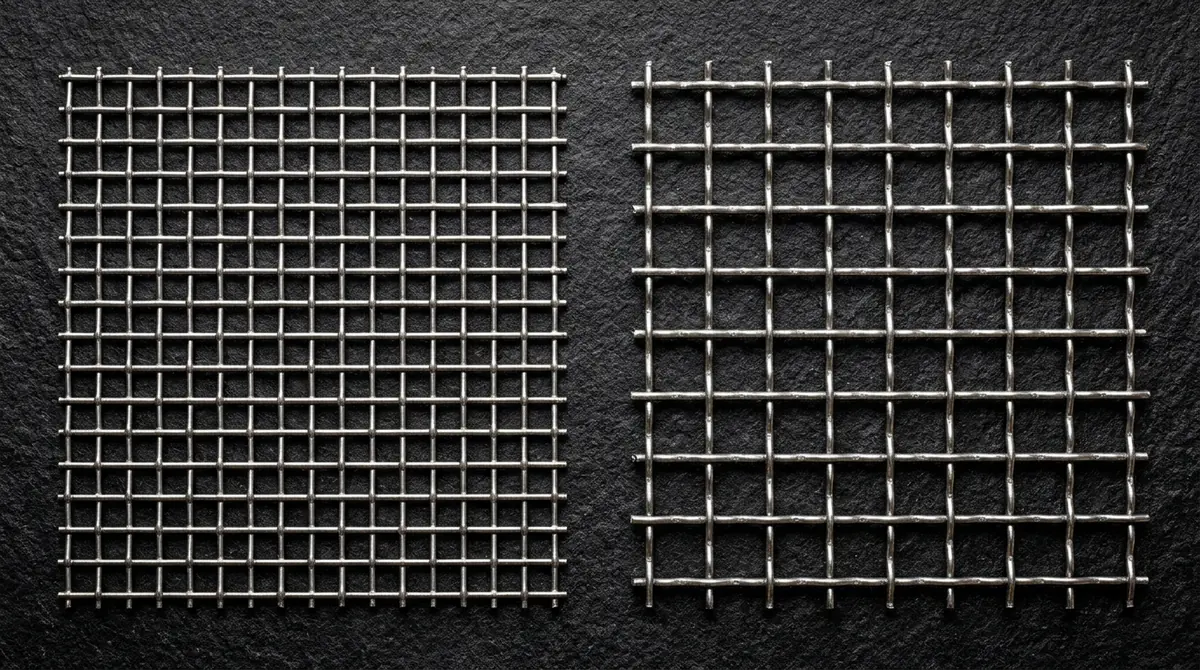
IRC 2018 Section R1003.9.2 provides a useful model-code reference for spark arrestors installed on masonry chimneys. It addresses screen free area, heat and corrosion resistance, sphere-passage limits and cleaning access. This is an edition-specific reference, not a claim about the law adopted at a particular project.
| Check | IRC 2018 masonry-chimney reference | What to confirm on a drawing |
|---|---|---|
| Net free area | At least four times the flue outlet’s net free area | Effective unobstructed opening area after wire and structural blockage |
| Openings | Exclude spheres over 1/2 inch (12.7 mm); allow spheres under 3/8 inch (9.5 mm) | Measured clear openings and tolerances, rather than mesh count alone |
| Material | Heat and corrosion resistance equivalent to 19-gage galvanized steel or 24-gage stainless steel | Material and dimensional specification accepted for the system |
| Cleaning access | Access to the arrestor and removable screen or cap for flue cleaning | Safe removal and reassembly details |
Why a nominal cap mesh size is not enough
Catalogues may show 3/8, 1/2, 5/8 or 3/4 inch mesh for different caps and uses. Do not assume those products meet the same rule. A larger-opening wildlife screen cannot be substituted for a spark arrestor simply because it fits the chimney. Have the installer or authority having jurisdiction confirm which requirements apply.
Gauge is not a universal wire-diameter conversion
A gauge designation depends on the material and gauge system. Do not convert a code reference into a wire diameter using an unidentified chart, or use a “greater than” sign with gauge numbers as if a larger number always means thicker metal. Put the actual diameter or thickness in millimeters on the purchase drawing and identify the relevant material specification.
Calculating Net Free Area for Chimney Mesh
Gross panel area includes the metal wires; free area does not. For square mesh with clear opening w and wire diameter d, the geometric open fraction is [w / (w + d)]². Multiply the exposed screen-face area by that fraction, then account for supports, flanges and other obstructions. Do not count a solid hood as open screen area.
For example, a hypothetical 0.50 m² exposed screen with a 70% open fraction provides 0.35 m² of geometric free area before further obstruction is considered. This calculation describes geometry only. It does not demonstrate acceptable draft or authorize an installation; the complete cap and chimney arrangement must be checked.
Choosing Stainless, Galvanized or Coated Chimney Mesh
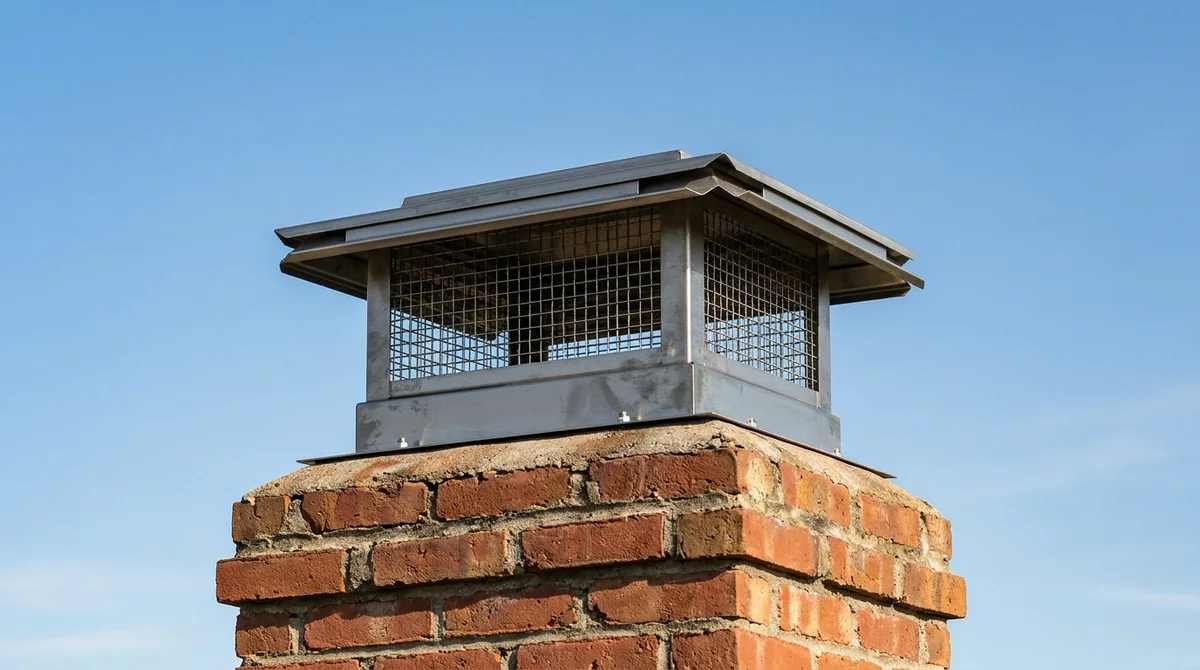
Material selection depends on operating temperature, fuel, condensate, salt exposure and maintenance. A more corrosion-resistant alloy does not compensate for inadequate open area or an unsuitable cap design.
| Material | Reason to consider it | Limits to check |
|---|---|---|
| Galvanized steel | Available in economical manufactured cap systems | Coating condition, heat exposure, corrosion and manufacturer-approved use |
| 304 stainless steel | Common corrosion-resistant option without a zinc coating | Deposits, chlorides, crevices and compatibility with the complete system |
| 316 stainless steel | Improved chloride-pitting resistance compared with 304 | Still not immune to corrosion; assess condensate and fuel-specific requirements |
| Painted or other coated steel | Used in some manufactured products | Verify the coating and complete product are approved for the temperature and application |
Do not infer service life, fuel compatibility or a fire-safety rating from alloy alone. Ask for the cap manufacturer’s material specification and installation instructions. Ordinary PVC-coated mesh and window insect mesh should not be improvised as flue components.
Welded versus woven construction
Welded mesh offers fixed intersections for formed panels; crimped woven cloth can suit some curved geometries. Both require suitable edge retention, stiffness and fabrication tolerances. Review the stainless steel wire mesh range for material options, then confirm that the selected product can meet the OEM drawing. A fencing product is not automatically chimney-rated.
Inspection, Cleaning and Creosote Control
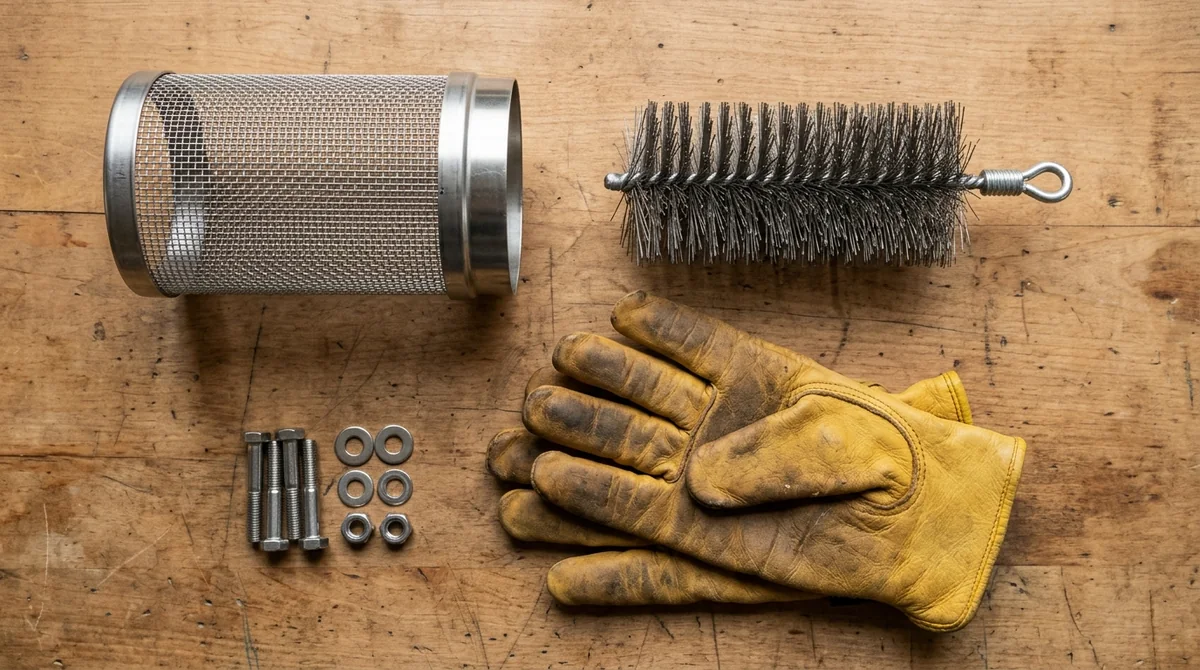
The Chimney Safety Institute of America explains the NFPA 211 distinction: arrange inspection at least annually, with cleaning, maintenance and repairs when needed. Regular wood burning or troublesome deposits may require more frequent attention. A fixed yearly brushing schedule is not a substitute for assessment.
- Keep access practical: the cap should permit cleaning and reinstallation according to its instructions.
- Respond to impaired draft: stop using a system that spills smoke or appears obstructed and have a qualified chimney professional assess it before reuse.
- Avoid improvised fine mesh: adding insect cloth can restrict discharge and collect deposits.
- Check the whole assembly: inspect mesh damage, loose fasteners and corrosion, together with the chimney itself.
OEM Spark Arrestor Mesh RFQ Checklist
- System and jurisdiction: chimney type, appliance or fuel, manufacturer requirements and applicable code edition.
- Material: alloy or coating specification and expected thermal and chemical exposure.
- Openings: clear dimensions, shape and tolerance in both directions.
- Wire or sheet dimensions: actual millimeter dimensions and any identified gauge system.
- Geometry: panel size, exposed area, frame obstruction, formed edges and fastening method.
- Verification: required material records, dimensional inspection and complete-product acceptance criteria.
For custom mesh blanks, send your approved drawing, quantity and material requirements through the XTZ Fence project inquiry page. Mesh fabrication and complete chimney-system approval are separate checks.
Frequently Asked Questions
What mesh size should a chimney spark arrestor use?
Use the clear-opening requirement specified for the local code and chimney system. Check the edition-specific masonry-chimney example above, but do not treat it as a universal requirement for every cap or appliance.
Is a chimney wildlife screen also a spark arrestor?
Not necessarily. Wildlife exclusion and spark control are different performance requirements. Verify the product documentation and approved use rather than relying on appearance.
Is 316 stainless steel always required?
No. Grade selection depends on exposure and the system specification. 316 can offer better resistance to chloride pitting than 304, but neither grade alone establishes compliance or a guaranteed lifespan.
Does screen surface area equal net free area?
No. Wires, edges, supports and other obstructions reduce the available opening area. Use the actual geometry and have the complete cap design checked.
How often should the screen be cleaned?
Arrange at least annual chimney inspection and clean when the assessment or system instructions require it. Heavy use or deposits may justify a shorter interval.