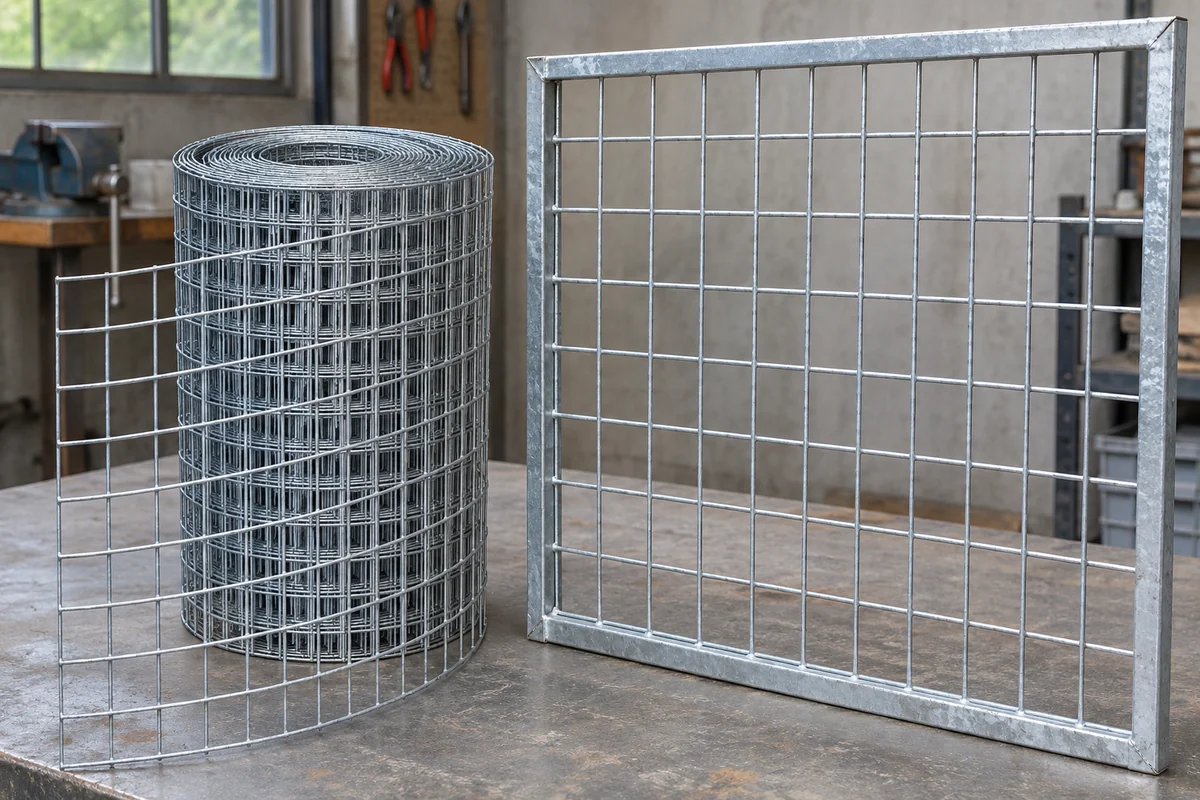
A welded wire fence uses horizontal and vertical wires joined at their crossings to form a fixed grid. It is supplied in rolls or rigid panels for boundaries, gardens, enclosures and security perimeters. Choose it by opening size, wire diameter, finish and the complete post-and-fixing system, including gates and changes in ground level.
The cheapest roll can become an expensive fence if it needs extra supports or leaves awkward gaps. Start with the job the finished barrier must do, then compare specifications and installed cost.
Welded wire fence panels or rolls: choose the supply format
Rolls suit continuous runs where the mesh is attached to a compatible support system. Rigid panels suit projects that need defined modules and a consistent appearance. A panel can be flat, reinforced with bends, or fitted into a perimeter frame; those constructions have different stiffness and fixing details.
| Supply format | Useful for | Confirm before ordering |
|---|---|---|
| Welded wire roll | Garden boundaries and continuous utility runs | Height, roll length, support method, end fixing and permitted tension |
| Unframed rigid panel | Repeated perimeter bays | Panel dimensions, reinforcement bends, post centres and matching clamps |
| Framed welded mesh panel | Defined openings and coordinated assemblies | Outside frame size, clear infill size, frame section and connection details |
| Close-mesh security panel | Sites with a specified security requirement | Complete system specification and any applicable test evidence |
Welded crossings limit movement within the grid. A roll bends for handling, but its rectangles do not freely change shape like the openings in some woven or knotted fences. Red Brand identifies level ground and short runs as suitable uses for its utility welded wire. That is useful context when comparing a light roll with a purpose-designed panel system. Red Brand welded wire guidance.
For livestock or pets, check the particular animal, likely pressure, climbing behaviour and risk of entanglement. “Welded wire” alone does not establish suitability for every enclosure.
Welded wire fence sizes: specify more than gauge
The opening and wire diameter should appear together on the order. Height and coating then describe the remaining material requirements; the drawing describes how that material becomes a fence.
Ask whether the stated mesh size is the clear gap between wires or the distance between their centres. For a rectangular grid, record both directions and show which direction runs vertically. A nominal 2 × 4-inch product needs more explanation than a photograph.
Gauge also needs a reference. Suppliers may use different gauge conventions, and a coated-wire description may refer to the steel core or the finished outside diameter. Request the actual wire diameter in millimetres or inches, the gauge system if used, and the measurement basis.
| Specification | A useful entry on the purchase order |
|---|---|
| Mesh geometry | Opening in both directions, measurement convention and orientation |
| Wire | Base-metal diameter, material and permitted variation |
| Finished dimensions | Roll height and length, or panel width and height |
| Protection | Zinc/coating specification, polymer type if present, and edge treatment |
| Assembly | Post centres, fixings, corners, gates and ground termination |
| Acceptance | Agreed sampling, dimensional checks and required documents |
Use the same measurement convention throughout the project. The XTZ guide to wire mesh sizes explains the relationship between pitch, clear opening and wire diameter.
Galvanized, coated or stainless welded wire fence?
Choose the finish for the exposure and maintenance conditions. A colour name or the word “galvanized” leaves important questions unanswered.
Galvanized before welding (GBW) starts with zinc-coated wire. Welding can disturb the protective layer at the crossings, so ask how those locations are protected in the finished product.
Galvanized after welding (GAW) applies the zinc coating after the mesh has been made. Confirm the specified coating and the condition of joints and openings. Heavy deposits can affect a small aperture, and appearance alone does not measure coating mass.
Polymer-coated mesh adds a specified coating over the underlying material. Ask about the substrate, coating thickness and adhesion requirements. PVC coating and polyester powder coating are different systems; compare the actual specification and repair instructions.
Stainless steel welded mesh is an alternative when a project calls for stainless material, a particular finish or reduced reliance on an applied zinc coating. Specify the grade and fabrication finish for the environment. Stainless steel still needs suitable detailing and maintenance.
For relevant coated steel fence fabric, ASTM F2453/F2453M-14(2025) addresses uniform meshes with an area of 6 square inches or less. Its public abstract includes coating and weld-shear testing. Its scope does not establish that every welded fence, or a particular supplier’s product, complies.
Posts, fixings and gates: check the complete fence layout
Post spacing belongs to the selected system and site conditions. It depends on panel or roll construction, fence height, loads, ground and mounting details. A spacing copied from another product can create unsupported mesh or incompatible fixing positions.
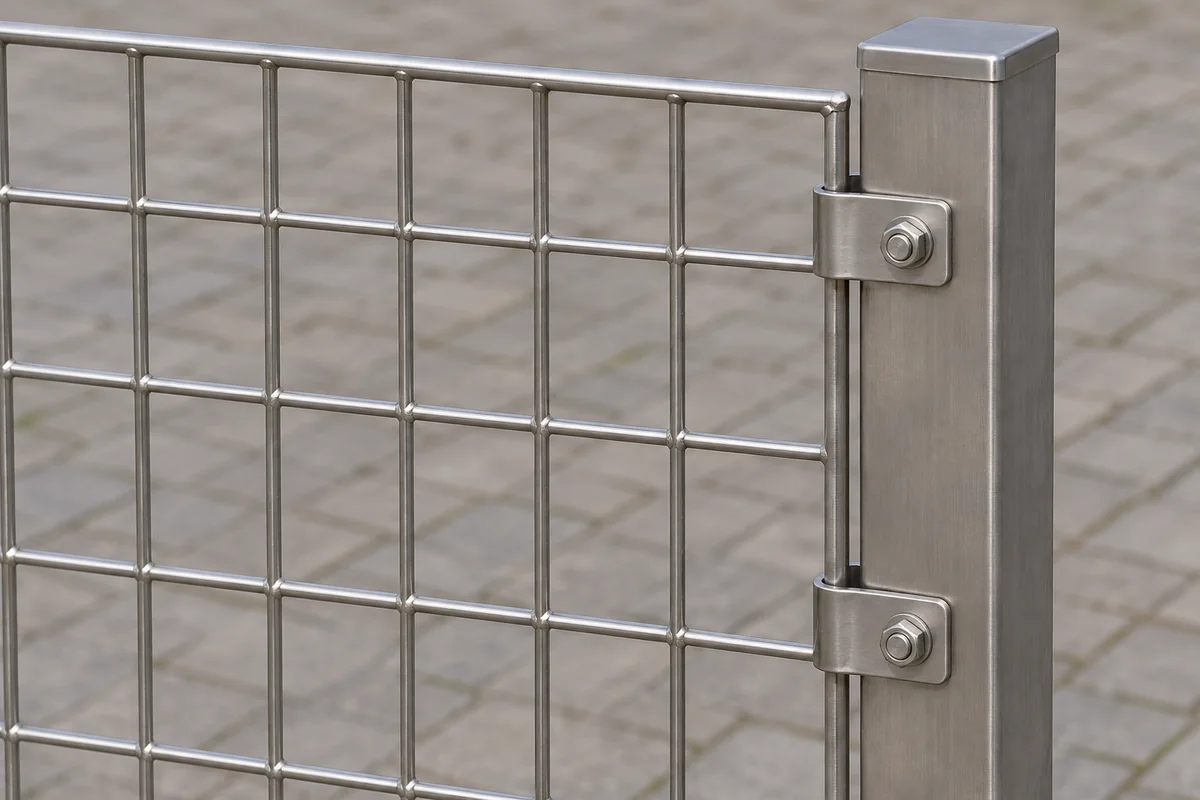
Mark end posts, corners, changes of direction and gates before counting intermediate bays. State whether dimensions are post centre-to-centre, clear between posts, or outside the panel frame. Include the clamp allowance and installation tolerance.
Gate posts need their own review. Leaf weight, hinge position, latch arrangement and any closer or automation change the connection requirements. Check the opening beneath the gate as carefully as the mesh beside it.
For security work, ASTM F3204-16(2024) treats selection as a site-specific welded-wire perimeter system. Mesh geometry is only one part of that decision.
A simple fence takeoff example
Suppose a drawing has one straight, uninterrupted 30-metre run. For this arithmetic example only, assume an approved maximum bay of 3 metres:
- Bays = round 30 ÷ 3 up to the next whole number = 10.
- Posts = bays + 1 = 11, including both ends.
The 3-metre bay is an assumed input, not a recommended post spacing. If the approved system uses fixed panel modules, work from its module and fixing dimensions. Gates, corners, steps and separate runs change the count. At a shared corner, count the physical corner post once and list all the connections it must carry.
For rolls, calculate net mesh coverage after planned joints and cut sections. Buying by roll weight cannot establish how many metres will be available for the fence.
Installing welded wire fencing on slopes
Resolve changes in level on the layout before installation. With rigid panels, common approaches include stepping level panels, using specially made sloping panels, or following a supplier-approved cutting and fixing detail. The available adjustment depends on the actual system.
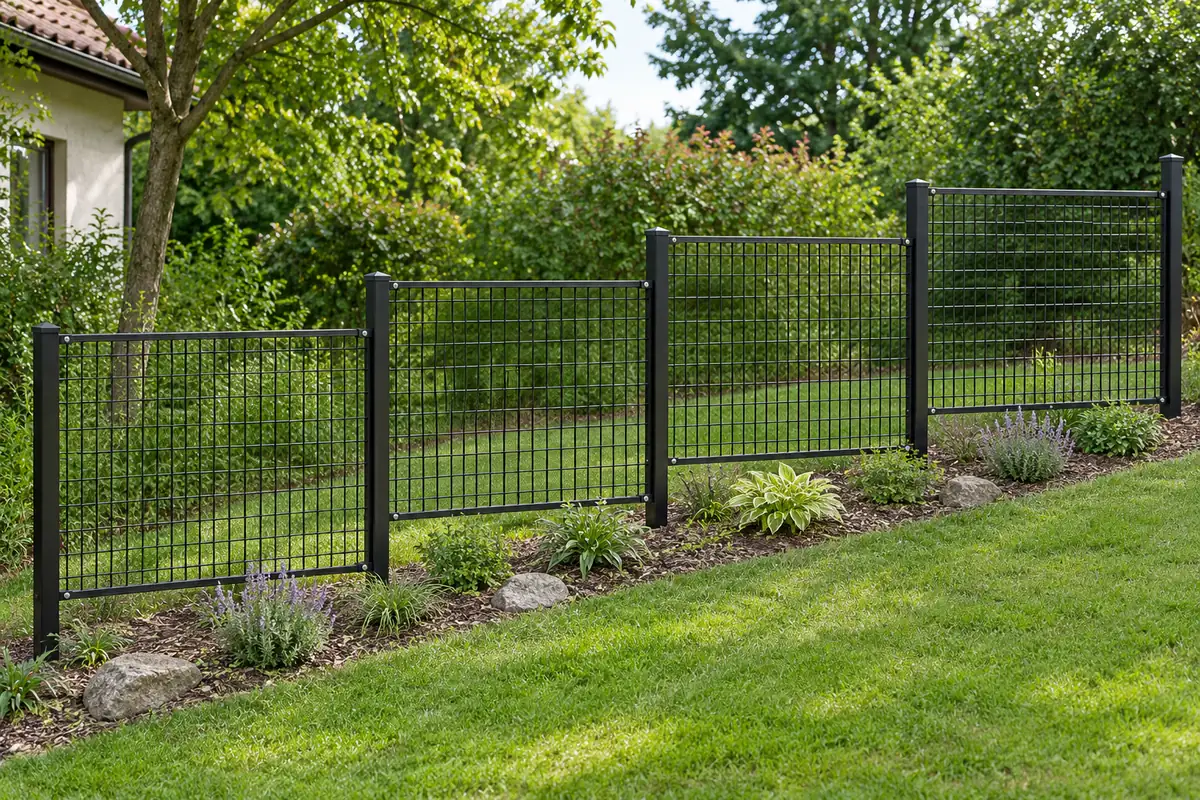
Stepping preserves rectangular panel geometry, but creates changing bottom clearances. Those gaps may matter for a pet enclosure or a security boundary. Shorter bays, a designed ground detail or a different panel shape may be needed.
Avoid forcing a rigid grid to follow a slope until welds distort. For roll fencing, obtain the permitted contouring and tensioning method. A mesh that can be unrolled across a hillside is not automatically ready to attach without gaps or distortion.
How to install a welded wire fence
Installation should follow the approved layout and the selected product’s instructions. The sequence below helps identify decisions that must be settled before work begins.
- Survey the route. Confirm boundaries, permissions, underground services, level changes and access for installation.
- Approve the system. Check mesh, posts, foundations or base plates, fixings, gates and exposure requirements together.
- Set out key positions. Establish ends, corners, gates and changes of level, then check intermediate modules.
- Install supports. Use the specified embedment or anchor design. Allow concrete or other materials to reach the condition required before loading.
- Attach the mesh. Keep the intended orientation and use compatible clamps, clips or ties. Apply only the tension the roll system permits.
- Finish cut sections. Address sharp wire ends, coating damage and exposed edges using the approved detail.
- Check the completed run. Inspect joints, bottom gaps, gate operation, fixings and alignment; record any outstanding items.
There is no universal footing depth for this sequence. Soil, frost conditions where applicable, fence height, wind exposure and the post system affect the design. Adding privacy fabric later can also change wind loading and should be reviewed before it is fitted.
Welded wire fence cost: compare the same finished scope
Compare total installed cost per linear metre or foot at the same height and specification. Roll price alone excludes posts, fixings, gates, foundations, labour and delivery.
Request separate lines for mesh, supports, connections, gates, installation and freight. Identify whether site preparation, demolition and disposal are included. Then divide the comparable total by the same measured fence length. A gate opening should be treated consistently across bids so that it does not make one quotation appear cheaper.
Wire diameter, opening size, coating, stainless grade, custom panel cuts and the number of corners all influence the material quote. Slopes, difficult access and ground conditions influence installation. A replacement allowance or maintenance comparison should use stated assumptions, not an unsupported promise of service life.
Where XTZ Fence fits into a welded mesh project
XTZ Fence offers stainless steel welded wire mesh panels with coordinated frames, posts and fixings. This is a relevant option when the project specification calls for a rigid stainless system. Confirm dimensions, grade, weld finish and mounting requirements on the project drawings.
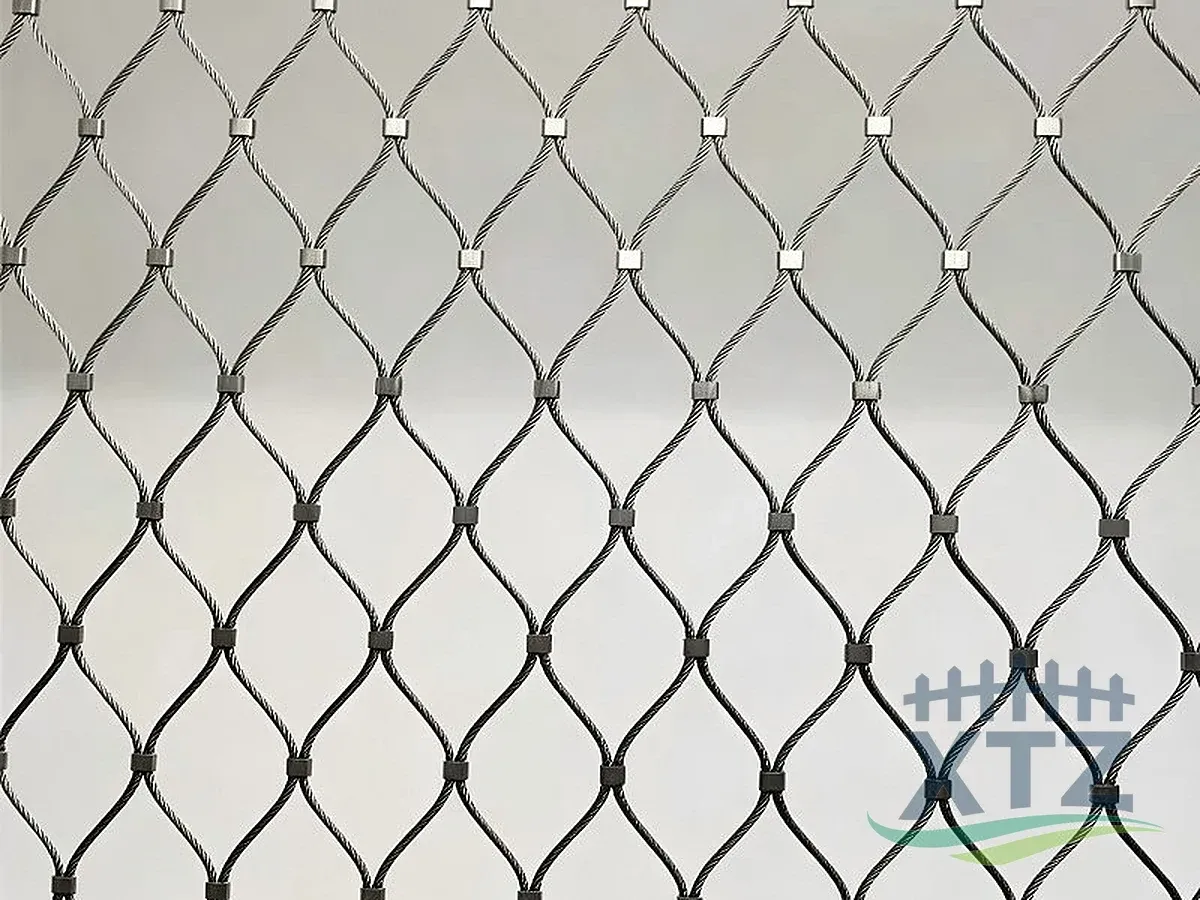
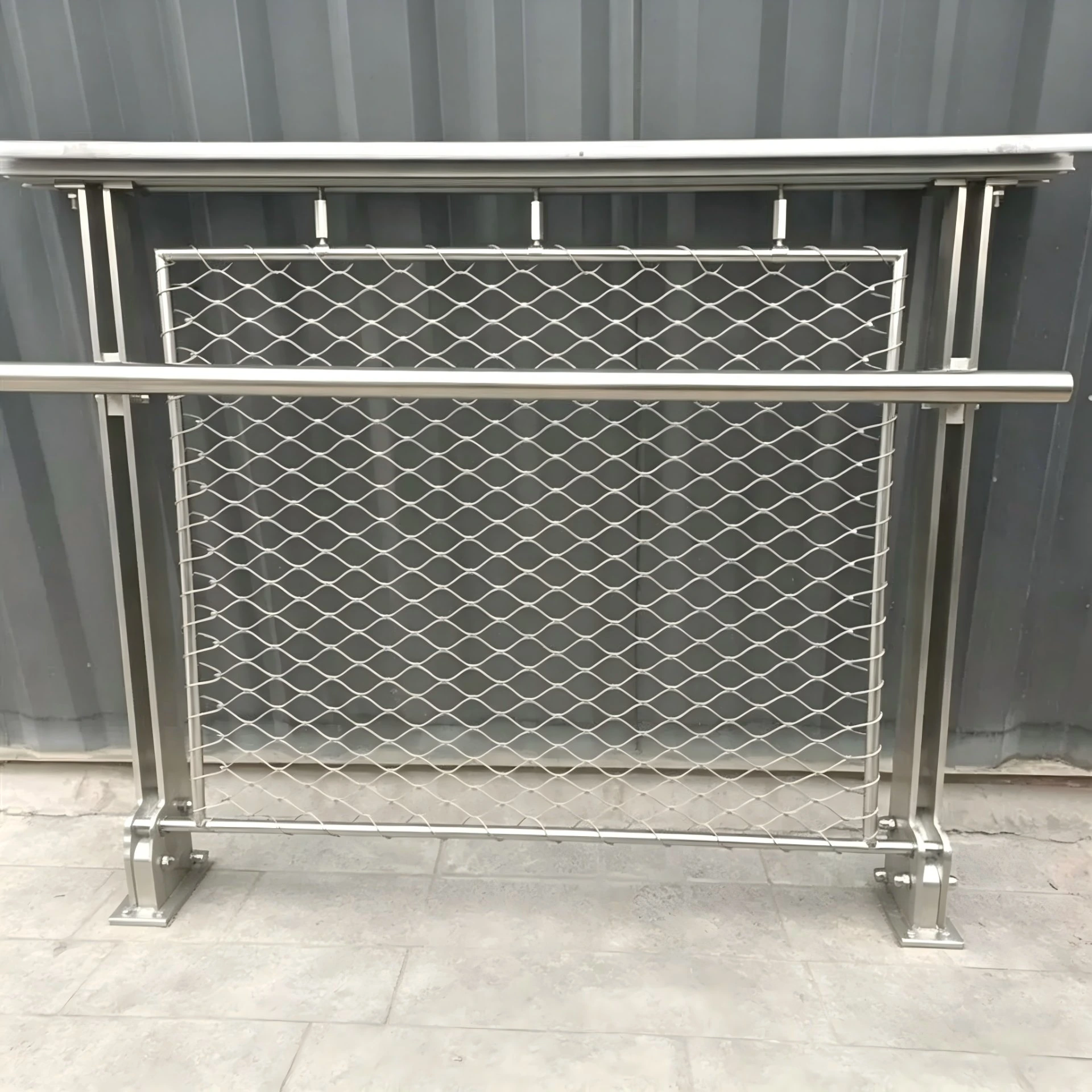
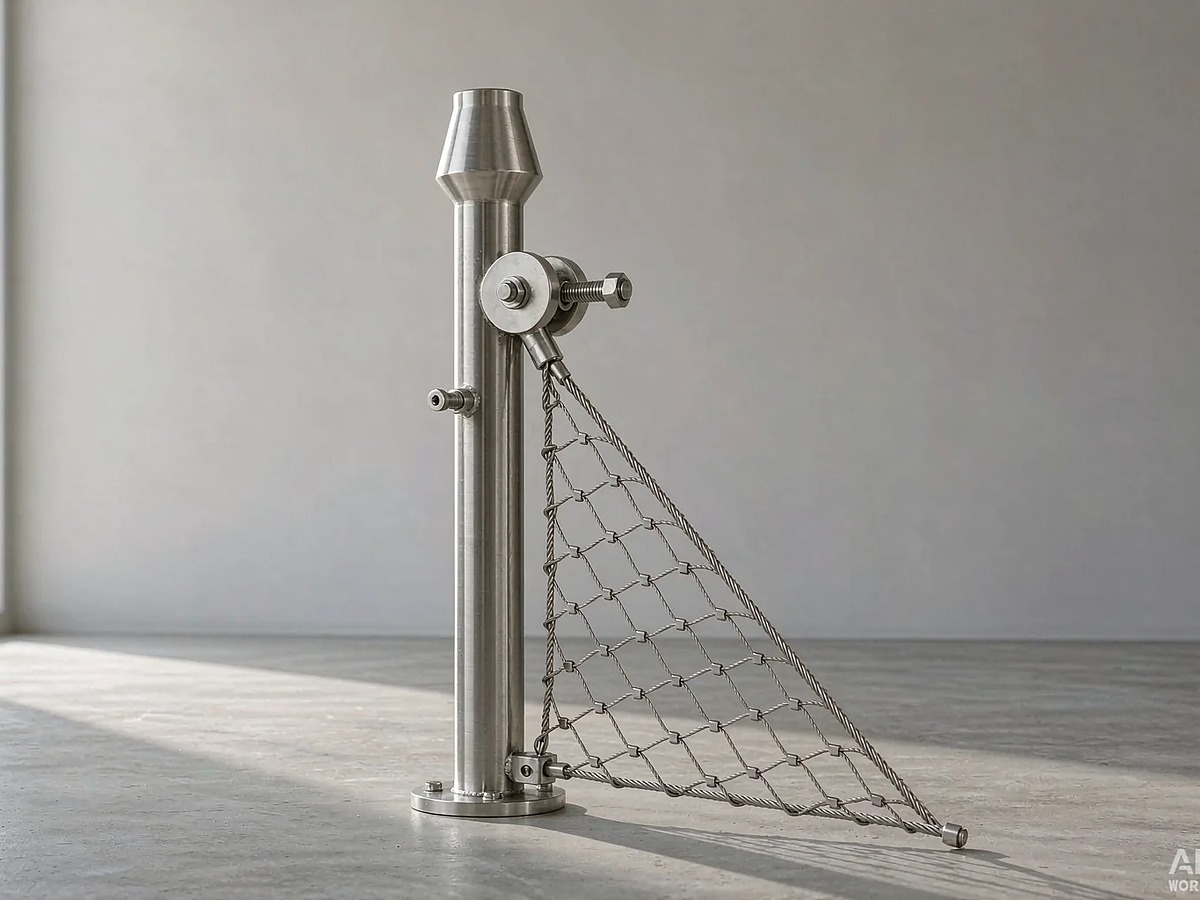
Where the design calls for a flexible diamond-pattern infill, XTZ’s stainless steel cable mesh provides a different construction. For a stainless steel mesh railing, the frame, border connections and installed mesh geometry need to be assessed together. Cable mesh and welded mesh should each be evaluated against the intended duty.
If the fence is also intended to act as a fall-prevention barrier, specify that requirement at the start. Our guide to balustrade infill mesh covers the additional questions around openings, loads and connections.
For a stainless fence quotation, send XTZ Fence the run layout, elevations, intended use, exposure conditions and gate schedule. Include the required opening, wire diameter and any project acceptance criteria.
Welded wire fence FAQ
Is welded wire fence stronger than chain link?
Strength depends on the complete specification and the type of load. Welded mesh holds a defined grid, while chain link has a woven diamond construction. Compare wire size, material, supports and connections for the intended duty. A light utility welded roll and a heavier chain-link system cannot be ranked from their construction names alone.
What gauge welded wire fence should I buy?
Choose an actual wire diameter for the application, then confirm the supplier’s gauge convention. Animal pressure, fence height, opening size, support spacing and expected loads all matter. With coated wire, ask whether the advertised size describes the steel core or finished coated diameter. A smaller gauge number generally indicates thicker wire within the same gauge system.
How far apart should welded wire fence posts be?
Use the spacing specified for the chosen mesh and support system. Rigid panels have defined modules and fixing allowances; rolls need compatible intermediate and end support. Ground conditions and loads can require a different design. Confirm post centres on the approved drawing before buying posts or setting foundations.
Can welded wire fence be used for dogs or chickens?
It can be used in suitably designed enclosures, but the mesh must match the animal and the surrounding risks. Consider opening size, wire strength, height, digging, climbing and sharp edges. A fence that contains poultry may still allow predators to reach through or enter beneath it. Review gates and ground edges as part of the enclosure.
Does galvanized welded wire fence rust?
Zinc protects the underlying steel, but protection depends on the coating, exposure and damage. Inspect welds, cut edges and worn contact points. For hot-dip galvanized components, the American Galvanizers Association describes approved repair methods under ASTM A780. Follow the product’s repair requirements; ordinary decorative paint is not evidence of an equivalent protective repair.
Can welded wire panels be used as balcony infill?
A panel used at a height must be assessed as part of the guard or railing system. The opening, loads, frame, welds, posts and anchors all need to satisfy the project requirements. Fence product descriptions do not establish balcony suitability. Obtain the applicable design and evidence before substituting a boundary panel into a railing.
Further reading and related topics
For a broader comparison, see XTZ Fence’s existing guide, Wire Mesh Fence Types: Choosing Panels, Rolls and Posts. Related buying topics include Galvanized Hardware Cloth: Sizes, Gauges and Buying Guide and Welded Wire Fence Quote Checklist: Panels, Posts and Gates.
Sources
- ASTM F2453/F2453M-14(2025): coated welded wire fence fabric: public scope and abstract.
- ASTM F3204-16(2024): design and construction of security fence systems: public scope.
- American Galvanizers Association: repairing hot-dip galvanized steel: protective coating repair methods.
- Red Brand: welded wire selection: utility roll construction and application guidance.