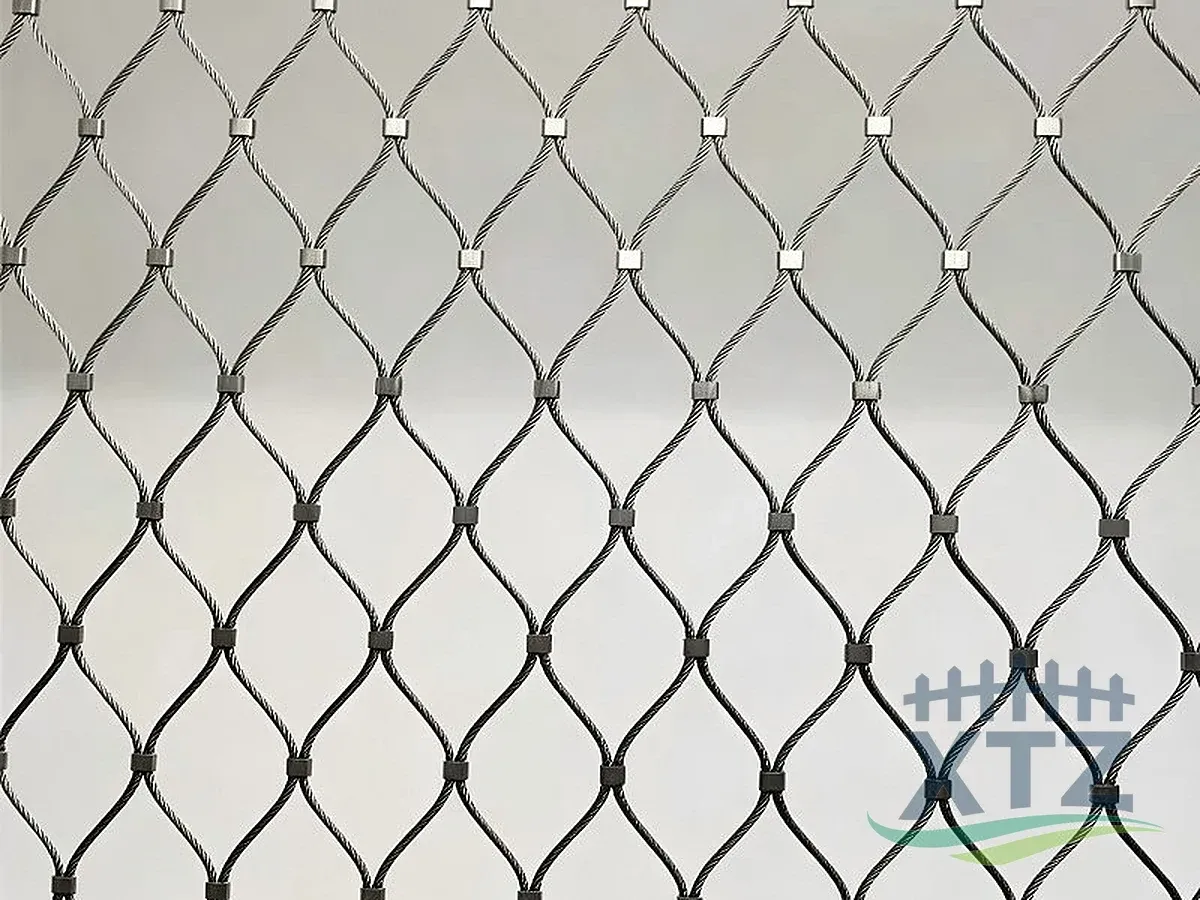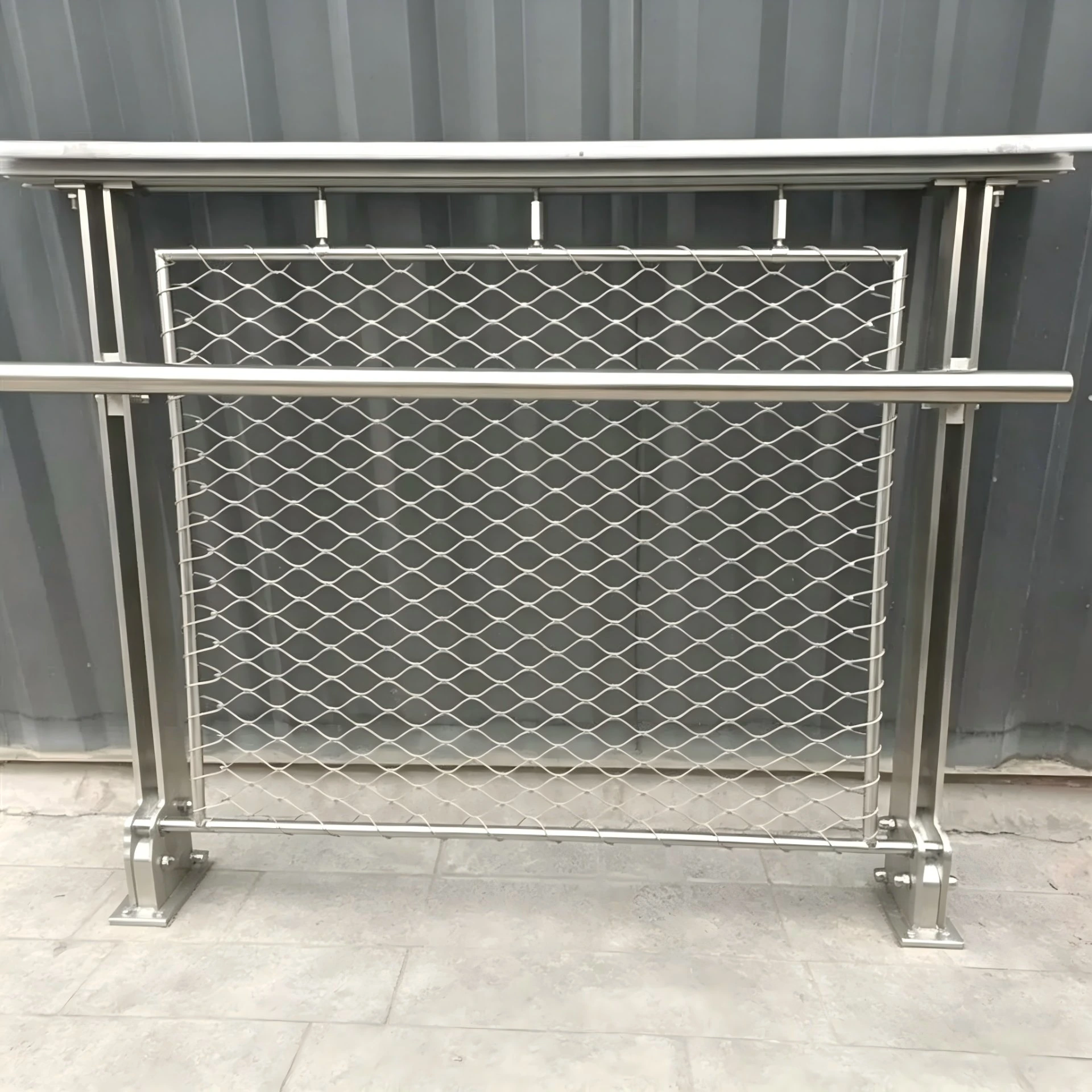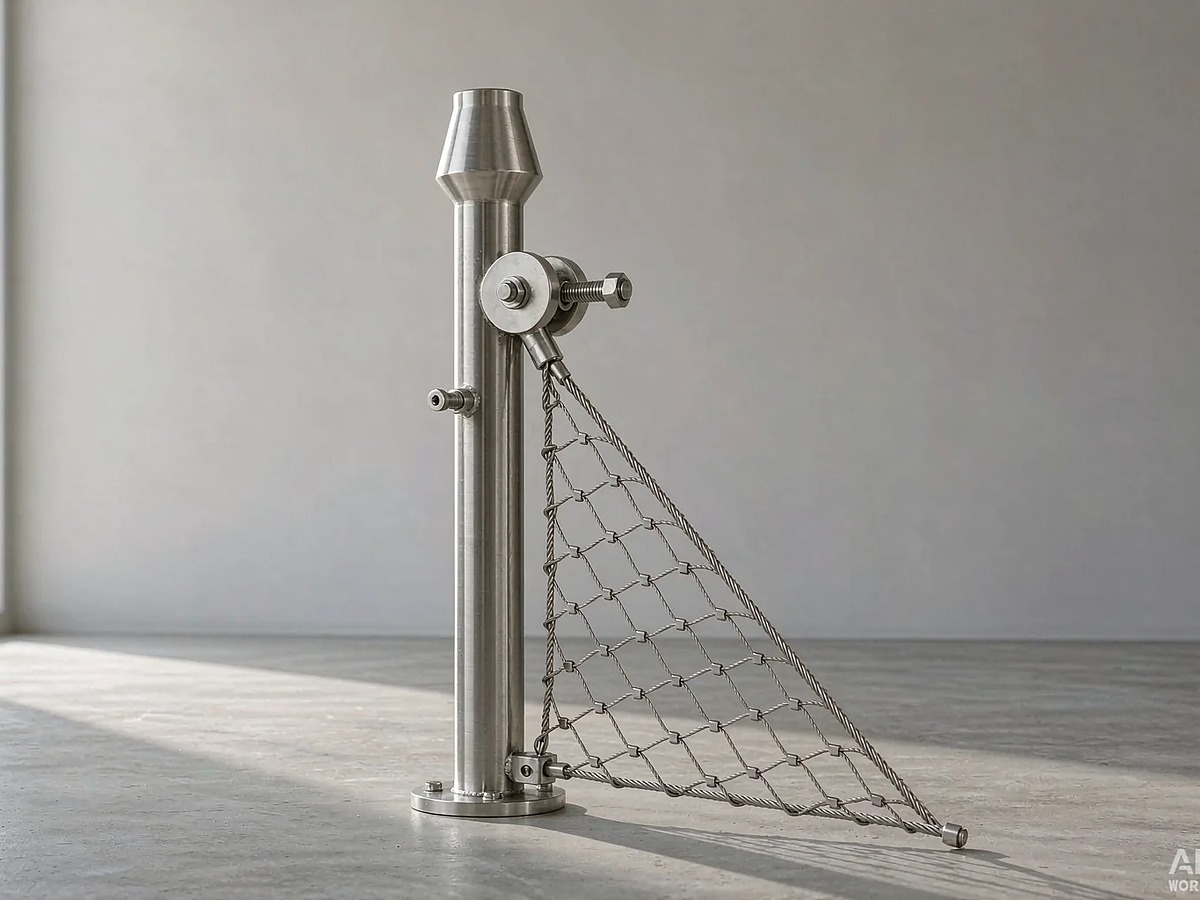
Wire cloth is a fabric made from interlaced metal wires, commonly used for screening, straining, and filtration. Suppliers also use “wire mesh” for many of the same products. To order the right material, specify the alloy, weave, opening size, wire diameter, and finished dimensions. The product name alone does not define its performance.
A buyer replacing a liquid strainer needs different information from someone selecting a garden barrier. For the strainer, particle retention and pressure drop matter. For the barrier, opening size, wire strength, corrosion protection, and fastening determine whether it will do the job.
Wire cloth vs. wire mesh and hardware cloth
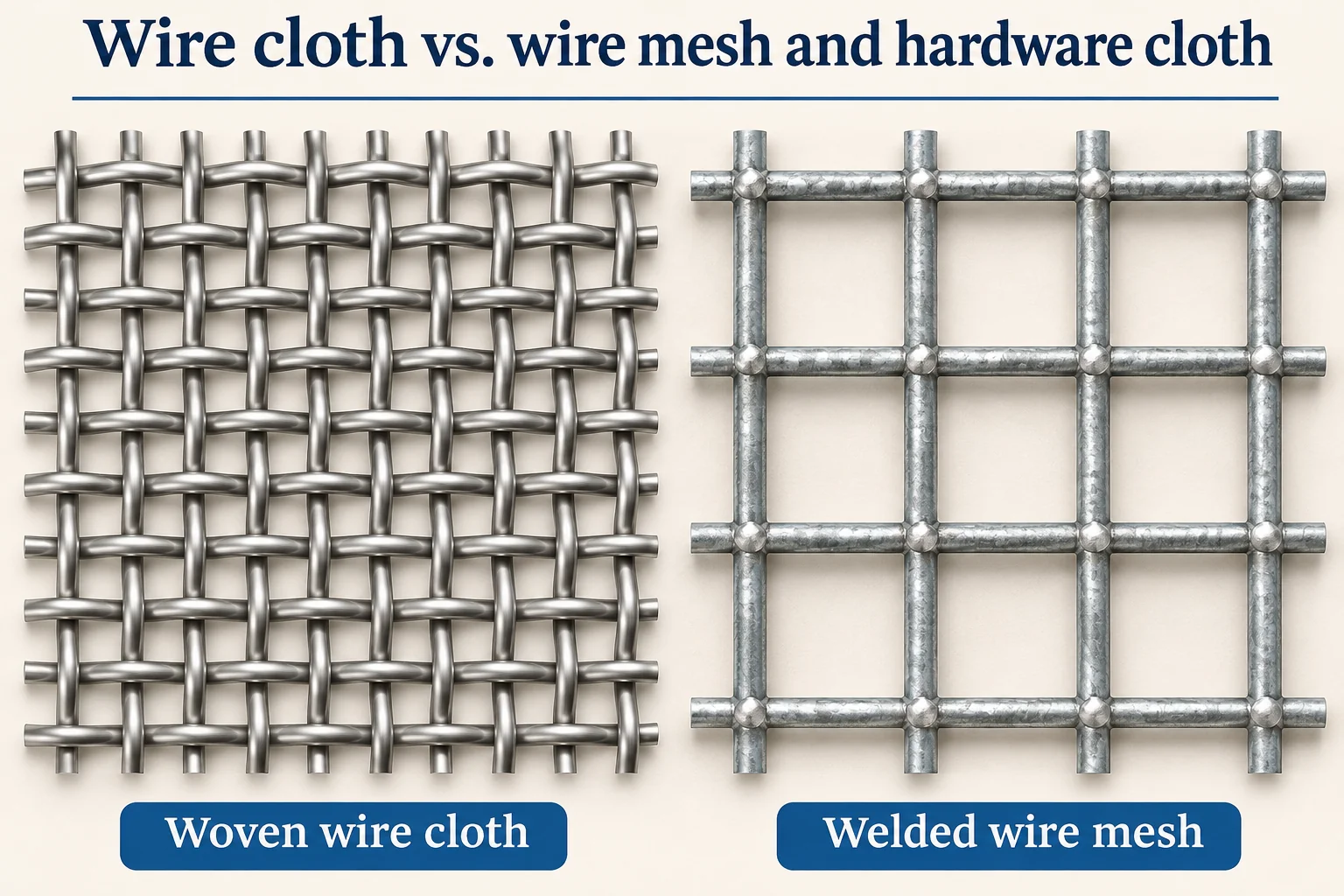
Wire mesh is the broader commercial term. It can describe woven or welded products, from fine screens to rigid panels. Wire cloth usually means woven material, especially in industrial filtration, although supplier terminology varies.
| Term | What it generally describes | What to check before ordering |
|---|---|---|
| Woven wire cloth | Lengthwise and crosswise wires interlaced on a loom | Weave, wire diameters, mesh count, and opening or retention requirement |
| Welded wire mesh | Intersecting wires joined by welds | Clear opening, wire diameter, weld quality, finish, and panel or roll size |
| Hardware cloth | Small-opening utility mesh, commonly galvanized; welded and woven versions exist | Actual construction, aperture, coating, and suitability for the intended enclosure |
| Space cloth | Mesh specified by the clear space between adjacent wires | Opening dimensions and wire diameter, with units explicitly stated |
These categories overlap. There is no universal opening size that makes every supplier switch from “mesh” to “cloth.” A photograph and a dimensional specification are more useful than trying to standardize a seller’s product name.
Expanded metal and perforated sheet are separate constructions: their openings are formed in sheet metal. They can be alternatives for some guards and screens, but they should not be substituted for woven filter media without checking the application.
For a rigid grid, XTZ Fence offers stainless steel welded wire mesh in rolls, sheets and cut panels. Check the construction explicitly when comparing it with woven cloth.
How mesh count, wire diameter, and opening size work together
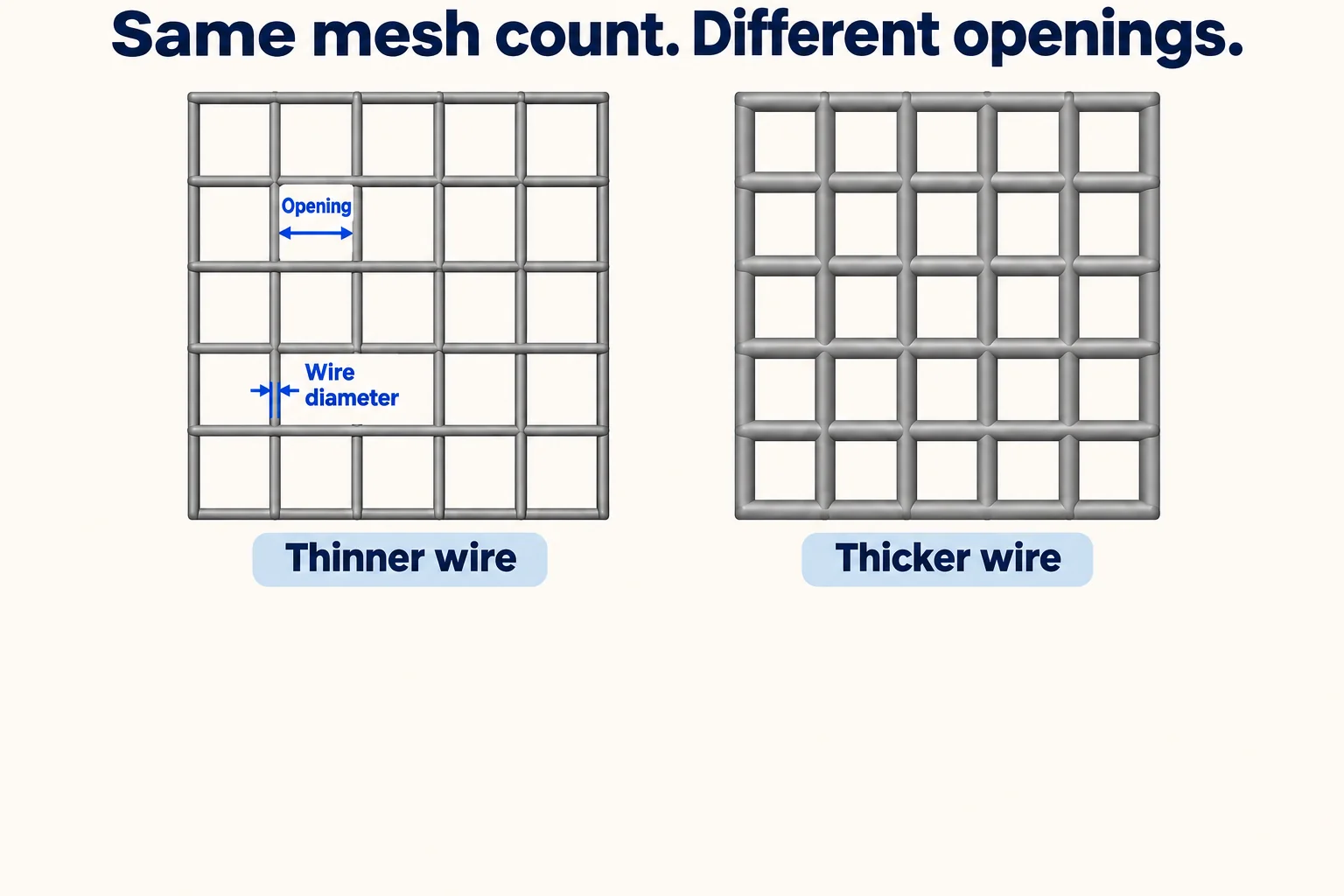
For the inch-based system used here, mesh count is the number of openings per linear inch. A 20 × 20 mesh has 20 openings per inch in each direction. The clear opening is the edge-to-edge distance between adjacent wires. Wire diameter is the thickness of the wire itself.
For ideal square-opening cloth with equal wire diameters in both directions:
Opening (mm) = 25.4 ÷ mesh count − wire diameter (mm)
Open area (%) = [opening ÷ (opening + wire diameter)]² × 100
The mesh count in either opening formula is still openings per inch. These equations describe nominal geometry; manufacturing tolerances and deformation affect actual openings. They do not calculate the retention rating of Dutch weave.
| Illustrative specification | Wire diameter | Calculated clear opening | Calculated open area |
|---|---|---|---|
| 20 × 20 mesh | 0.014 in. | 0.036 in. / 0.9144 mm | 51.84% |
| 20 × 20 mesh | 0.020 in. | 0.030 in. / 0.7620 mm | 36.00% |
| 100 × 100 mesh | 0.0045 in. | 0.0055 in. / 139.7 µm | 30.25% |
These are calculated examples, not a stock list or certified test results. The first two rows show why “20 mesh” is an incomplete purchase specification. Both have the same count, but their openings and open areas differ substantially.
Likewise, a 6 × 6 mesh count means six openings per inch in both directions. It does not mean six-inch openings. Confirm the units when a drawing says “6 × 6,” particularly when comparing industrial cloth with construction reinforcement products.
Specify wire diameter in millimeters or decimal inches. If you use gauge, name the gauge system: a gauge number without that information can lead to the wrong wire thickness.
Which weave should you choose?
The warp wires run along the length of the woven cloth. The weft, also called shute, runs across its width. Their arrangement determines the weave.
| Construction | How the wires cross | Selection considerations |
|---|---|---|
| Plain square weave | Alternately over one wire and under the next | A useful starting point for general screening when a clear square opening is required |
| Twill square weave | Over two wires and under two, with successive rows offset | Allows wire and opening combinations that can be difficult to weave in plain construction |
| Dutch weave | Different wire counts and diameters form a dense filtering structure | Specify the required retention rating, test method, flow, and differential pressure |
| Pre-crimped weave | Wires are shaped before weaving to locate their intersections | Used in coarser screens and panels; confirm crimp style and dimensional stability |
Dutch weave includes plain, twilled, and reverse variants. Its flow paths cannot be described by a simple square-hole conversion. Compare supplier performance data under the same test conditions; the same nominal micron label does not establish identical filtration performance.
Terms such as market grade, mill grade, and bolting cloth describe commercial specification families. Bolting cloth commonly uses finer wire to provide more open area at a given mesh count. Request the actual dimensions instead of relying on the grade name to define aperture or strength.
For coarser woven screens, explore XTZ Fence’s stainless steel crimped wire mesh. For finer filtration requirements, the stainless steel filtration mesh guide explains micron ratings and weave selection in more detail.
Choosing stainless steel, galvanized steel, or another alloy
Choose the metal around the environment that will contact it: the process fluid, temperature, cleaning chemicals, moisture, and abrasion. Appearance cannot reliably distinguish stainless steel grades.
304 stainless steel is a common starting point for general service. Molybdenum-alloyed grades such as 316 and 316L offer increased corrosion resistance for more demanding environments. That does not make them immune to corrosion or suitable for every chloride concentration and temperature. Check the actual exposure with the supplier. Outokumpu’s Supra material guidance explains the role of these alloys.
Galvanized steel uses a zinc coating to protect the underlying steel and is widely used for utility mesh. Confirm whether the coating is applied before or after weaving or welding, and how cut edges will be handled. For carbon steel, include the finish and expected moisture exposure in the specification.
Aluminum, copper, brass, and other alloys may suit weight, appearance, conductivity, or specific process requirements. Those properties need to be assessed together with mechanical strength and corrosion compatibility. Stainless steel alone is not evidence that a finished screen meets a food-contact requirement; the assembly, fabrication, cleaning, and documentation also need review.
Match the cloth to the application
For a liquid strainer or filter, begin with the particles to be retained and the required throughput. Provide the fluid, viscosity, operating temperature, available screen area, and allowable pressure drop. A fine mesh that blocks quickly may require more area, upstream screening, or a different cleaning arrangement.
For dry screening, describe the feed material, particle shape, loading, and vibration. Particles can lodge in apertures or form a layer over the screen. Aperture alone will not predict throughput, and a rectangular opening may separate elongated particles differently from a square one.
For ventilation, enclosure panels, and outdoor barriers, compare the opening with what must be excluded. Then consider wire strength, support spacing, fastening, and corrosion protection. A filter cloth specification does not establish that a panel is suitable as a structural guard or fall-protection system.
Fabrication can determine whether an otherwise suitable cloth fits the equipment. Cut edges may fray or expose sharp wire ends. Agree on slitting, cut dimensions, edge treatment, frames, seams, and attachment points before manufacture. Keep fine mesh supported during handling, and inspect for damaged openings before installation.
Which standards and inspection records matter?
Match the standard to the product and its intended use. Industrial screening cloth, Dutch filter cloth, and laboratory test sieves have different requirements.
| Reference | Relevant scope | Purchasing implication |
|---|---|---|
| ASTM E2016 | Industrial woven wire cloth for general use | Agree on the applicable edition and the dimensions and tolerances to be verified |
| ASTM E2814-22 | Industrial woven wire filter cloth, including Dutch weave | Define filtration acceptance criteria with the supplier |
| ASTM E11 | Woven wire test sieve cloth and test sieves | Request the appropriate sieve documentation for particle-size testing |
| ISO 9044:2016 | Industrial square-aperture woven wire cloth for screening | Check scope exclusions, including pre-crimped and welded screens and cloth coated after weaving |
ASTM E2016 excludes several specialized products, including Dutch filter cloth, galvanized hardware cloth, and test sieve cloth. Its published scope explains that distinction. A generic “ASTM compliant” statement is therefore insufficient.
Request an inspection record tied to the supplied material or lot. Depending on the order, useful checks include alloy identification, wire diameter, aperture, mesh count, roll or panel dimensions, visible weaving defects, and edge condition. Agree on the sampling and acceptance method before placing the order.
Frequently asked questions about wire cloth
Does a higher mesh count always mean finer filtration?
At a fixed wire diameter, increasing the count reduces the clear opening. Across different specifications, wire diameter and weave also change. For filtration, compare the opening or tested retention requirement alongside mesh count.
Is a micron rating the same as an opening size?
A micron is a unit of length: 1 µm equals 0.001 mm. It can describe a measured opening or a filtration rating. A retention rating also needs a test method and acceptance criterion; it is not automatically a promise that every larger particle will be retained under all conditions.
Can hardware cloth replace industrial filter cloth?
Only if its documented opening, material, construction, and performance meet the process requirement. Utility hardware cloth should not be assumed equivalent to a specified filtration medium.
Can wire cloth be cleaned and reused?
Some applications permit cleaning and reuse. The cleaning method must suit the alloy, contamination, and wire size. Inspect for distortion, broken wires, blocked areas, and edge damage before returning the cloth to service.
What to include in a wire cloth quotation request
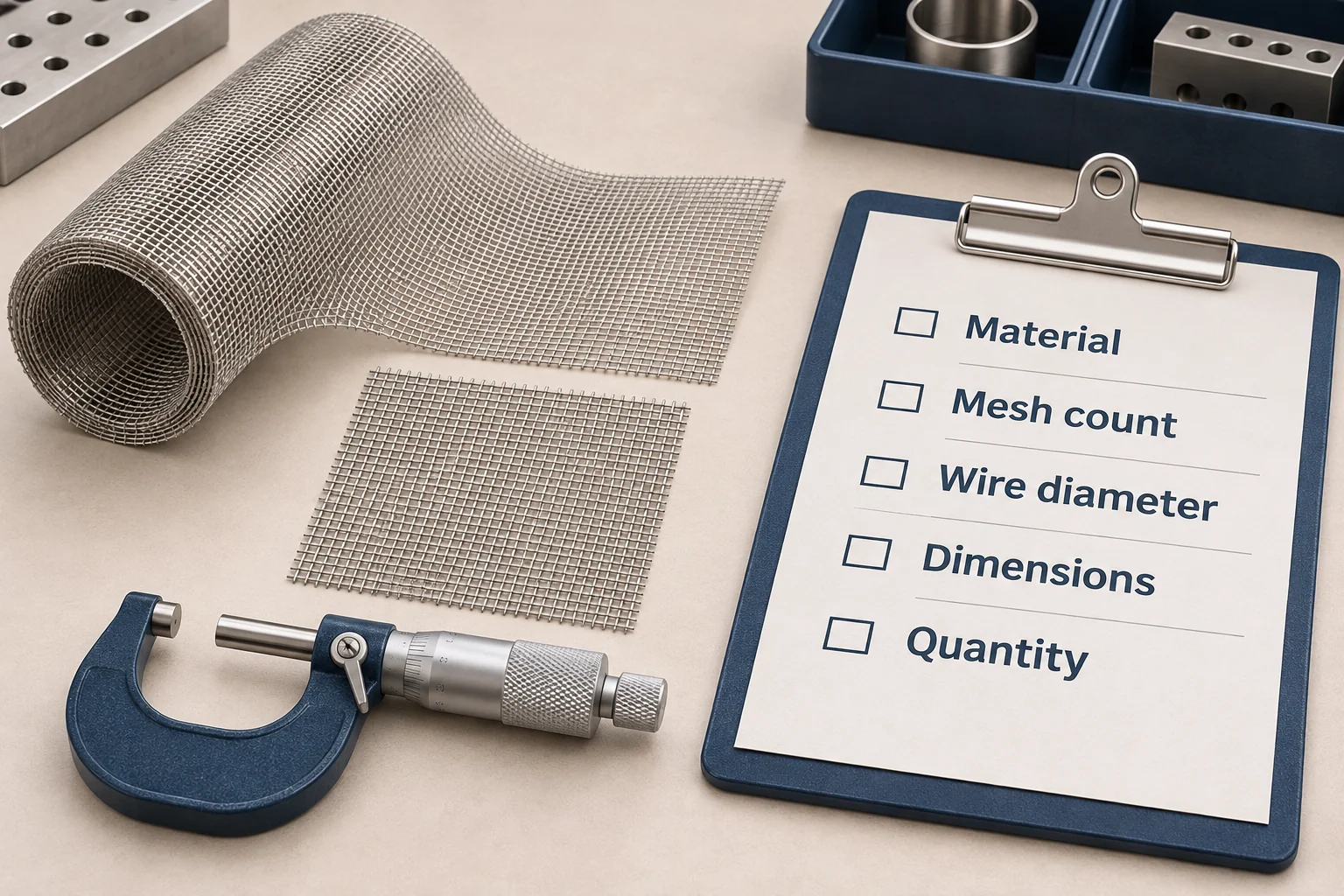
Send a drawing or specification that includes:
- The intended application, process medium, temperature, and exposure conditions.
- Alloy and finish, including the coating sequence where relevant.
- Weave, mesh count in both directions, and wire diameter in explicit units.
- Required clear opening, or filtration rating with its test and acceptance criteria.
- Roll width and length, panel or cut-part dimensions, tolerances, and quantity.
- Edge treatment, frames, seams, and any forming or cutting requirements.
- Applicable standards, material documentation, inspection requirements, and delivery location.
For example, “20 × 20 mesh, 304 stainless steel, plain square weave, 0.014-inch wire, nominal 0.036-inch opening” describes a geometry much more clearly than “fine stainless mesh.” Add dimensions, tolerances, quantity, and service conditions before requesting a quote. This example is a specification format, not a product availability claim.
When comparing prices, keep the alloy, wire size, finished dimensions, and inspection requirements consistent. Include cutting, edge finishing, packaging, freight, and expected replacement frequency. Ask the supplier to confirm the complete specification before production.
XTZ Fence, operated by Anping County Tianzan Wire Mesh Products Co., Ltd., supplies stainless steel mesh and fence systems. Send your drawing, required construction, opening, wire diameter, material grade, quantity and destination to the XTZ Fence project desk. Ask the team to confirm suitability and availability for the exact specification, especially for fine filter cloth or a certified test sieve.
Technical references
- ASTM International: Industrial Woven Wire Cloth, E2016-20 scope. Check the contractual edition when ordering.
- ASTM International: Industrial Woven Wire Filter Cloth, E2814-22.
- ASTM International: Woven Wire Test Sieve Cloth and Test Sieves, E11.
- ISO: Industrial woven wire cloth, ISO 9044:2016.
- Outokumpu: Supra stainless steel grades and corrosion considerations.