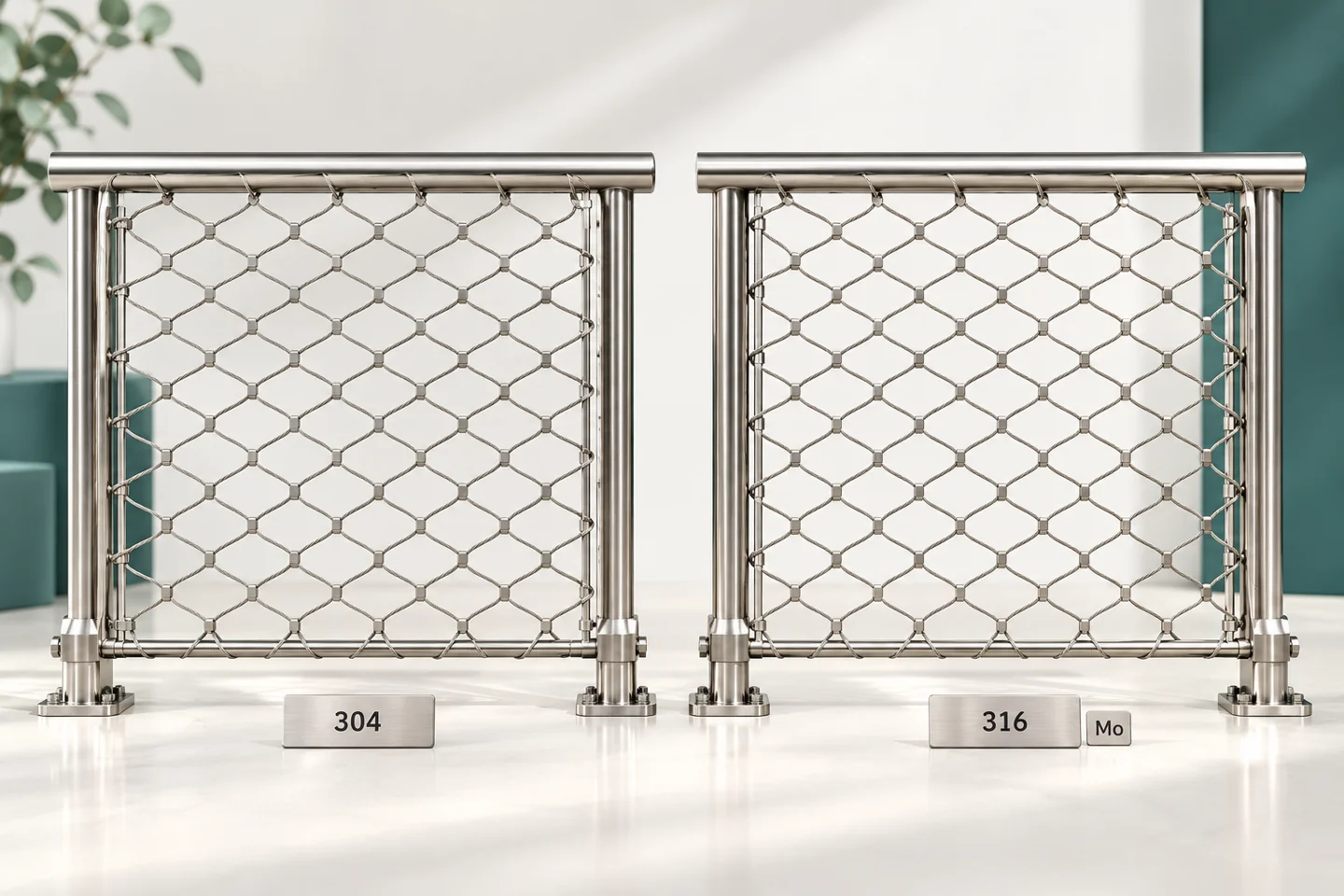
The main difference between 304 and 316 stainless steel cable mesh is corrosion resistance in chloride exposure. Type 316 contains added molybdenum, which improves resistance to localized corrosion. Type 304 can suit less aggressive environments. Choose the grade after reviewing salt exposure, cleaning access, surface finish and the complete assembly.
What changes when you specify 316?
Both grades belong to the austenitic stainless steel family. Type 316’s molybdenum addition improves resistance to chloride-related pitting and crevice corrosion. It does not make a mesh immune to seawater, chemicals or poor detailing. The International Molybdenum Association’s material-selection FAQ explains this distinction and the separate meaning of the low-carbon “L” grades.
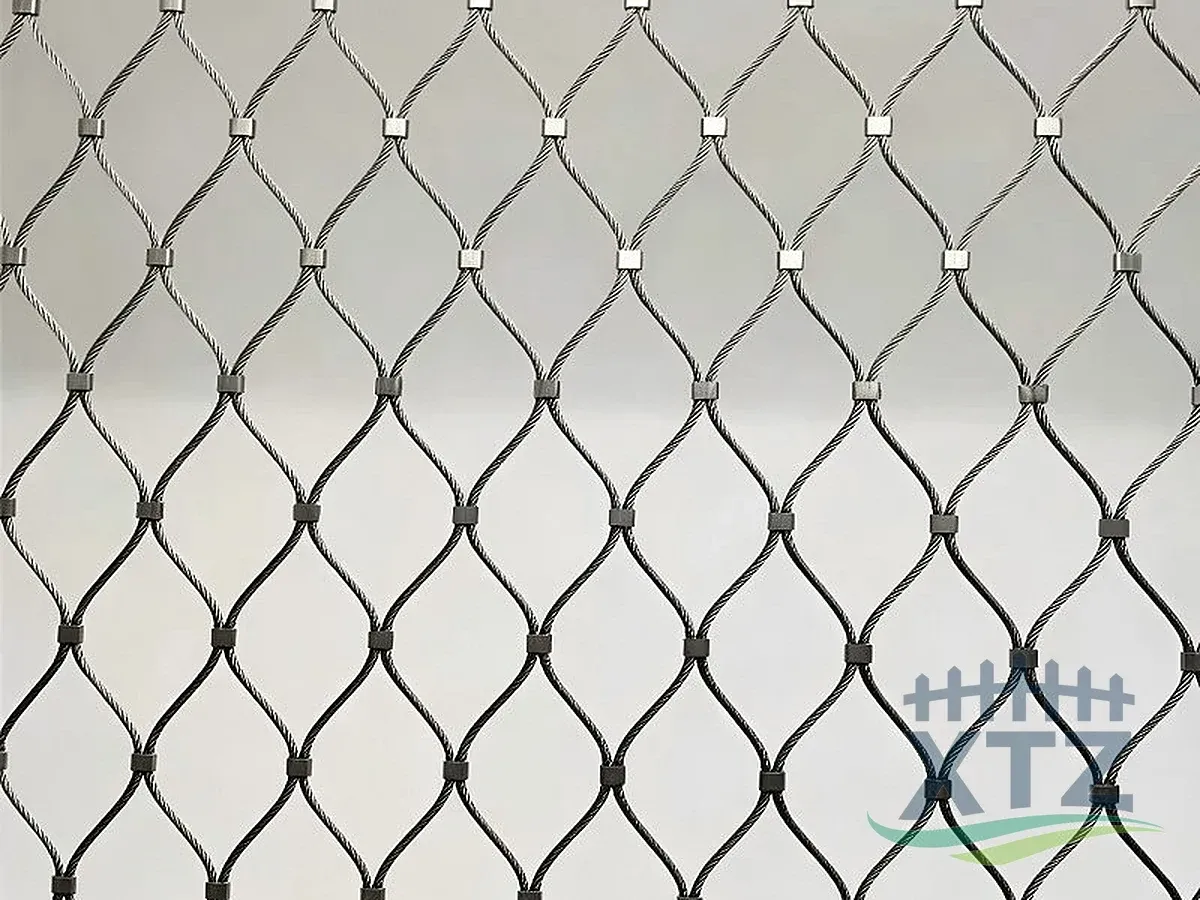
For stainless steel rope mesh, material grade is one field in the specification. Cable construction, rope diameter, opening geometry and edge connections still need to be defined. Changing 304 to 316 does not establish the load capacity of a panel.
| Selection point | 304 | 316 |
|---|---|---|
| Chloride exposure | Less resistant than 316 under comparable conditions | Improved resistance; still needs an exposure review |
| Dry, clean indoor service | A common candidate | May be selected where project conditions justify it |
| Coastal or de-icing salt deposits | Requires careful assessment | Often a stronger starting candidate, not an automatic approval |
| Mechanical performance | Verify the actual cable and assembly | Verify the actual cable and assembly |
| Routine maintenance | Required according to exposure and finish | Also required |
| Price comparison | Obtain a like-for-like quotation | Obtain a like-for-like quotation; no fixed premium applies to every order |
Choose for the site, not just “indoor” or “outdoor”
A sheltered inland stair, a windswept seafront balcony and a panel beside a salted road have different exposures. Distance from the sea alone does not describe wind direction, salt accumulation or rain washing. Review nearby pollution, persistent dampness and surfaces that trap deposits.
For ordinary inland conditions with good cleaning access, 304 may be worth evaluating. Where salt spray or de-icing salts are likely, consider 316 and assess the details that retain contamination. For severe exposure, continuous immersion or difficult chemical conditions, a corrosion specialist may recommend a different alloy or design.
Swimming-pool environments deserve a separate review. Warm humidity and concentrated chemicals can create demanding conditions, especially in sheltered connections. “Marine grade” is not sufficient evidence that an assembly is appropriate beside or above a pool.
Specify ferrules, frames and fasteners as well as cable
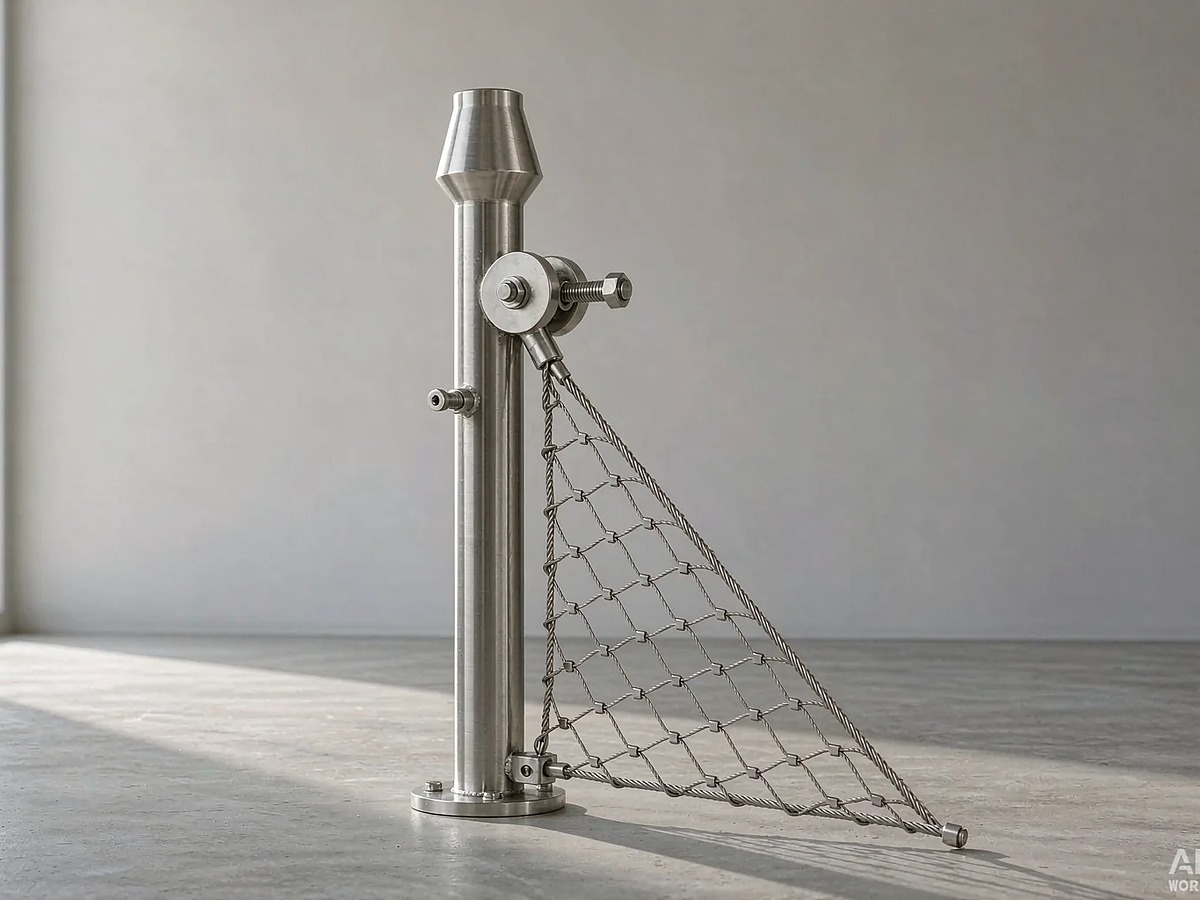
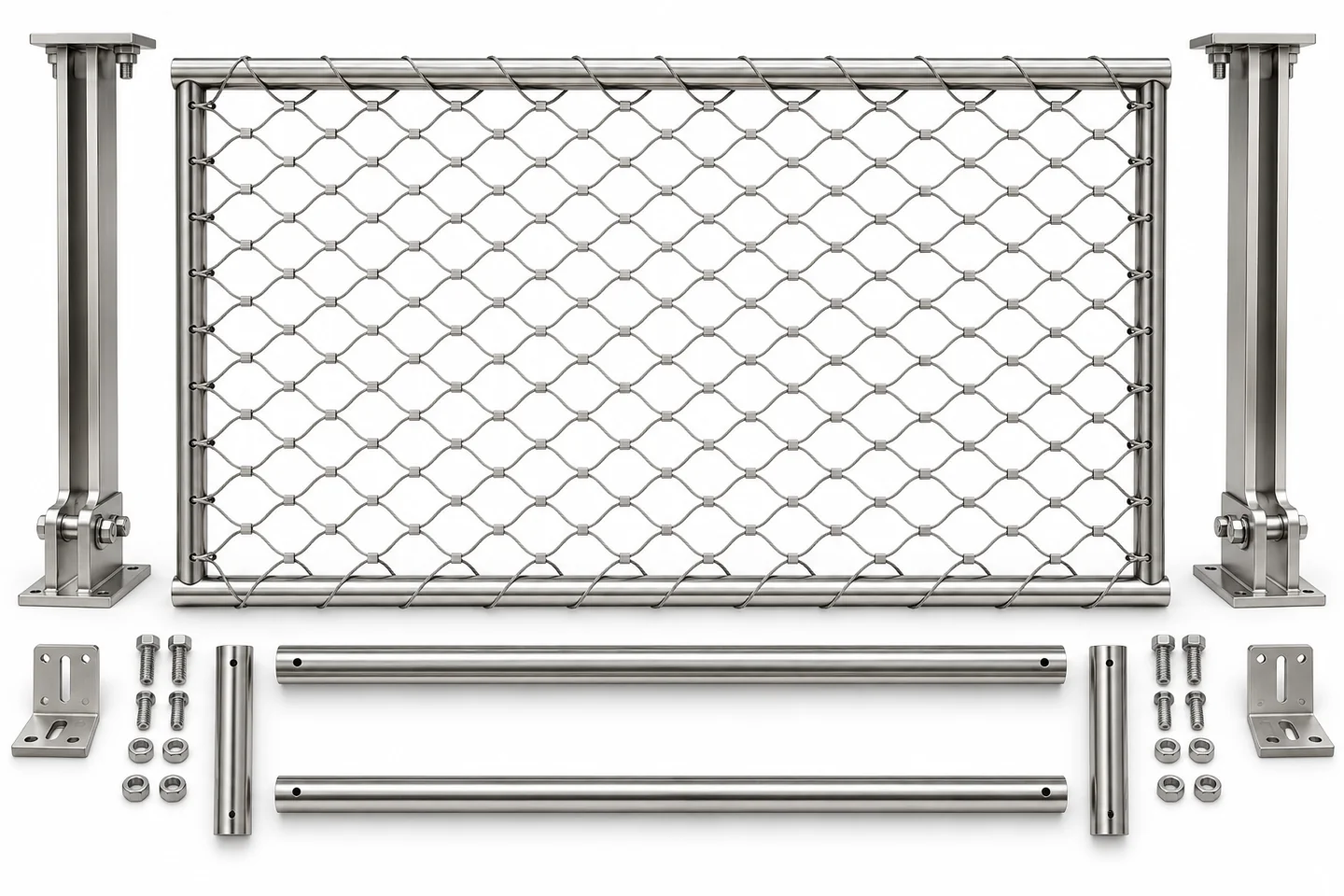
A rope mesh installation contains several components. Ask for the cable grade and the material specifications for ferrules, border cables, lacing, frame members and fasteners. A drawing that labels only the net leaves important decisions open.
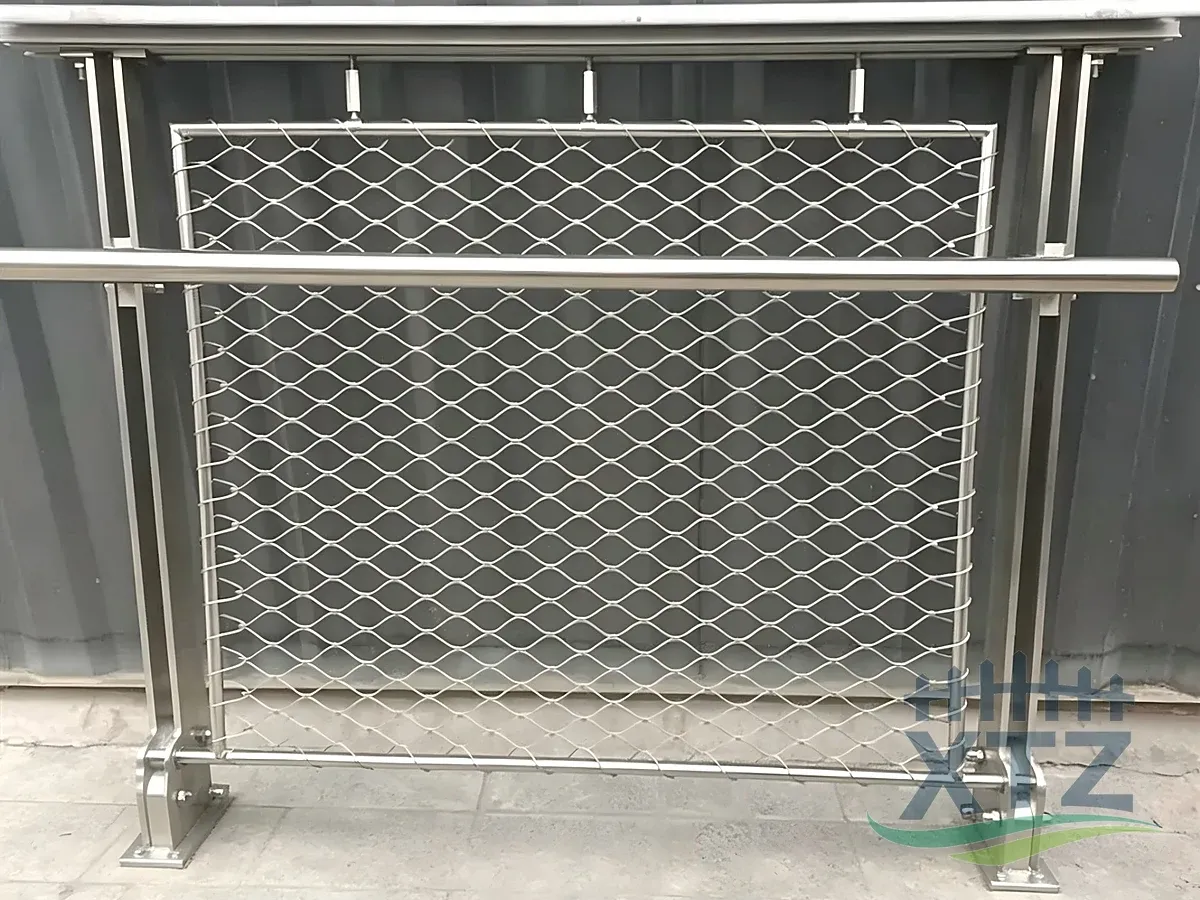
On a stainless steel rope mesh fence, the frame finish, weld treatment and mounting details also affect durability. Review dissimilar-material contacts and the opportunity for water to drain. Appropriate isolation or other detailing should be determined for the assembly.
304L and 316L: what does the L mean?
The L denotes a low-carbon grade. Lower carbon can reduce sensitization-related corrosion risk after welding. Whether it is needed depends on the product form, fabrication and service conditions. It does not mean the cable has a higher breaking load or that maintenance can be omitted.
Keep the mesh cable specification separate from the welded frame specification. Ask the fabricator to identify the grades and fabrication controls for each component. Do not assume every part of a product advertised as “316” is automatically 316L.
Can you identify 304 and 316 by appearance?
Finished mesh can look the same in either grade. Colour, gloss and a photograph cannot verify its chemistry. A magnet test alone is also unreliable for identifying these grades because processing can influence magnetic response.
Use material documentation and traceability appropriate to the order. Where required, agree on positive material identification, the components to be tested and the acceptance criteria. XRF can help distinguish molybdenum-bearing material, but it does not establish low-carbon “L” status. That needs a suitable verification method and documentation.
Compare quotes on the same specification
A lower quote may reflect a different rope diameter, mesh opening, panel size, finish or supply scope. Compare the mesh grade and construction first, then the edge system, frames, fittings, inspection requirements and packing. Record which items are included.
For a project with several hundred panels, cleaning access and replacement access may influence the buying decision as much as the first material price. Ask for the proposed maintenance requirements before committing to the grade.
Frequently asked questions
Is 316 cable mesh always better than 304?
It offers improved chloride corrosion resistance, but grade selection should fit the environment and project specification. It does not automatically improve every mechanical or installation characteristic.
Can 304 cable mesh be used outdoors?
It can be considered for suitable environments. Check salt, pollution, finish, rain exposure and maintenance access. “Outdoor” by itself is not a complete specification.
Will 316 mesh prevent all coastal staining?
No. Deposits, rough surfaces and sheltered details can still cause problems. The grade should be supported by suitable detailing and regular cleaning.
Is 316 stronger than 304 mesh?
Do not infer panel capacity from the grade alone. Obtain the relevant cable properties and assembly verification, including frame, connections and anchors.
What information should I provide for grade selection?
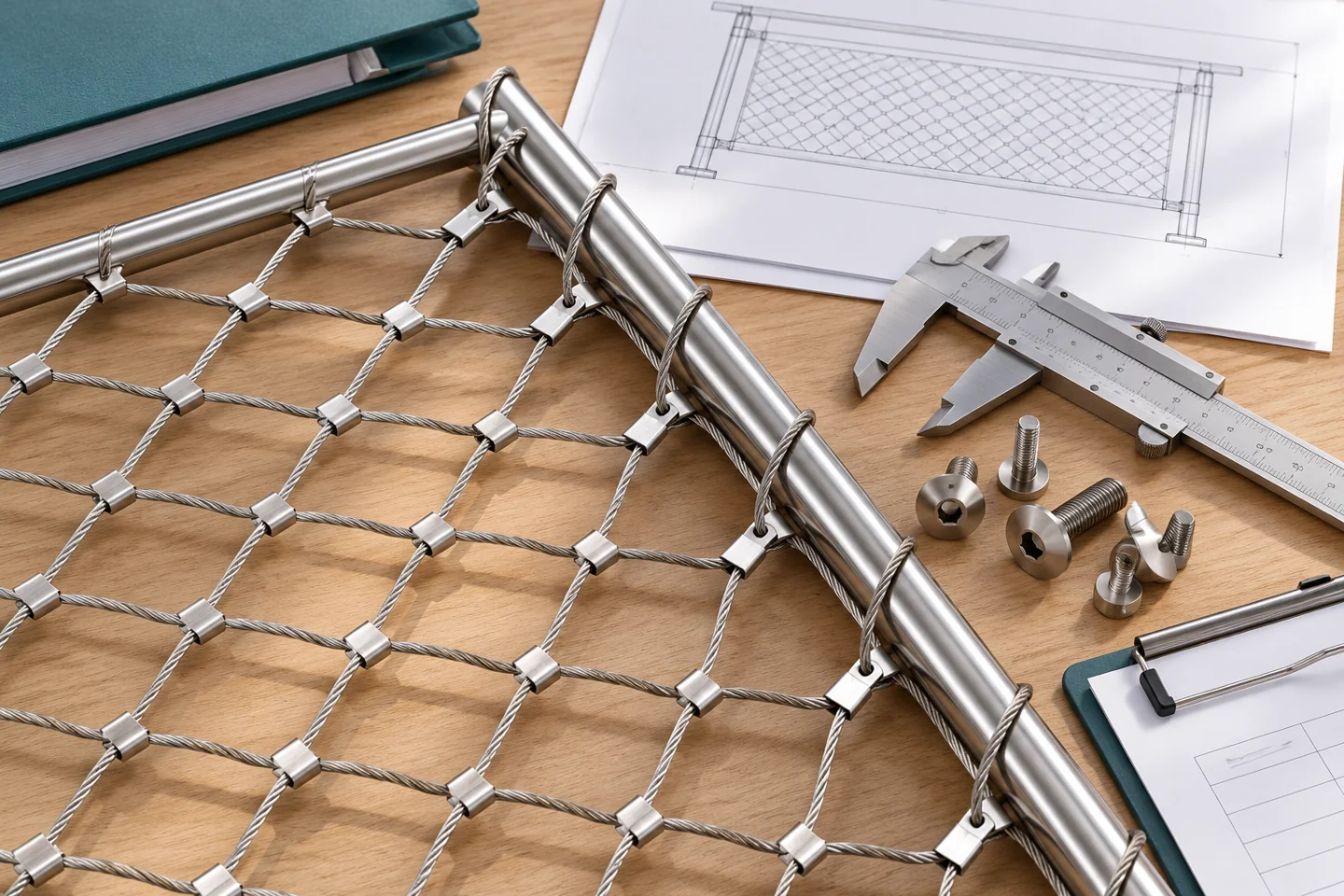
Include the installation location, exposure to salt or chemicals, indoor or outdoor conditions, cleaning access, required finish and project documentation requirements. Add drawings showing how the mesh meets the frame or supporting structure.
Send those conditions to XTZ with the desired opening, rope diameter and panel dimensions. The quotation should state the proposed materials and supply scope clearly enough for the project team to review. Related reading: 316 Stainless Steel Cable Mesh and How to Clean and Maintain Stainless Steel Cable Mesh Request a grade-matched quotation from the XTZ project desk with the exposure, opening, rope diameter and destination included.