Specify expanded metal mesh by its profile, material, diamond pitch, clear opening, strand dimensions and finished sheet orientation. Raised mesh retains the formed profile from expansion; flattened mesh is rolled to a flatter surface. SWD and LWD describe the short and long design directions, which must be distinguished from the clear openings.
For a comparison of mesh families across building applications, see wire mesh for architecture.
Raised or flattened: which form fits the project?
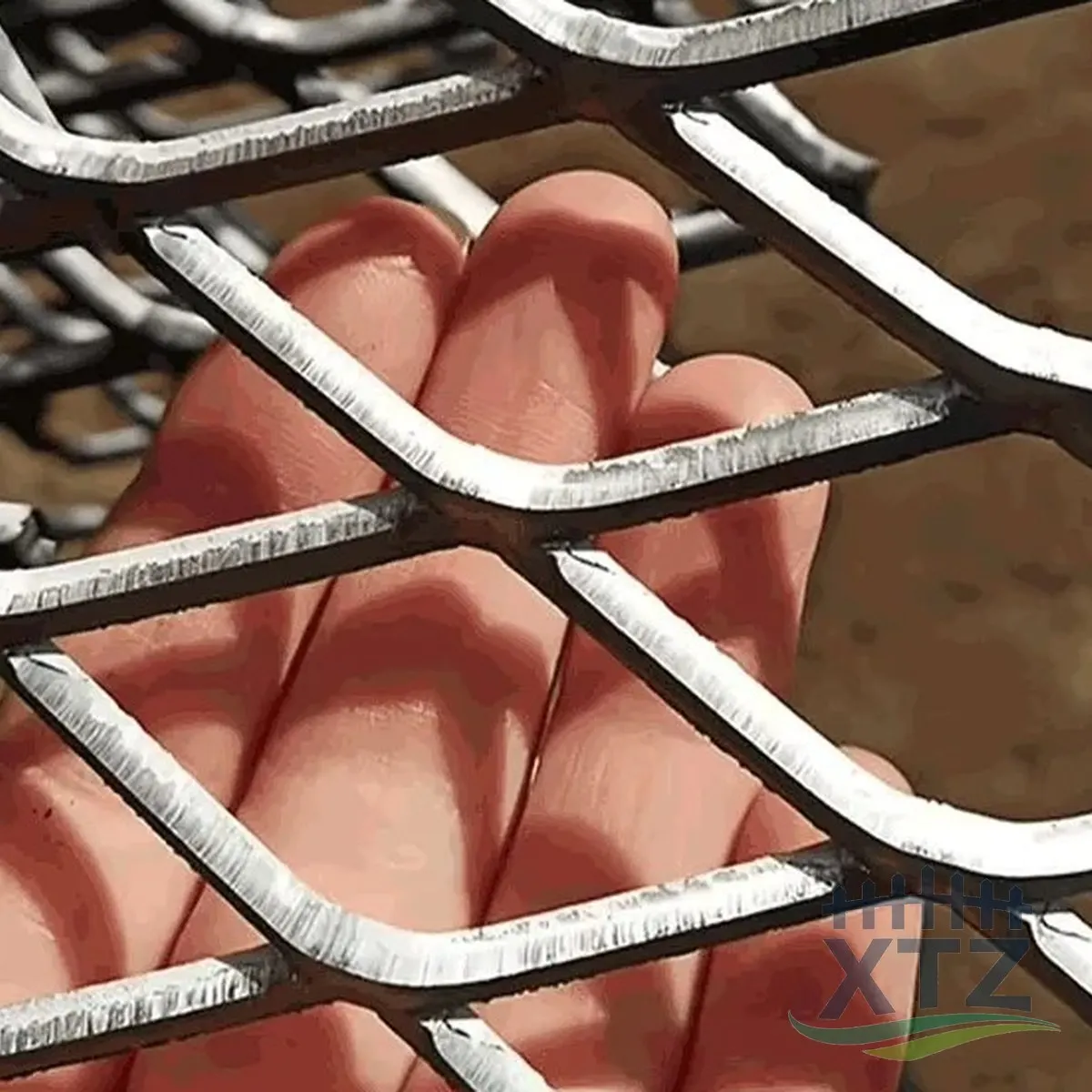
Expanded metal starts as sheet that is slit and stretched into an interconnected pattern. The metal between openings forms the strands; the junctions are the bonds. Raised, sometimes called standard, expanded metal retains a three-dimensional profile. Flattening adds a rolling process that changes that profile and can change the finished dimensions.
| Decision | Raised expanded metal | Flattened expanded metal |
|---|---|---|
| Surface | Angled strands with a pronounced profile | Lower-profile surface after rolling |
| Appearance | Stronger directional texture and shadow | More planar appearance |
| Frame coordination | Allow for overall mesh depth | Check finished thickness and flatness |
| Dimensional approval | Confirm dimensions of the raised product | Confirm dimensions after flattening |
| Possible architectural use | Textured screens and feature panels | Inserts and screens where a flatter profile suits the detail |
| Remaining checks | Support, edges, loads and finish | Support, edges, loads and finish |
Flattening does not automatically make a panel safe to touch or eliminate sharp cut edges. It also does not mean two products with the same nominal designation have identical openings or load behavior. Compare the actual data and samples. The distinction between the manufacturing processes is explained in this expanded metal measurement guide.
XTZ's stainless steel expanded metal mesh is the relevant product family for these enquiries. Confirm the specific profile, pattern and supply format with the quotation.
What do SWD and LWD mean?
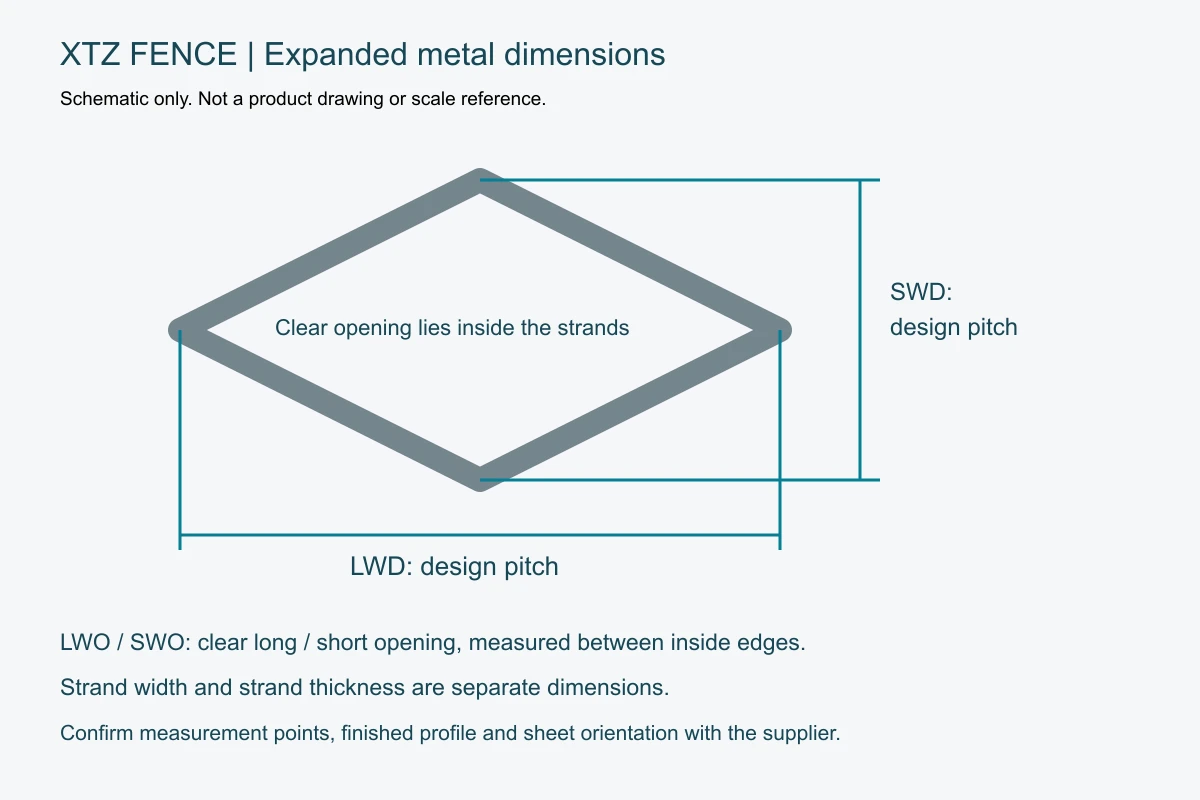
SWD means short way of design, also described as the short way of the diamond. LWD means long way of design. These are repeat or pitch dimensions measured between corresponding points in the pattern, commonly bond centers. They are different from SWO and LWO, which describe the clear short and long openings.
| Term | Meaning | What to confirm |
|---|---|---|
| SWD | Short-way design pitch | Measurement points on the supplier's drawing |
| LWD | Long-way design pitch | Measurement points and installed direction |
| SWO | Clear opening in the short direction | Required free gap, with no metal included |
| LWO | Clear opening in the long direction | Required free gap along the long opening |
| Strand width | Width of a metal strip in the pattern | Actual width and agreed measurement method |
| Strand thickness | Thickness of the metal strand | Whether the value is before or after flattening |
| Overall thickness | Total depth occupied by the profile | Clearance needed in the frame or fixing detail |
| Bond | Junction where strands remain connected | Pattern geometry and edge termination |
The distinction is visible in expanded mesh terminology and product tables, which list design dimensions and opening dimensions separately. Supplier labels can vary, so attach a dimensioned sketch when the clear gap is important.
Do not calculate the clear opening by casually subtracting one strand dimension from the pitch. Strand angle and bond geometry matter. Ask for the finished opening values or measure an approved sample using the agreed method.
How to specify sheet size and direction
Write the overall sheet width and height with units, then draw the diamond orientation. “1,000 × 2,000 mm” is incomplete if the fabricator does not know which way the long diamonds should run.
A useful notation is “1,000 mm horizontal × 2,000 mm vertical; long diamond axis vertical; front face marked.” This states the installation intent without relying on a supplier's width-versus-length convention. Add the corresponding SWD/LWD orientation to the supplier's production drawing before approval.
There are two separate scales to check: the small repeating diamond and the large finished panel. A correctly sized diamond does not establish panel squareness, and a correctly sized panel does not guarantee the selected opening. Include dimensional tolerances, flatness and any required pattern alignment across neighboring sheets.
For raised mesh, turning the sheet over or rotating it can alter the view through the angled strands. Mark the face and top on samples and production panels when appearance is directional.
Material, finish and architectural use
If the brief calls for a flexible net rather than a formed sheet, compare stainless steel wire rope mesh. For a complete framed boundary system, review the stainless steel rope mesh fence and its posts and connections. These alternatives need their own opening and support specifications.
“Expanded steel mesh” may refer to different steel grades and surface conditions. State the base material explicitly. If the project requires stainless steel, specify the agreed grade rather than assuming that the product name is sufficient.
For interior screens, review visual openness, surface texture and the handling of accessible edges. Where the mesh is close to furniture or circulation routes, the frame should contain the cut perimeter and suit the selected profile.
For external panels, provide the exposure, proposed finish, support spacing and project loads. Ask how the edge and connections will be protected or finished after fabrication. A coating color reference alone does not define coating preparation or its suitability for the environment.
For feature panels, view a sample under the proposed lighting from both principal approach directions. If a woven texture is closer to the intended appearance, compare stainless steel decorative mesh. If individual interlacing wires are required, the relevant alternative is stainless steel crimped wire mesh.
Resolve the perimeter before cutting
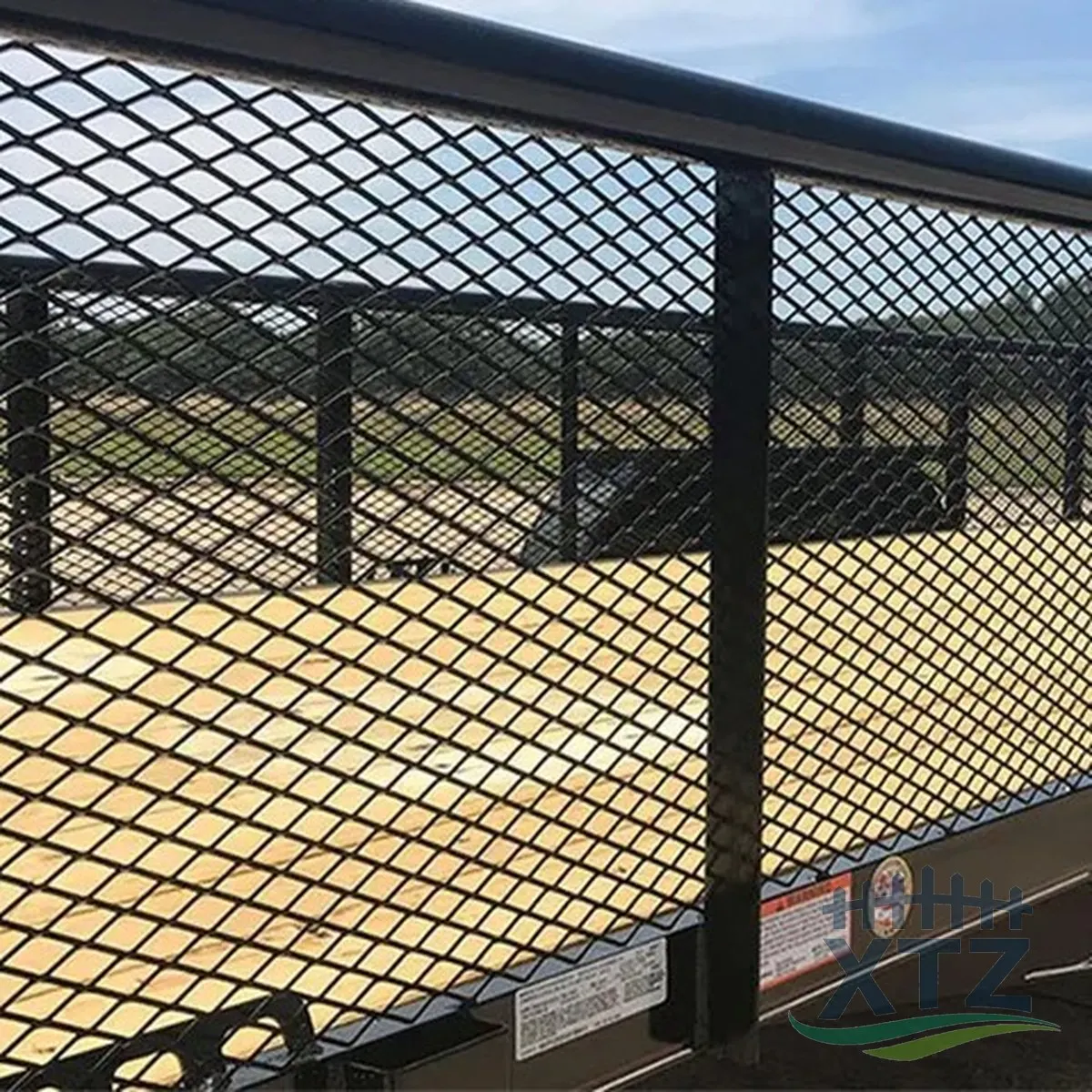
Expanded metal can be cut through strands or along a selected row of bonds, subject to the pattern and dimensions. The result affects the border appearance and available fixing positions. Exact overall dimensions and a symmetrical pattern edge may not both be achievable without adjusting the layout.
Ask the fabricator to show the cut line. Decide whether the mesh will be enclosed in a channel, clamped between members or attached to another engineered support. Include allowances for the selected retaining method. Do not use the visible opening in a frame as the mesh cutting size unless the detail specifically calls for it.
If the sheet will be curved or folded, submit the bend direction, radius and required finish. Formability depends on the particular material and pattern. A photograph of a curved example is not a manufacturing tolerance or a guarantee that every mesh can take the same shape.
Ordering example: make the unknowns explicit
The following is an enquiry example, not a stocked XTZ specification or a structural design:
| Field | Example enquiry entry |
|---|---|
| Application | Interior decorative screen |
| Product | Flattened stainless steel expanded metal |
| Grade | Proposed 304, subject to project approval |
| Finished panel | 1,000 mm wide × 2,000 mm high |
| Quantity | 12 panels |
| Pattern | Supplier to propose options against the attached visual reference |
| Direction | Long diamond axis vertical; top and front identified |
| Dimensions to return | SWD, LWD, SWO, LWO, strand width, finished strand thickness and overall thickness |
| Edge | Concealed in the proposed frame; cut allowance to be agreed |
| Approval | Physical sample and dimensioned production drawing before manufacture |
Add tolerances, finish acceptance, packing, destination and required delivery timing. For a performance-critical application, include the relevant design criteria and identify who approves the complete panel and support system. A clear list of unknowns is more useful than guessed values that later become a purchase requirement.
Frequently asked questions
Are SWD and SWO interchangeable?
No. SWD describes design pitch; SWO describes the clear short opening. They answer different questions and should be recorded separately when the gap matters. The same distinction applies to LWD and LWO. Check the dimension arrows on the supplier's drawing because product tables do not always use identical labeling conventions.
Is flattened expanded metal always thinner?
Flattening reduces the raised profile and can change the strand dimensions. The values depend on the product and process. Ask for finished strand thickness and overall thickness instead of assuming that the original sheet thickness remains the final value. Those two measurements also matter differently when selecting a retaining channel.
Can raised and flattened mesh share one specification?
They can share a material requirement or visual brief, but the profile must be stated and the finished dimensions checked separately. Flattening can change the design and opening dimensions. Approve the actual proposed product, including its edge detail, rather than accepting a nominal pattern name as proof of equivalence.
Is expanded metal suitable for walking surfaces?
Some specifically designed expanded metal grating products are used for walking surfaces. A decorative expanded mesh panel should not be assumed suitable for that duty. Load capacity, span, support, connections and slip-related requirements need project-specific assessment using the proposed product's applicable data.
What is the best way to compare quotations?
Use one schedule that includes material, profile, pattern dimensions, strand dimensions, panel size, orientation, edges and finish. Ask each supplier to identify deviations. Compare fabrication, packing and supplied components as well as the material price, since a mesh-only quotation and a framed-panel quotation cover different work.
Send XTZ Fence your drawing, application, material preference and panel quantities. Include SWD/LWD direction and the edge section so the proposed mesh can be checked against the finished assembly.